KARACHI: Stained glass windows, a sweeping staircase and embellished interiors make Mohatta Palace a gem in Karachi, a Pakistani megacity of 20 million people. Peacocks roam the lawn and the sounds of construction and traffic melt away as visitors enter the grounds.
The pink stone balustrades, domes and parapets look like they’ve been plucked from the northern Indian state of Rajasthan, a relic of a time when Muslims and Hindus lived side by side in the port city.
But magnificence is no guarantee of survival in a city where land is scarce and development is rampant. Demolition, encroachment, neglect, piecemeal conservation laws and vandalism are eroding signs of Karachi’s past.
The building’s trustees have fended off an attempt to turn it into a dental college, but there’s still a decades-long lawsuit in which heirs of a former owner are trying to take control of the land. It sat empty for almost two decades before formally opening as a museum in 1999.
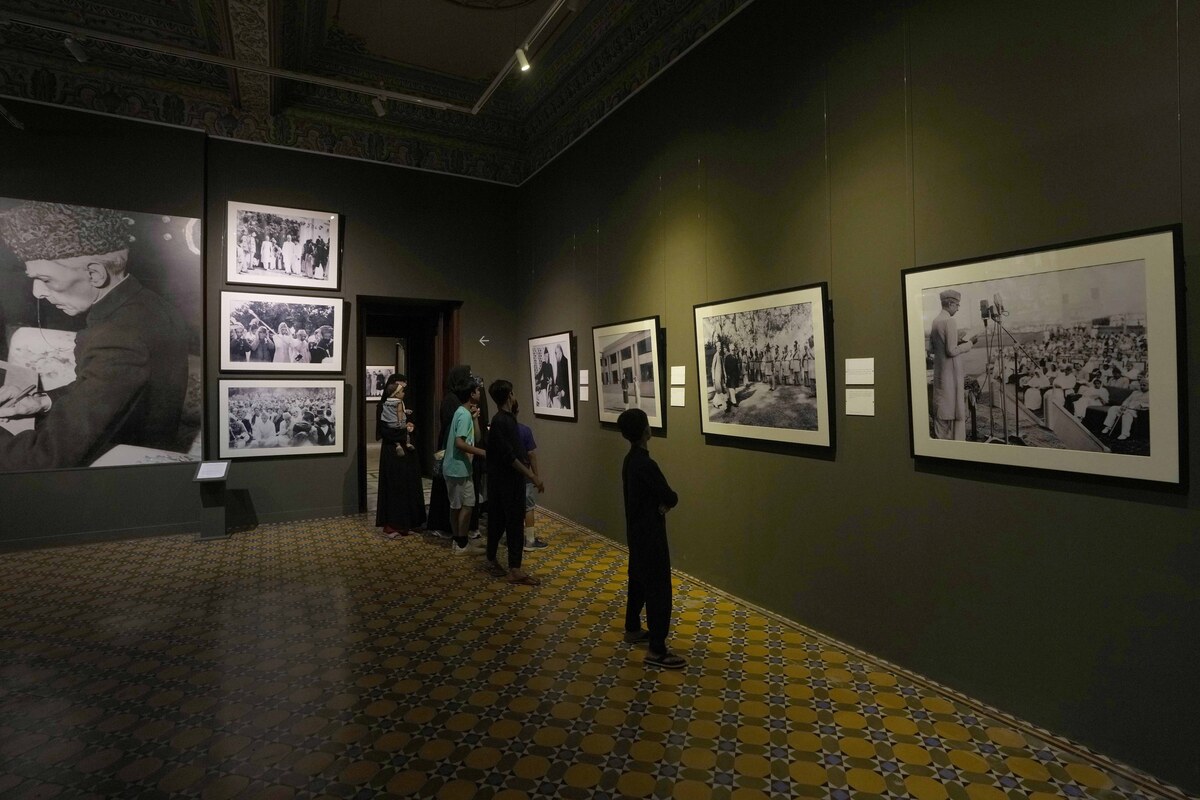
Visitors look at pictures of Pakistan's independence movement which was started by Muhammad Ali Jinnah, later known to be the founder of Pakistan, in the museum set up in the historical building "Mohatta Palace" in Karachi on May 24, 2024. (AP)
The palace sits on prime real estate in the desirable neighborhood of Old Clifton, among mansions, businesses and upmarket restaurants.
The land under buildings like the Mohatta Palace is widely coveted, said palace lawyer Faisal Siddiqi. “It shows that greed is more important than heritage.”
Karachi’s population grows by around 2 percent every year and with dozens of communities and cultures competing for space there’s little effort to protect the city’s historic sites.
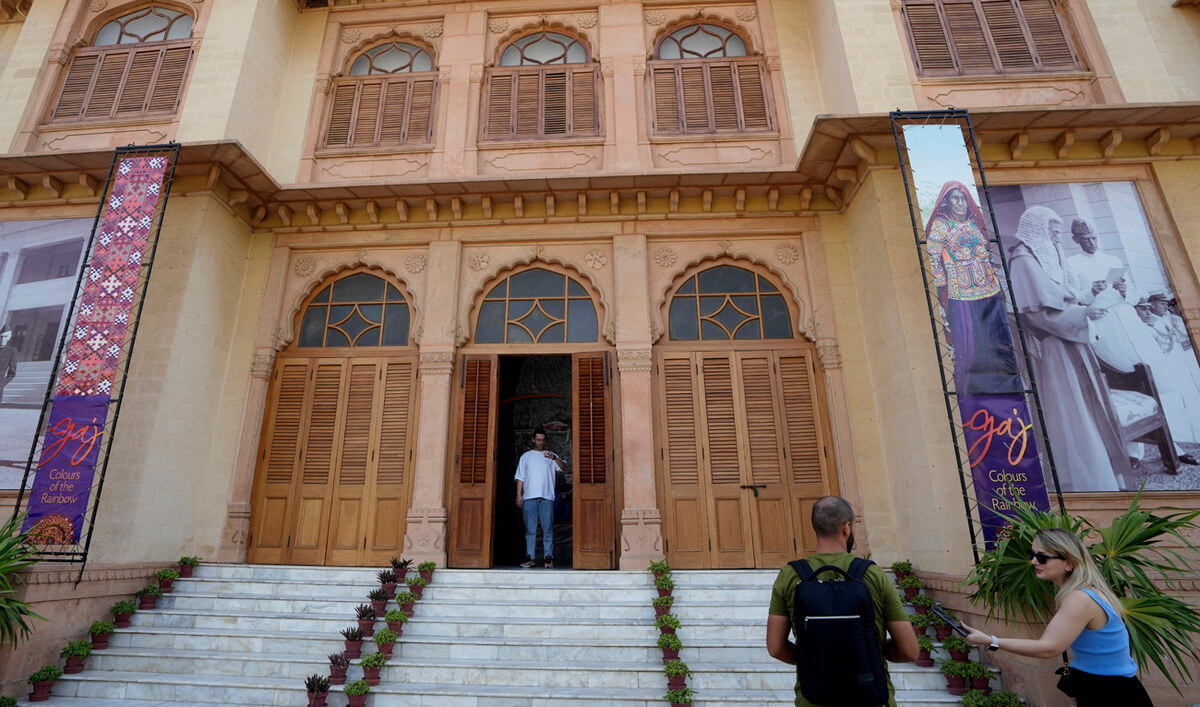
People visit at historical building “Mohatta Palace,” which was built in 1920s and has since been turned into a museum, in Karachi on May 24, 2024. (AP)
For most Pakistanis, the palace is the closest they’ll get to the architectural splendor of India’s Rajasthan, because travel restrictions and hostile bureaucracies largely keep people in either country from crossing the border for leisure, study or work.
Karachi’s multicultural past makes it harder to find champions for preservation than in a city like Lahore, with its strong connection to the Muslim-dominated Mughal Empire, said Heba Hashmi, a heritage manager and maritime archaeologist.
“The scale of organic local community support needed to prioritize government investment in the preservation effort is nearly impossible to garner in a city as socially fragmented as Karachi,” she said.
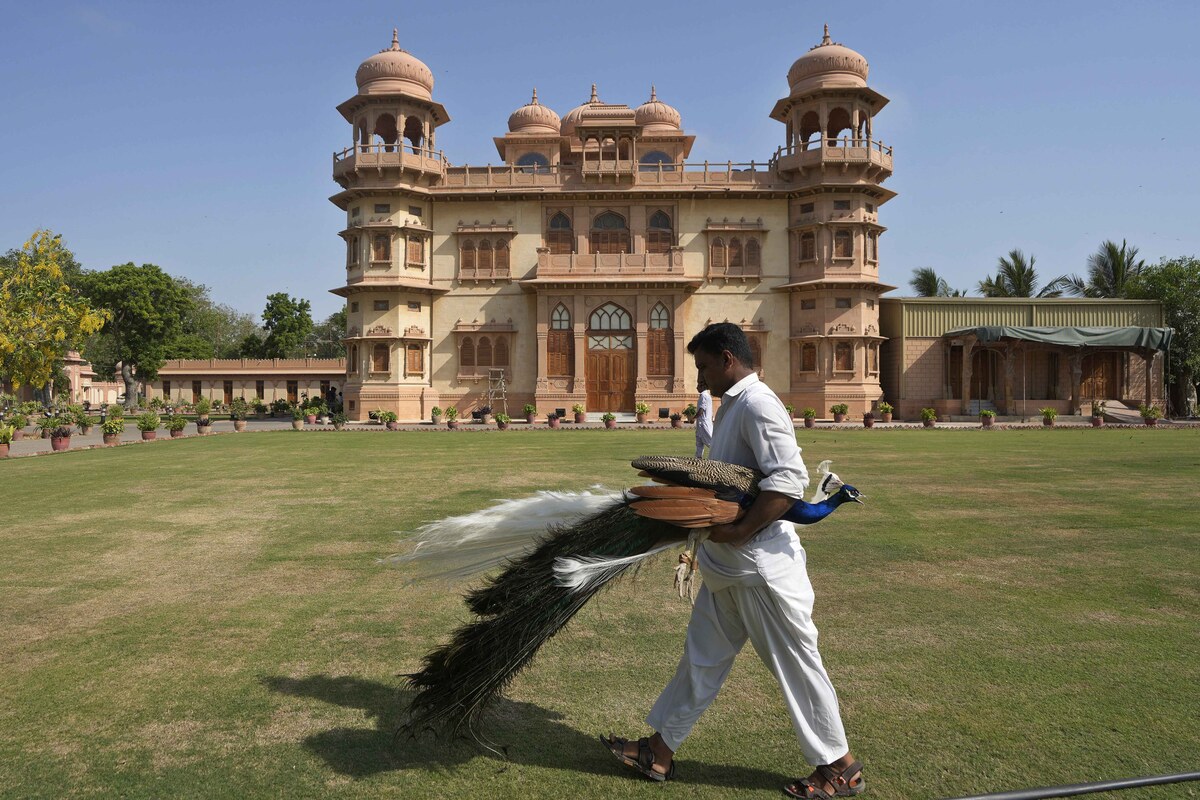
A worker moves a peacock from the lawn of historical building "Mohatta Palace," which was built in 1920s and has since been turned into a museum, in Karachi on May 24, 2024. (AP)
Mohatta Palace is a symbol of that diversity. Hindu entrepreneur Shivratan Mohatta had it built in the 1920s because he wanted a coastal residence for his ailing wife to benefit from the Arabian Sea breeze. Hundreds of donkey carts carried the distinctively colored pink stone from Jodhpur, now across the border in India.
He left after partition in 1947, when India and Pakistan were carved from the former British Empire as independent nations, and for a time the palace was occupied by the Foreign Ministry.
Next, it passed into the hands of Pakistani political royalty as the home of Fatima Jinnah, the younger sister of Pakistan’s first leader and a powerful politician in her own right.
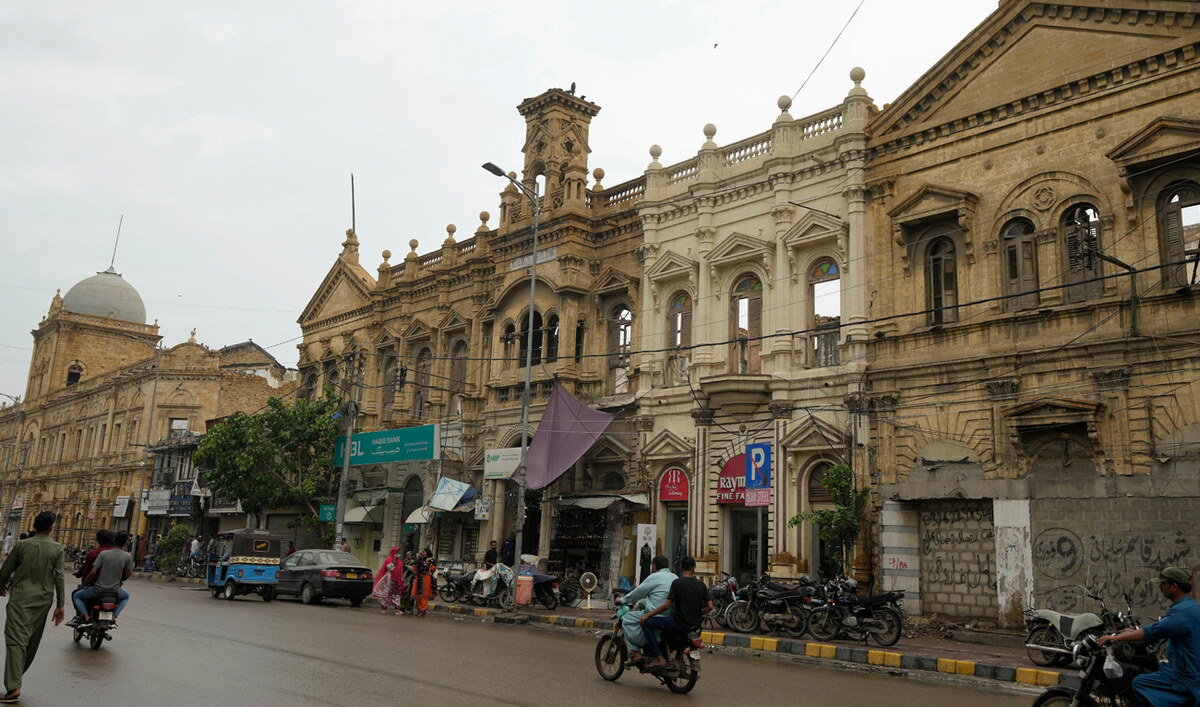
Motorcyclists drive on a road with old buildings in downtown Karachi on August 29, 2024. (AP)
After her death, the authorities gave the building to her sister Shirin, but Shirin’s passing in 1980 sparked a court fight between people saying they were her relatives, and a court ordered the building sealed.
The darkened and empty palace, with its overgrown gardens and padlocked gates, caught people’s imagination. Rumors spread of spirits and supernatural happenings.
Someone who heard the stories as a young girl was Nasreen Askari, now the museum’s director.
“As a child I used to rush past,” she said. “I was told it was a bhoot (ghost) bungalow and warned, don’t go there.”
Visitor Ahmed Tariq had heard a lot about the palace’s architecture and history. “I’m from Bahawalpur (in Punjab, India) where we have the Noor Mahal palace, so I wanted to look at this one. It’s well-maintained, there’s a lot of detail and effort in the presentations. It’s been a good experience.”
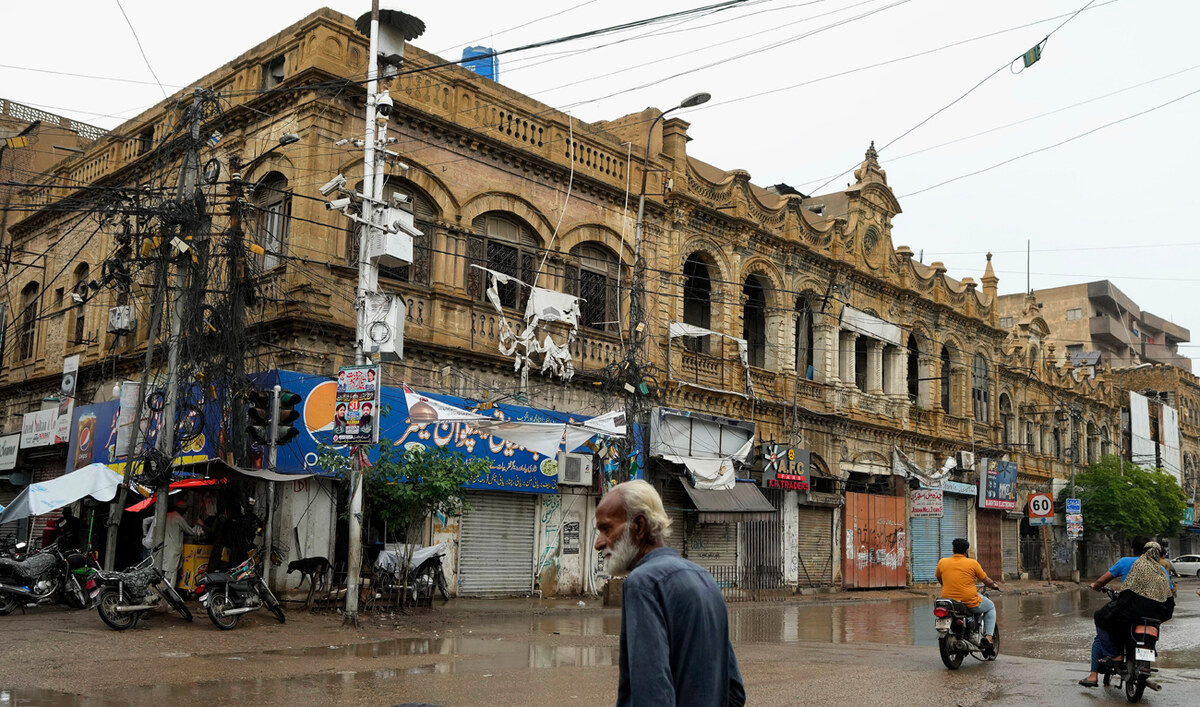
A man walks past an old building in downtown Karachi on August 28, 2024. (AP)
But the money to maintain the palace isn’t coming from admission fees.
General admission is 30 rupees, or 10 US cents, and it’s free for students, children and seniors. On a sweltering afternoon, the palace drew just a trickle of visitors.
It’s open Tuesday to Sunday but closes on public holidays; even the 11 a.m.-6 p.m. hours are not conducive for a late-night city like Karachi.
The palace is rented out for corporate and charitable events. Local media report that residents grumble about traffic and noise levels.
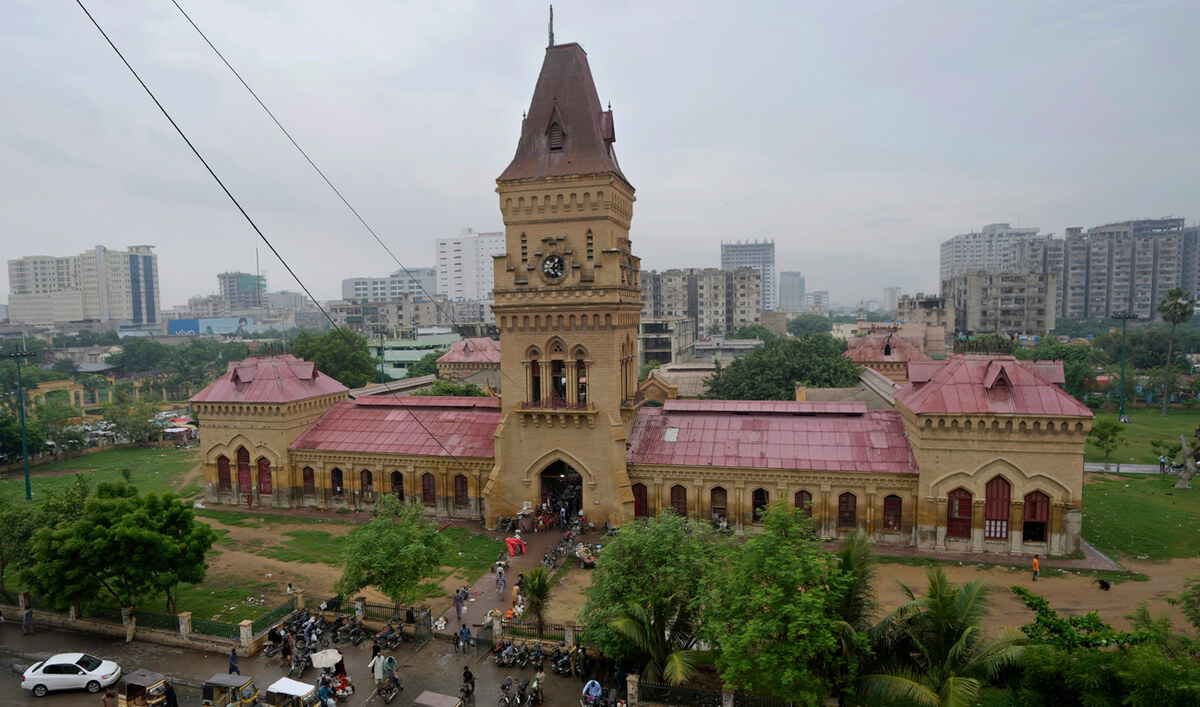
People visit the historical Empress Market in Karachi on August 29, 2024. (AP)
But the palace doesn’t welcome all attention, even if it could help carve out a space for the building in modern Pakistan.
Rumors about ghosts still spread by TikTok, pulling in influencers looking for spooky stories. But the palace bans filming inside, and briefly banned TikTokers.
“It is not the attention the trustees wanted,” said Askari. “That’s what happens when you have anything of consequence or unusual. It catches the eye.”
A sign on the gates also prohibits fashion shoots, weddings and filming for commercials.
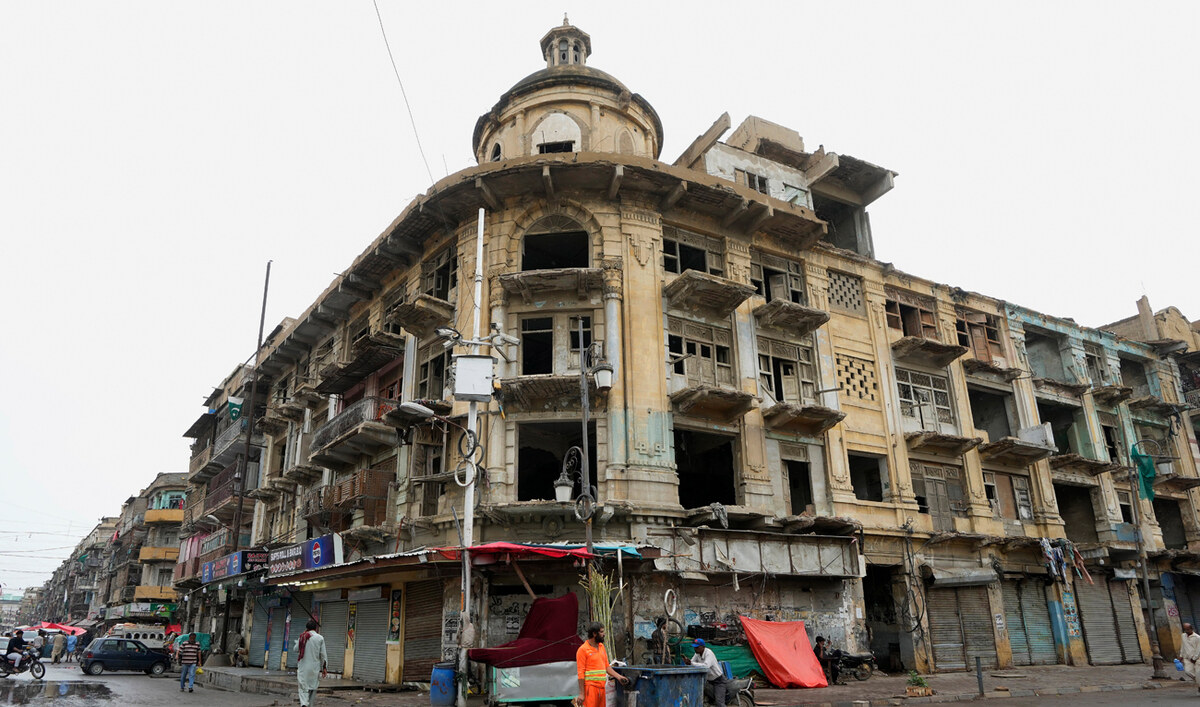
People walk past an old building in downtown Karachi on August 29, 2024. (AP)
“We could make so much money, but the floodgates would open,” said Askari. “There would be non-stop weddings and no space for visitors or events, so much cleaning up as well.”
Hashmi, the archaeologist, said there is often a strong sense of territorialism around the sites that have been preserved.
“It counterproductively converts a site of public heritage into an exclusive and often expensive artifact for selective consumption.”
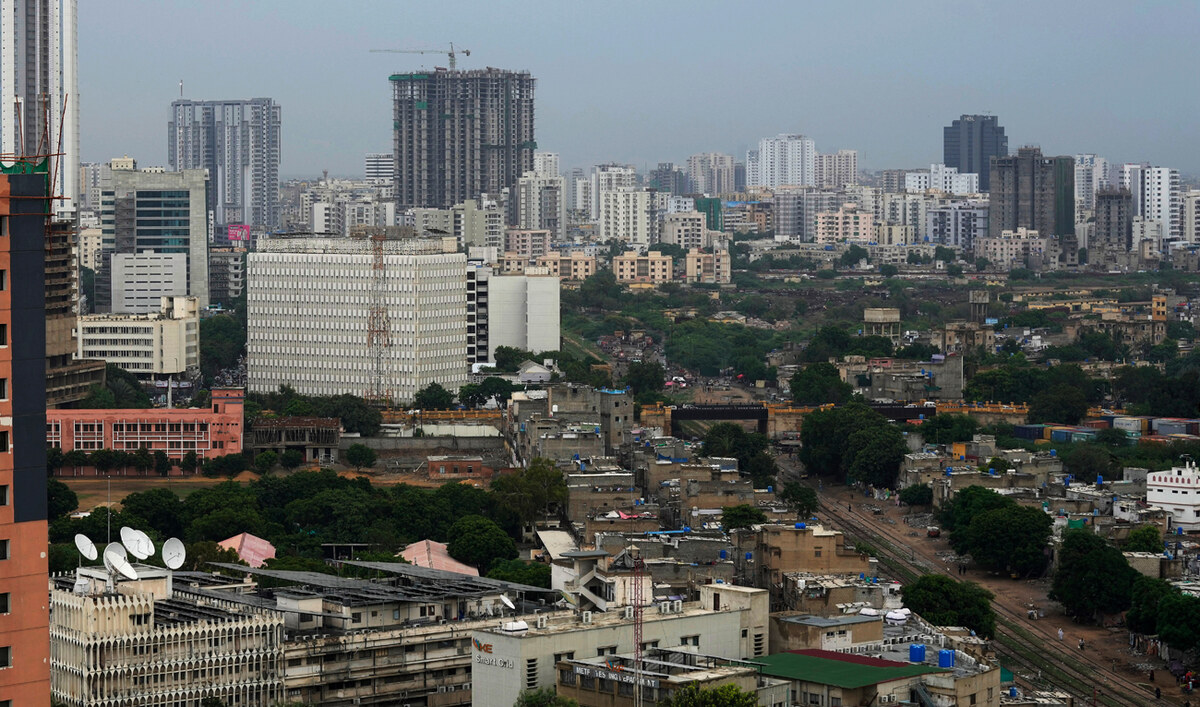
A view of a residential area is seen with skyscrapers in the background in Karachi on August 29, 2024. (AP)