DUBAI: On the streets of Iranian cities, it’s becoming more common to see a woman passing by without a mandatory headscarf, or hijab, as the second anniversary of the death of Mahsa Amini and the mass protests it sparked approaches.
There’s no government official or study acknowledging the phenomenon, which began as Iran entered its hot summer months and power cuts in its overburdened electrical system became common. But across social media, videos of people filming neighborhood streets or just talking about a normal day in their life, women and girls can be seen walking past with their long hair out over their shoulders, particularly after sunset.
This defiance comes despite what United Nations investigators describe as “expanded repressive measures and policies” by Iran’s theocracy to punish them — though there’s been no recent catalyzing event like Amini’s death to galvanize demonstrators.
The country’s new reformist President Masoud Pezeshkian campaigned on a promise to halt the harassment of women by morality police. But the country’s ultimate authority remains the 85-year-old Supreme Leader Ayatollah Ali Khamenei, who in the past said “unveiling is both religiously forbidden and politically forbidden.”
For some observant Muslim women, the head covering is a sign of piety before God and modesty in front of men outside their families. In Iran, the hijab — and the all-encompassing black chador worn by some — has long been a political symbol as well.
“Meaningful institutional changes and accountability for gross human rights violations and crimes under international law, and crimes against humanity, remains elusive for victims and survivors, especially for women and children,” warned a UN fact-finding mission on Iran on Friday.
Amini, 22, died on Sept. 16, 2022, in a hospital after her arrest by the country’s morality police over allegedly not wearing her hijab to the liking of the authorities. The protests that followed Amini’s death started first with the chant “Women, Life, Freedom.” However, the protesters’ cries soon grew into open calls of revolt against Khamenei.
A monthslong security crackdown that followed killed more than 500 people and saw over 22,000 detained.
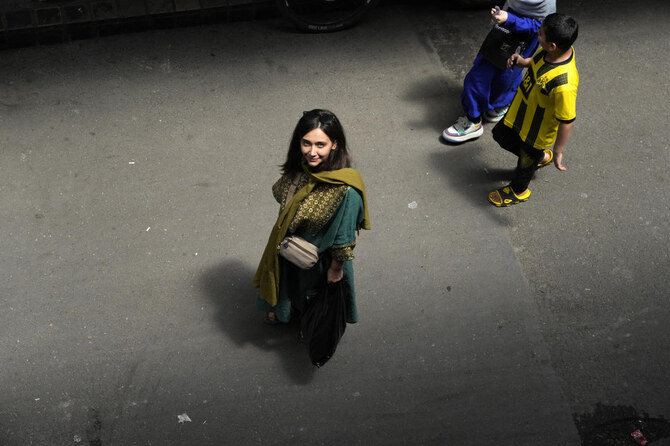
Today, passersby on the streets of Tehran, whether its tony northern suburbs for the wealthy or the working-class neighborhoods of the capital’s southern reaches, now routinely see women without the hijab. It particularly starts at dusk, though even during the daylight on weekends women can be seen with their hair uncovered at major parks.
Online videos — specifically a sub-genre showing walking tours of city streets for those in rural areas or abroad who want to see life in the bustling neighborhoods of Tehran — include women without the hijab.
Something that would have stopped a person in their tracks in the decades follwing the 1979 Islamic Revolution now goes unacknowledged.
“My quasi-courage for not wearing scarves is a legacy of Mahsa Amini and we have to protect this as an achievement,” said a 25-year-old student at Tehran Sharif University, who gave only her first name Azadeh out of fear of reprisal. “She could be at my current age if she did not pass away.”
The disobedience still comes with risk. Months after the protests halted, Iranian morality police returned to the streets.
There have been scattered videos of women and young girls being roughed up by officers in the time since. In 2023, a teenage Iranian girl was injured in a mysterious incident on Tehran’s Metro while not wearing a headscarf and later died in hospital. In July, activists say police opened fire on a woman fleeing a checkpoint in an attempt to avoid her car being impounded for her not wearing the hijab.
Meanwhile, the government has targeted private businesses where women are seen without their headscarves. Surveillance cameras search for women uncovered in vehicles to fine and impound their cars. The government has gone as far as use aerial drones to monitor the 2024 Tehran International Book Fair and Kish Island for uncovered women, the UN said.
Yet some feel the election of Pezeshkian in July, after a helicopter crash killed Iranian hard-line President Ebrahim Raisi in May, is helping ease tensions over the hijab.
“I think the current peaceful environment is part of the status after Pezeshkian took office,” said Hamid Zarrinjouei, a 38-year-old bookseller. “In some way, Pezeshkian could convince powerful people that more restrictions do not necessarily make women more faithful to the hijab.”
On Wednesday, Iran’s Prosecutor General Mohammad Movahedi Azad warned security forces about starting physical altercations over the hijab.
“We prosecuted violators, and we will,” Movahedi Azad said, according to Iranian media. “Nobody has right to have improper attitude even though an individual commits an offense.”
While the government isn’t directly addressing the increase in women not wearing hijabs, there are other signs of a recognition the political landscape has shifted. In August, authorities dismissed a university teacher a day after he appeared on state television and dismissively referred to Amini as having “croaked.”
Meanwhile, the pre-reform newspaper Ham Mihan reported in August on an unpublished survey conducted under the supervision of Iran’s Ministry of Culture and Islamic Guidance that found the hijab had become one of the most important issues in the country — something it hadn’t seen previously.
“This issue has been on people’s minds more than ever before,” sociologist Simin Kazemi told the newspaper.


![]()

Women in Iran are going without hijabs as the 2nd anniversary of Mahsa Amini’s death approaches
Short Url
https://arab.news/gv5s9
Women in Iran are going without hijabs as the 2nd anniversary of Mahsa Amini’s death approaches
- Country’s new reformist President Masoud Pezeshkian campaigned on a promise to halt the harassment of women by morality police


Latest updates


© 2026 SAUDI RESEARCH & PUBLISHING COMPANY, All Rights Reserved And subject to Terms of Use Agreement.