DERA ISMAIL KHAN: Police in the Lakki Marwat district of Pakistan’s northwestern Khyber Pakhtunkhwa (KP) province said they were calling off a days-long protest against a spike in militant attacks and targeted killings of police officers after the army agreed to leave check posts in villages and city centers of the restive area.
Pakistan’s army has a heavy presence across KP, where it has been battling militants from the Al-Qaeda, Pakistani Taliban and other groups for nearly two decades. The province, which borders Afghanistan, has witnessed a number of attacks on police, security forces and anti-polio vaccination teams as well as kidnappings of officials in recent months.
There have been protests in several districts of KP since July, when Pakistan’s cabinet announced that a new military operation would be launched amid a surge in terror attacks across the country. People in KP have rejected plans for an armed operation and demand that civilian agencies like the provincial police and the counter-terrorism department be better equipped.
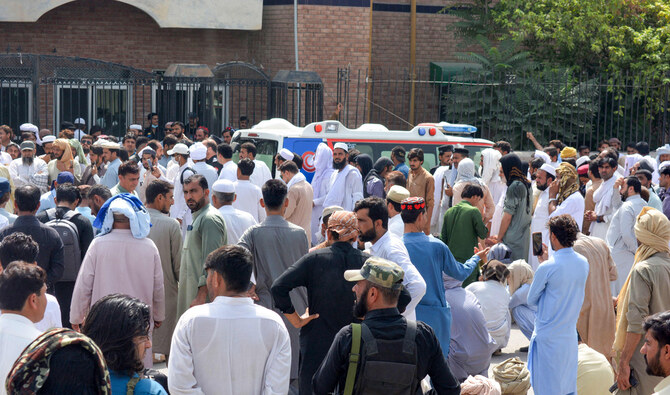
In Lakki Marwat, police launched a sit-in on Monday and blocked the Peshawar-Karachi Indus Highway for all types of vehicular traffic. The sit-in continued for almost four days and ended late Thursday after the police said they had reached an agreement with the district administration, following the intervention of elders from the native Marwat tribe.
“Pak Army will leave Lakki Marwat within six days. Police must be empowered and given armored vehicles and other resources,” the district police spokesman said in a statement, detailing conditions of the agreement.
“External interference in police must be eliminated, injured policemen should be taken care of, and no disciplinary action should be taken against the police personnel and civilians who participated in the sit-in.”
The statement said police would relaunch their sit-in if the agreement was not implemented.
Lakki Marwat Police Spokesman Shahid Marwat told Arab News the army would not “totally withdraw” from the district but will leave check posts in villages and city centers.
The army and the provincial government have not yet commented on the military’s plans to exit Lakki Marwat.
The protest, which was joined by representatives of civil society and political parties as well as tribal elders and members of the public, came days after unidentified gunmen attacked a police van in Lakki Marwat, killing an officer, while two brothers of a serving policeman were also killed in a separate attack in the district last week.
Hours after the sit-in was called off, a police constable, Hikmat Ullah, was gunned down at a shop in the Samandar village of Lakki Marwat, according to police. The death brought the number of police killings in KP to 78 this year, police data showed.
The volatile Lakki Marwat district is located on the edge of Pakistan’s restive tribal regions that border Afghanistan, from where Islamabad says militants mainly associated with the banned Tehreek-e-Taliban Pakistan frequently launch attacks, targeting police and security forces.
Islamabad has even blamed Kabul’s Afghan Taliban rulers for facilitating anti-Pakistan militants. Kabul denies the charges.


![]()

Police call off anti-militancy protest, say army will decrease presence in northwestern Pakistani district
Short Url
https://arab.news/wnbmx
Police call off anti-militancy protest, say army will decrease presence in northwestern Pakistani district
- Army has heavy presence in Khyber Pakhtunkhwa where it has been battling militant groups for nearly two decades
- Army has not yet commented on the agreement, at least 78 policemen have been killed in Khyber Pakhtunkhwa this year
Latest updates


© 2026 SAUDI RESEARCH & PUBLISHING COMPANY, All Rights Reserved And subject to Terms of Use Agreement.