RIYADH: Saudi banks real estate loans reached SR816.83 billion ($217.82 billion) in the second quarter of 2024, marking an annual 12 percent rise, according to official data.
Figures from the Saudi Central Bank, also known as SAMA, indicated that this amount represents approximately 30 percent of the total banks’ loan portfolio for the three-month period.
Retail real estate loans made up the largest share at 79 percent, increasing by 10 percent during this period to reach SR641.72 billion.
Corporate real estate loans, although accounting for 21 percent of the total, grew at a faster annual rate of 18 percent, totaling SR175.12 billion.
The share of real estate loans within Saudi banks’ total loan portfolios has steadily increased in recent years. According to data from SAMA, five years ago, these loans accounted for about 17 percent of total lending activities.
This figure rose to 18.5 percent in 2021, then jumped to 28.5 percent in 2022, and 29.6 percent in 2023. As of the second quarter of this year, real estate loans now make up 29.7 percent of the total.
This growth is being driven by several key factors, including urban development, evolving lifestyle preferences, and the rise of e-commerce. There is also a growing emphasis on sustainability, a shift towards remote work, demographic changes, and supportive government policies.
In particular, there is a notable increase in demand for various property types, ranging from residential apartments and villas to commercial offices and retail spaces.
Hospitality venues are also seeing heightened interest, as mixed-use developments become more prevalent. These developments blend residential, commercial, and recreational areas, creating dynamic communities that meet a wide array of needs.
Macroeconomic trends such as population growth, urbanization, and economic stability are further bolstering this market.
Additionally, strategic initiatives like Vision 2030, which aim to diversify the economy and attract foreign investment, are providing a robust framework for sustained growth.
Real estate companies in Saudi Arabia are increasingly focusing on affordable housing and sustainable construction, recognizing the long-term potential of these areas.
As a result, Saudi Arabia’s real estate sector stands out as a compelling opportunity for investment and development, attracting both local and international players looking to capitalize on the country’s evolving landscape.
According to a study by Mordor Intelligence, the Kingdom’s commercial real estate market is highly fragmented and competitive, driven by increasing demand for new properties due to growing commercial activities.
Developers compete based on factors such as land banks, property location, and upcoming projects, as well as construction costs, and company reputation.
The study noted that prominent real estate development companies in the market include Al Saedan Real Estate, Kingdom Holding Company, and SEDCO Development.
It also cited Jabal Omar Development Company, Makkah Construction & Development Co., and Dar Alarkan Real Estate Development Co., as well as Saudi Taiba Investment and Real Estate Development Co.
In parallel, home financing is experiencing significant growth, aligning with the government’s goal to increase homeownership among Saudi nationals to 70 percent by 2030.
In 2016, SAMA revised regulations to increase loan-to-value ratios for financing companies from 70 percent in 2014 to 85 percent.
In 2017, the LTV cap was extended to 85 percent for citizens seeking their first home through banks, and further increased to 90 percent in 2018.
As the government continues to boost affordable housing supply, the creation of the Saudi Real Estate Refinance Company in 2017, a subsidiary of the Kingdom’s Public Investment Fund, has strengthened the provision of mortgage-backed securities for investors.
The demand for real estate financing is expected to grow from SR280 billion in 2017 to SR500 billion by 2026, driven by robust economic growth. SRC plays a vital role in this expansion by making the housing market more accessible to both local and international investors.
According to a study by Deloitte, the lack of refinancing firms in the Saudi mortgage market had previously constrained banks’ ability to expand their loan portfolios within any single sector.
However, the establishment of the Saudi Real Estate Refinance Company has changed this dynamic, allowing banks to package their loan portfolios into mortgage-backed securities that can be sold to investors.
Impact of interest rates
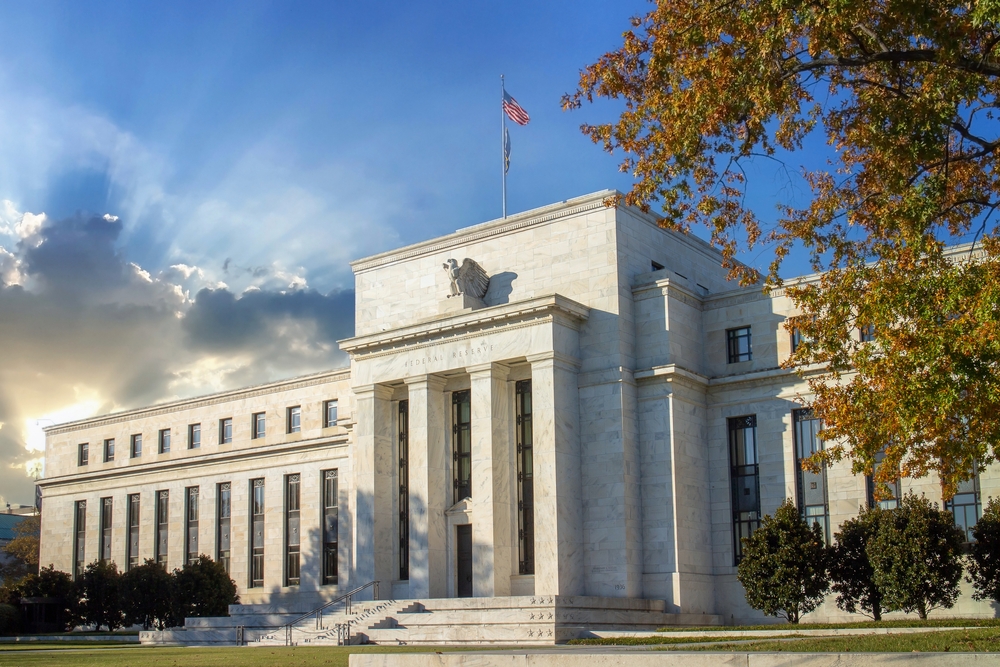
US Federal Reserve building in Washington D.C. Shutterstock
The Saudi real estate market has been significantly impacted by fluctuations in interest rates, which are closely tied to US monetary policy due to the Saudi riyal’s peg to the US dollar.
As the Federal Reserve raised the level to combat inflation, the Gulf Cooperation Council nations, including Saudi Arabia, followed suit, leading to higher borrowing costs across the region.
These elevated interest rates initially created challenges for individuals and companies seeking real estate financing in the Kingdom.
The cost of credit increased, causing potential buyers to hesitate, particularly in a market that was already experiencing rising property prices.
Many prospective homeowners and investors adopted a wait-and-see approach, hoping for a reduction in rates before making major purchasing decisions.
Despite the persistence of the high level, the market has shown resilience and begun to regain momentum.
Elias Abou Samra, CEO of Rafal Real Estate Development Co., noted in an interview with Arab News in July the market has adapted to the “higher-for-longer” interest rate environment.
Buyers have come to terms with the fact that waiting for a reduction in rates could be offset by further increases in property prices.
This realization has prompted many to move forward with their purchasing decisions, boosting demand for mortgages and real estate transactions.
Another contributing factor is that, despite the challenges of rising interest rates, the impact has been softened by a significant increase in construction activity across Saudi Arabia’s giga-projects and other major development initiatives supported by PIF.
These large-scale projects have maintained momentum in the real estate market, helping to counterbalance the effects of higher borrowing costs.
In an August statement, the US Federal Reserve indicated its readiness to cut interest rates, expressing confidence that inflation is easing and caution over potential further slowing in the job market.
While the Fed chair Jerome Powell did not specify a timeline or the extent of the potential rate cuts, his comments suggest a possible rate reduction at the upcoming mid-September policy meeting.
There is uncertainty about whether the Fed will implement a more aggressive cut, such as a half-point reduction, instead of the usual quarter-point.
For Saudi banks, expected rate cuts could spur corporate loan growth, while their strong asset quality is likely to mitigate any downside risks in 2024.
Fitch Ratings recognizes the Kingdom’s banks as having the strongest risk profiles among GCC lenders, thanks to robust asset quality, conservative underwriting standards, and strict regulation by the Saudi Central Bank.