

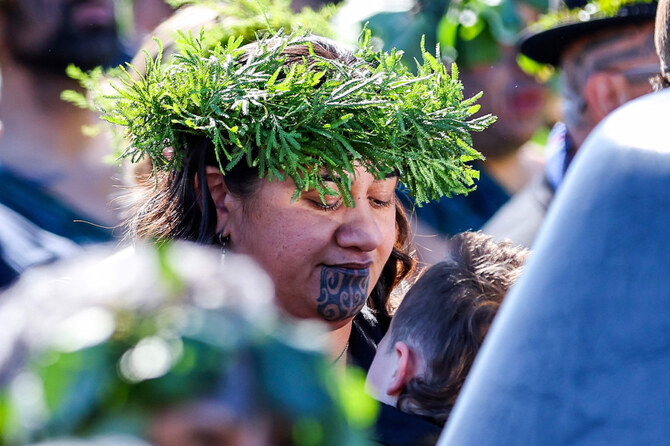

NGARUAWAHIA, New Zealand: New Zealand’s Maori chiefs anointed a 27-year-old queen as their new monarch Thursday, a surprise choice hailed as a symbol of change for the country’s Indigenous community.
Nga Wai hono i te po Paki was cheered by thousands as she ascended a high-backed wooden throne during an elaborate ceremony on the country’s North Island.
She is the youngest daughter of King Tuheitia Pootatau Te Wherowhero VII, who died on Friday after heart surgery.
After being selected by a council of chiefs, Nga Wai was ushered to the throne by a phalanx of bare-chested and tattooed men bearing ceremonial weapons -- who chanted, screamed and shouted in acclamation.
Wearing a wreath of leaves, a cloak and a whalebone necklace, she sat beside her father’s coffin as emotive rites, prayers and chants were performed.
The late king had laid in state for six days before being taken down the Waikato River on a flotilla of four war canoes each powered by more than a dozen rowers.
His funerary procession passed throngs of onlookers camped on the riverbank, before stopping at the foot of sacred Mount Taupiri.
From there, three rugby teams acted as pallbearers, shepherding his coffin up steep slopes to the summit and the final resting place of past Maori royals.
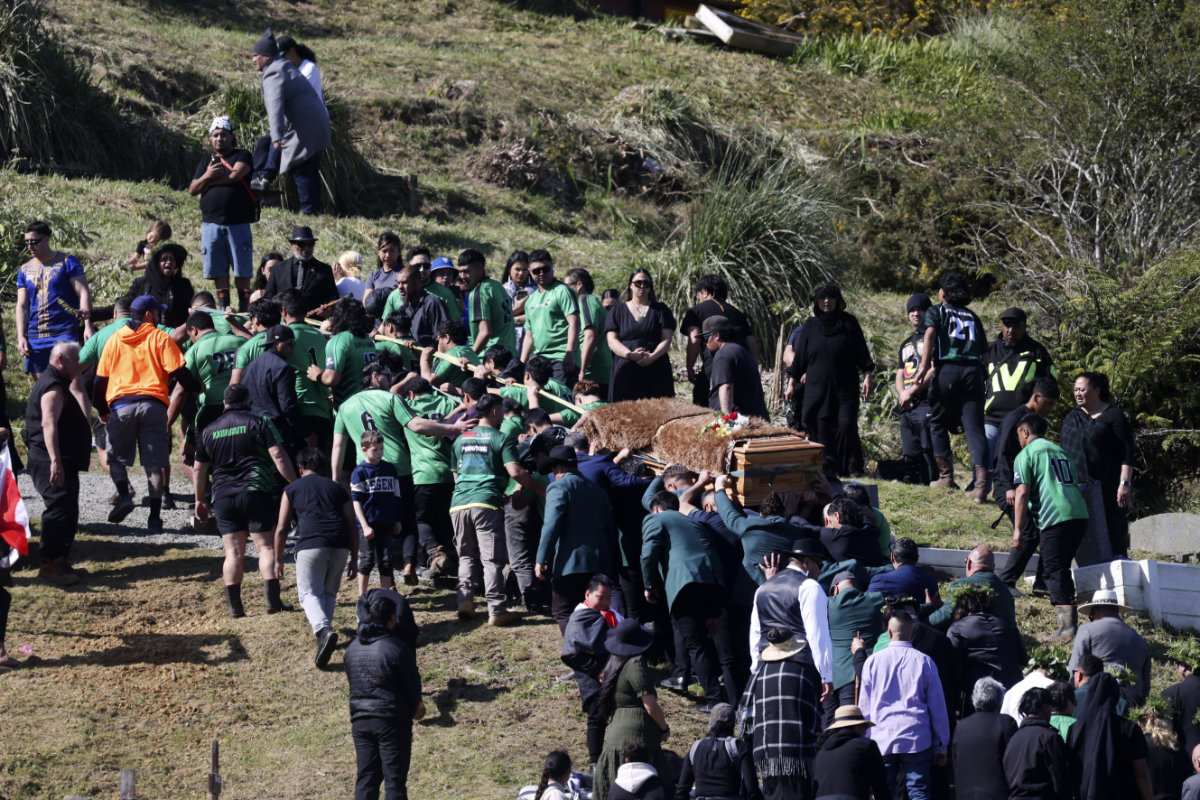
The coffin with the body of New Zealand's Maori King, Kiingi Tuheitia Pootatau Te Wherowhero VII, is carried up Taupiri Mountain for burial in Ngaruawahia, New Zealand, on Sept. 5, 2024. (AP)
Ceremonial, yet potent symbol of identity
The Maori monarch is a mostly ceremonial role with no legal status.
But it has enormous cultural, and sometimes political, significance as a potent symbol of Maori identity and kinship.
As the king’s only daughter and his youngest child, Queen Nga Wai was perhaps considered an outside choice to become his successor.
One of her two elder brothers had taken on many ceremonial duties during their father’s periods of ill health and had been tipped to take over.
“It is certainly a break from traditional Maori leadership appointments which tend to succeed to the eldest child, usually a male,” Maori cultural advisor Karaitiana Taiuru told AFP.
Taiuru said it was a “privilege” to witness a young Maori woman become queen, particularly given the ageing leadership and mounting challenges faced by the community.
“The Maori world has been yearning for younger leadership to guide us in the new world of AI, genetic modification, global warming and in a time of many other social changes that question and threaten us and Indigenous Peoples of New Zealand,” he said.
“These challenges require a new and younger generation to lead us.”
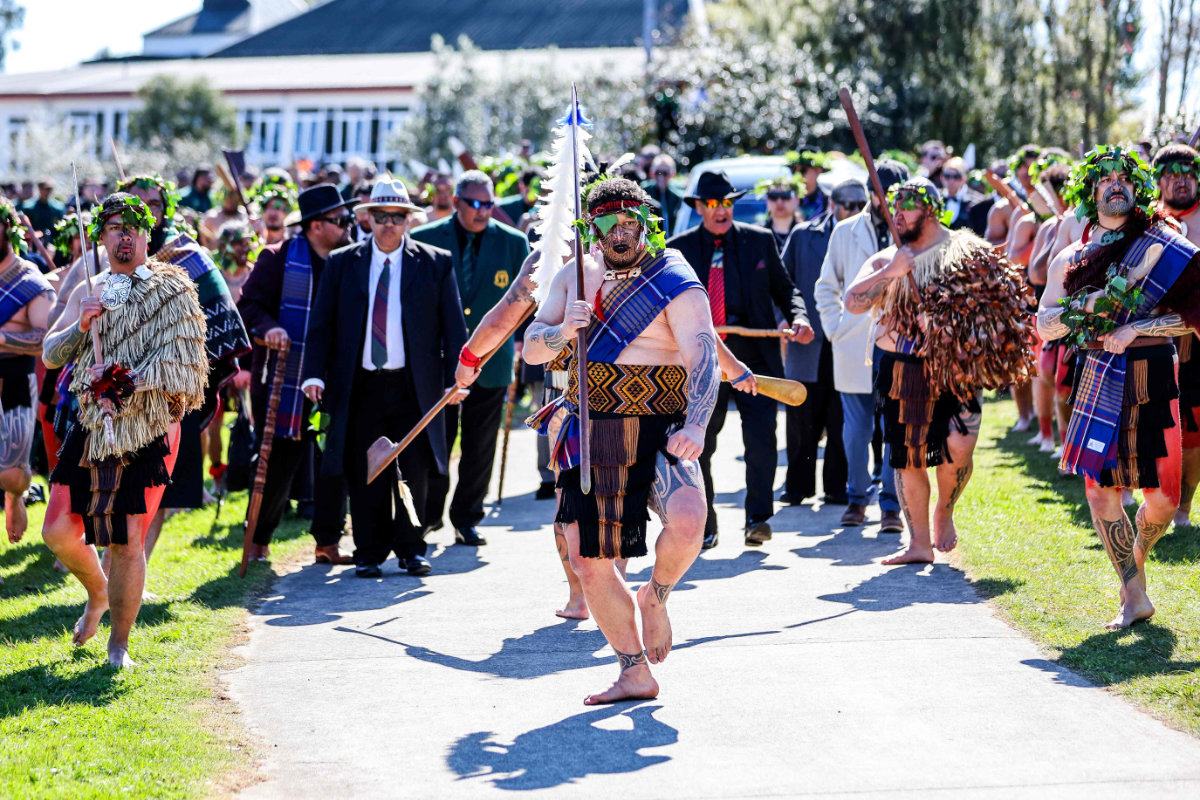
Maori warriors participate during the funeral ceremony of New Zealand's Maori King Tuheitia Pootatau Te Wherowhero VII in Ngaruawahia on September 5, 2024. (AFP)
New Zealand’s Maori make up roughly 17 percent of the population, or about 900,000 people.
Maori citizens are much more likely than other New Zealanders to be unemployed, live in poverty or suffer cancer, cardiovascular disease and diabetes and have higher suicide rates.
Maori life expectancy is seven years less than other New Zealanders.
The Kiingitanga, or Maori King movement, was founded in 1858 to unite New Zealand’s tribes and provide a single counterpart to the colonial ruler, Britain’s Queen Victoria.
“People think Maori people are one nation -- we’re not. We’re many tribes, many iwi. We have different ways of speaking out,” said Joanne Teina, who had travelled from Auckland for the ceremony.
“The Kiingitanga was created to create unity -- among people who were fighting each other for thousands of years, before Pakeha (Europeans) came along. Now we just fight them.”
Legacy forged through respect and ‘aroha’
Queen Nga Wai is the eighth Maori monarch and the second queen.
Her grandmother, Queen Te Arikinui Dame Te Atairangikaahu, held the position for four decades until 2006.
The new queen studied the Maori language and customary law at New Zealand’s Waikato University. She also taught “kapa haka” performing arts to children.
To mark the anniversary of the king’s coronation in 2016, she received a traditional Maori “moko” tattoo on her chin.
King Tuheitia, a 69-year-old truck-driver-turned-royal, died on Friday, just days after heart surgery and celebrations marking the 18th anniversary of his coronation.
Tens of thousands of Indigenous citizens and “Pakeha” -- those of European ancestry -- visited to pay respects, mourn and celebrate New Zealand’s rich Maori heritage.
Among them was Auckland-based Darrio Penetito-Hemara, who told AFP the king had united “many people across Aotearoa (New Zealand) who don’t often see eye-to-eye”.
The king leaves a legacy forged “through respect, through aroha (love)”, Penetito-Hemara said.




