New Zealand’s Māori king dies after 18-year reign

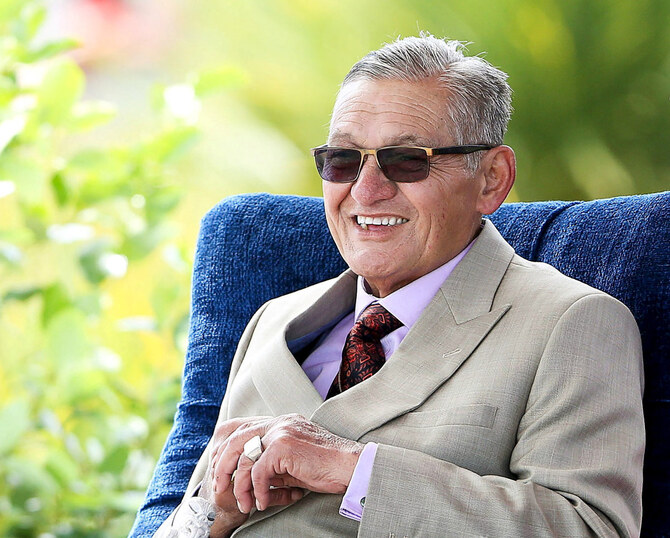
Maori King Tuheitia at Turangawaewae Marae is pictured in Ngaruawahia, south of Auckland, New Zealand, on November 8, 2015. (REUTERS/Pool)
Short Url
Updated 30 August 2024
Follow

New Zealand’s Māori king dies after 18-year reign

  • Kiingi Tuheitia Pootatau Te Wherowhero VII, 69, died in hospital after heart surgery
  • He was the 7th to hold the position created in 1858 to unite indigenous Māori tribes in the face of British colonization

NUKU’ALOFA, Tonga: New Zealand’s Māori King, Kiingi Tuheitia Pootatau Te Wherowhero VII, died Friday at age 69, days after the celebration of his 18th year on the throne.
He was the seventh monarch in the Kiingitanga movement, holding a position created in 1858 to unite New Zealand’s Indigenous Māori tribes in the face of British colonization.
Tuheitia died in hospital after heart surgery, said Rahui Papa, a spokesperson for the Kiingitanga, the Māori King Movement, in a post on Instagram.
The movement’s primary goals were to end the sale of land to non-Indigenous people, stop inter-tribal warfare, and provide a springboard for the preservation of Māori culture, the Waikato-Tainui tribe website said. The monarch has a largely ceremonial but still consequential role in New Zealand, where Māori make up close to 20 percent of the population.
“The death of King Tuheitia is a moment of great sadness for followers of Kiingitanga, Maaoridom and the entire nation,” Papa wrote on social media.
New Zealand Prime Minister Christopher Luxon paid tribute to Tuheitia, saying his “unwavering commitment to his people and his tireless efforts to uphold the values and traditions of the Kiingitanga have left an indelible mark on our nation.”
“I will remember his dedication to Aotearoa New Zealand,” Luxon said, using the country’s Māori and English names, “his commitment to mokopuna (young people), his passion for te ao Māori (the Māori world), and his vision for a future where all people are treated with dignity and respect.”
In recent months, Tuheitia has coordinated national unity talks for Māori in response to policies of Luxon’s center-right government. Critics accuse the government of being anti-Māori in its efforts to reverse policies favoring Indigenous people and language.
King Charles III, New Zealand’s constitutional head of state, and his wife, Queen Camilla, were “profoundly saddened” by Tuheitia’s death.
“I had the greatest pleasure of knowing Kiingi Tuheitia for decades. He was deeply committed to forging a strong future for Māori and Aotearoa New Zealand founded upon culture, traditions and healing, which he carried out with wisdom and compassion,” Charles said in a statement.
The week before Tuheitia’s death, thousands traveled to Turangawaewae Marae, the Māori King Movement headquarters in the town of Ngāruawāhia, for annual celebrations of the king’s ascension to the throne.
The seat of the king is held by the Tainui tribes in the Waikato region, and it was not yet clear who will take the throne.
“It is expected that Kiingi Tuheitia will lie in state at Turangawaewae Marae for five days before he is taken to his final resting place on Taupiri Mountain,” Papa said.


Arts festival’s decision to exclude Palestinian author spurs boycott

Randa Abdel Fattah. (Photo/Wikipedia)
Updated 12 January 2026
Follow

Arts festival’s decision to exclude Palestinian author spurs boycott

  • A Macquarie University academic who researches Islamophobia and Palestine, Abdel-Fattah responded saying it was “a blatant and shameless act of anti-Palestinian racism and censorship,” with her lawyers issuing a letter to the festival

SYDENY: A top Australian arts festival has seen ​the withdrawal of dozens of writers in a backlash against its decision to bar an Australian Palestinian author after the Bondi Beach mass shooting, as moves to curb antisemitism spur free speech concerns.
The shooting which killed 15 people at a Jewish Hanukkah celebration at Sydney’s Bondi Beach on Dec. 14 sparked nationwide calls to tackle antisemitism. Police say the alleged gunmen were inspired by Daesh.
The Adelaide Festival board said last Thursday it would disinvite Randa ‌Abdel-Fattah from February’s ‌Writers Week in the state of South Australia because “it ‌would not ​be ‌culturally sensitive to continue to program her at this unprecedented time so soon after Bondi.”

FASTFACTS

• Abdel-Fattah responded, saying it was ‘a blatant and shameless act of anti-Palestinian racism and censorship.’

• Around 50 authors have since withdrawn from the festival in protest, leaving it in doubt, local media reported.

A Macquarie University academic who researches Islamophobia and Palestine, Abdel-Fattah responded saying it was “a blatant and shameless act of anti-Palestinian racism and censorship,” with her lawyers issuing a letter to the festival.
Around 50 authors have since withdrawn from the festival in protest, leaving it in doubt, local media reported.
Among the boycotting authors, Kathy Lette wrote on social media the decision to bar Abdel-Fattah “sends a divisive and plainly discriminatory message that platforming Australian Palestinians is ‘culturally insensitive.'”
The Adelaide Festival ‌said in a statement on Monday that three board ‍members and the chairperson had resigned. The ‍festival’s executive director, Julian Hobba, said the arts body was “navigating a complex moment.”

 a complex and ‍unprecedented moment” after the “significant community response” to the board decision.
In the days after the Bondi Beach attack, Jewish community groups and the Israeli government criticized Prime Minister Anthony Albanese for failing to act on a rise in antisemitic attacks and criticized protest marches against Israel’s war in ​Gaza held since 2023.
Albanese said last week a Royal Commission will consider the events of the shooting as well as antisemitism and ⁠social cohesion in Australia. Albanese said on Monday he would recall parliament next week to pass tougher hate speech laws.
On Monday, New South Wales state premier Chris Minns announced new rules that would allow local councils to cut off power and water to illegally operating prayer halls.
Minns said the new rules were prompted by the difficulty in closing a prayer hall in Sydney linked to a cleric found by a court to have made statements intimidating Jewish Australians.
The mayor of the western Sydney suburb of Fairfield said the rules were ill-considered and councils should not be responsible for determining hate speech.
“Freedom ‌of speech is something that should always be allowed, as long as it is done in a peaceful way,” Mayor Frank Carbone told Reuters.