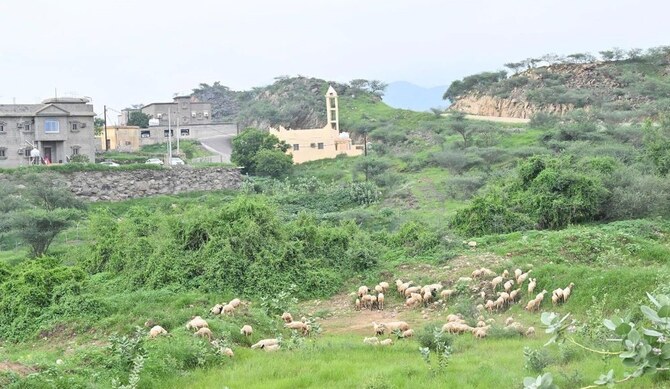
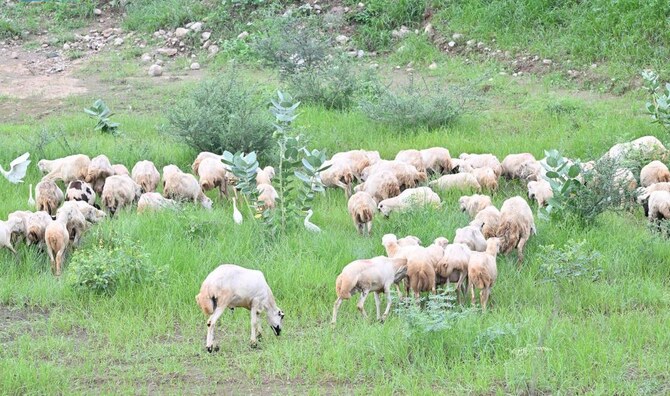

RIYADH: One of Saudi Arabia’s most fertile agricultural regions is emerging as a vital hub for the Kingdom’s food security due to its rich and diverse livestock resources.
Jazan’s natural environment, which blends fertile plains, mountainous terrain and seasonal rain, creates an ideal climate for raising various types of livestock, the Saudi Press Agency reported.
Sheep, goats and camels thrive in the region’s environment, making Jazan a significant contributor to the local economy by meeting the market’s demands for red meat and dairy products.
According to the Ministry of Environment, Water and Agriculture, Jazan’s livestock population exceeds 3.977 million, including more than 1.72 million sheep, 2.1 million goats, about 95,400 cattle and 57,400 camels.
In addition, poultry production in the region is robust, with businesses producing almost 1.944 million broiler chickens annually.
These figures highlight the vitality of the livestock sector in Jazan, which has historically served as a central part of local culture and the economy.
The region’s herding tradition has been passed down through generations, with Jazan’s geographic and environmental diversity playing a crucial role in sustaining and expanding the practice.
Economically, livestock farming in Jazan adds significant value to the local community by creating jobs and boosting agricultural output.
The ministry’s Rural Development Program, known as “Reef,” supports sustainable development by providing financial and technical assistance to farmers and rural families, improving livestock productivity and marketability.
The ministry’s efforts toward preserving and developing livestock in Jazan include preventive vaccination programs, daily health checks, disease diagnosis and animal treatment services provided by veterinary departments and clinics throughout the region.
Additionally, mosquito control measures in animal pens and services offered by the region’s veterinary diagnostic laboratory further contribute to the health and sustainability of livestock.
Livestock farming in Jazan remains a cornerstone of economic development and food security in Saudi Arabia, the SPA said.
The continued growth and development of the sector reflects the collective efforts of the government and local community to achieve self-sufficiency, ensuring sustainable management of the region’s animal resources.