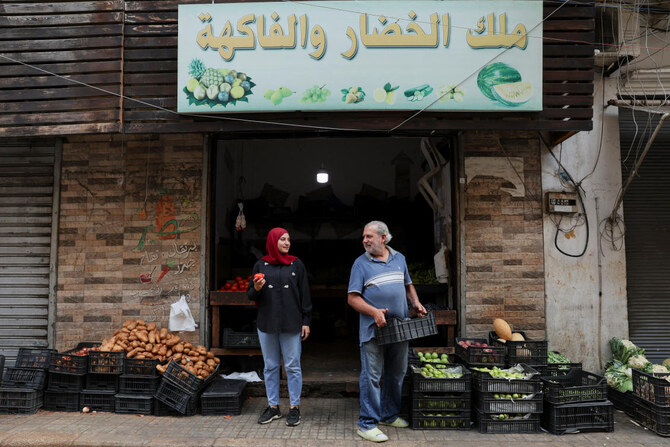
BEIRUT: Shopkeeper Alaa Fakih lies awake at night scared that another catastrophe could strike Lebanon. Like many she is traumatized by the past — from the 1975-1990 civil war to a devastating Beirut port blast in 2020 and an enduring economic collapse — and fearful of the future.
“I shouldn’t be thinking about all these things — I’m thinking how to continue my daughter’s education and if, for example, I was walking and God forbids, an explosion happens,” said Fakih, 33, whose heart beats rapidly at night as she shivers.
“How to walk and not have an explosion. All these have a negative effect on my psychological well-being.” People are now most anxious about the prospect of another full blown conflict between Lebanon’s armed group Hezbollah and Israel, who have been engaged in border warfare since the Gaza war erupted in October. Lebanon took years to rebuild from a 2006 war between the arch-foes which killed 1,200 people in Lebanon, mostly civilians, and 158 Israelis, most of them soldiers.
Decades of corruption and mismanagement by ruling politicians led the financial system to collapse in 2019, wiping out savings, demolishing the currency and fueling poverty.
The following year, Beirut was shattered by a huge chemicals explosion at the port that killed at least 220 people and was so powerful it was felt 250 km (155 miles) away in Cyprus and sent a mushroom cloud over the Lebanese capital. Political pressure has derailed an investigation that sought to prosecute powerful people over the explosion.
“One can cry from the slightest things, your tears come down,” said Fakih.
COPING MECHANISMS
Psychoanalyst Alyne Husseini Assaf said Lebanese have struggled to process the many layers of suffering. Some hide away their feelings. Others live in denial.
“There’s a defense mechanism of escaping, mostly with alcohol or drugs. There’s also a defense mechanism where the person escapes in psychological and physical symptoms, sits in bed and does not want to do anything anymore,” she said.
Once called the Switzerland of the Middle East, Lebanon descended into a brutal multi-sided civil war in 1975.
Reminders of the war are not hard to find, including bullet-riddled buildings in an area once known as the Green Line that split Beirut into Christian East and mainly Muslim West.
Sectarian tensions and memories of war linger on.
“There is a psychological legacy passed on from a generation to the next and it stays alive if the person does not work on themselves on a psychological level,” said Assaf.
All it takes is a sonic boom over Beirut to trigger panic attacks.
Manal Syriani, the mother of Eidan, 4, is typical. Her trauma is triggered by memories of the port explosion.
“There’s no follow up, there’s no justice, no one is telling you what’s going on,” said Syriani, who is in the hospitality business.
“There is now a person relying on me so how will I make this person feel safe? I mean, anything could happen. He could be playing outside and a shell falls, that’s it.”
She has sought relief from her thoughts at a church.
“It’s this calmness, this is what I seek, this is what makes me... that gives you fuel to keep going, to repeat the same cycles, to go through the same cycles again.”


![]()
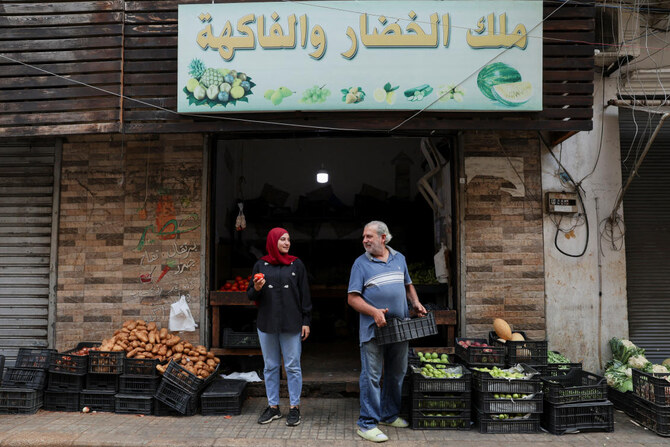
Lebanese already haunted by past traumas fear more catastrophes to come
Short Url
https://arab.news/jx9rq
Lebanese already haunted by past traumas fear more catastrophes to come
- People are now most anxious about the prospect of another full blown conflict between Hezbollah and Israel
- Lebanon took years to rebuild from a 2006 war between the arch-foes which killed 1,200 people in Lebanon

Latest updates


© 2026 SAUDI RESEARCH & PUBLISHING COMPANY, All Rights Reserved And subject to Terms of Use Agreement.