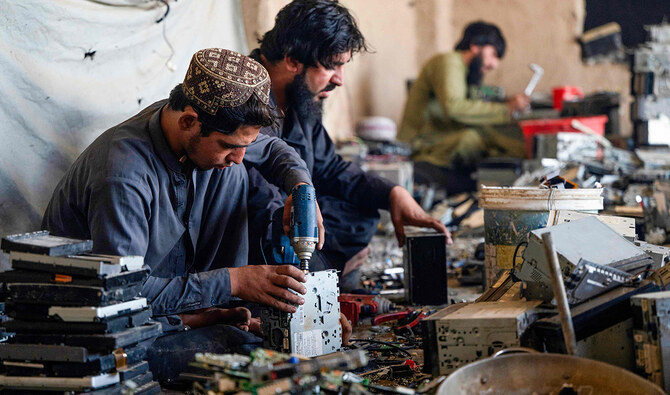

SPIN BOLDAK: Sitting on the floor of a dilapidated workshop in the Afghan border town of Spin Boldak, a group of men break apart discarded electronics to search for the smattering of gold inside.
It’s a profitable, but ultimately doomed trade as modern electronics are increasingly built with cheaper metals.
It’s also a trade that comes with significant health risks.
But soaring gold prices and easier access in recent years to an acid necessary in the hazardous process have sparked a small revival in the industry.
Without the use of gloves or protective masks, the men use pliers or their bare hands to dismantle televisions, computers or mobile phones that have arrived in dumpsters from Japan, Hong Kong or Dubai.
“It takes time...and we don’t have a lot of equipment. It’s a very tiring job,” says Sayed Wali Agha, the 51-year-old boss of the workshop near the border with Pakistan.
The gold — a good thermal and electrical conductor — is extracted from circuit boards and passed down the line to a worker who accumulates the micrograms in a tin basin while another applies acid to strip it clean.
Outside the workshop, toxic yellow smoke rises into the blue sky.
The trade of recycling gold returned along with the Taliban government in 2021, when the acid used to separate the valuable metal from other materials became available again, workers have told AFP.
“In a month we recover 150 grams of gold,” says Sayed. “We sell each gram for 5,600 Afghanis ($79).”
It provides a salary of around $166 a month to each of the 20 staff, an average salary but one which brings with it significant health risks.
In wealthy nations, the same process is achieved safely with the use of technology.
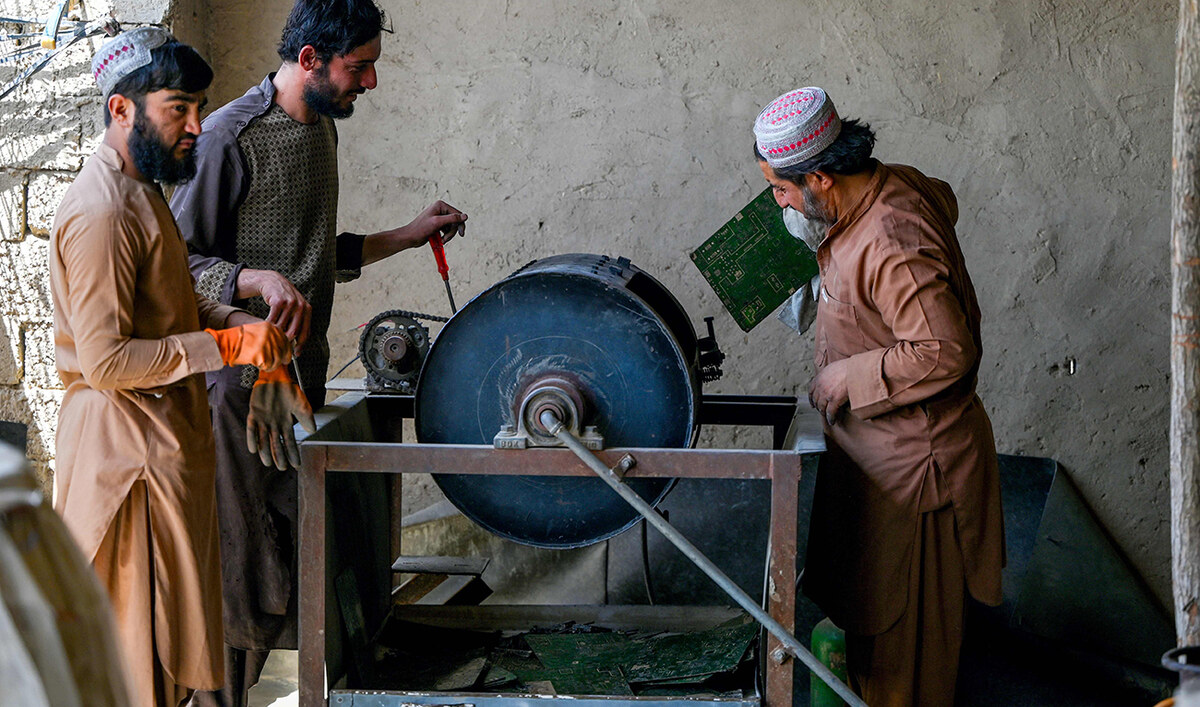
In this photo taken on August 25, 2024, Afghan smelters extract gold from cameras and car navigation screen devices at a furnace in a workshop near the Afghanistan-Pakistan border in Spin Boldak district, Kandahar province. (AFP)
In the neighboring workshop, Rahmatullah also employs around twenty men in equally difficult working conditions, where ten televisions have to be dismantled to reach one gram of gold.
“It is good work, it brings income,” says the 28-year-old, who only gave his first name, but admits it is a business “that has no future.”
One hundred kilometers (62 miles) away, the gold arrives in a jewelry market of Kandahar city where several workshops and stores fill a several-story building.
“It’s very high quality, 24-carat gold,” says Mohammad Yaseen, melting down the precious metal with a blowtorch in a terracotta dish.
But the 34-year-old says the market is receiving less and less gold from Spin Boldak — between 30 and 40 grams a week.
“Japanese electronics contain gold, Chinese electronics do not,” he explains.
“The share of Japanese electronics is decreasing day by day while Chinese electronics are increasing.”
He predicts the recycling of gold will eventually stop, with its use in electronics generally falling due to its cost.
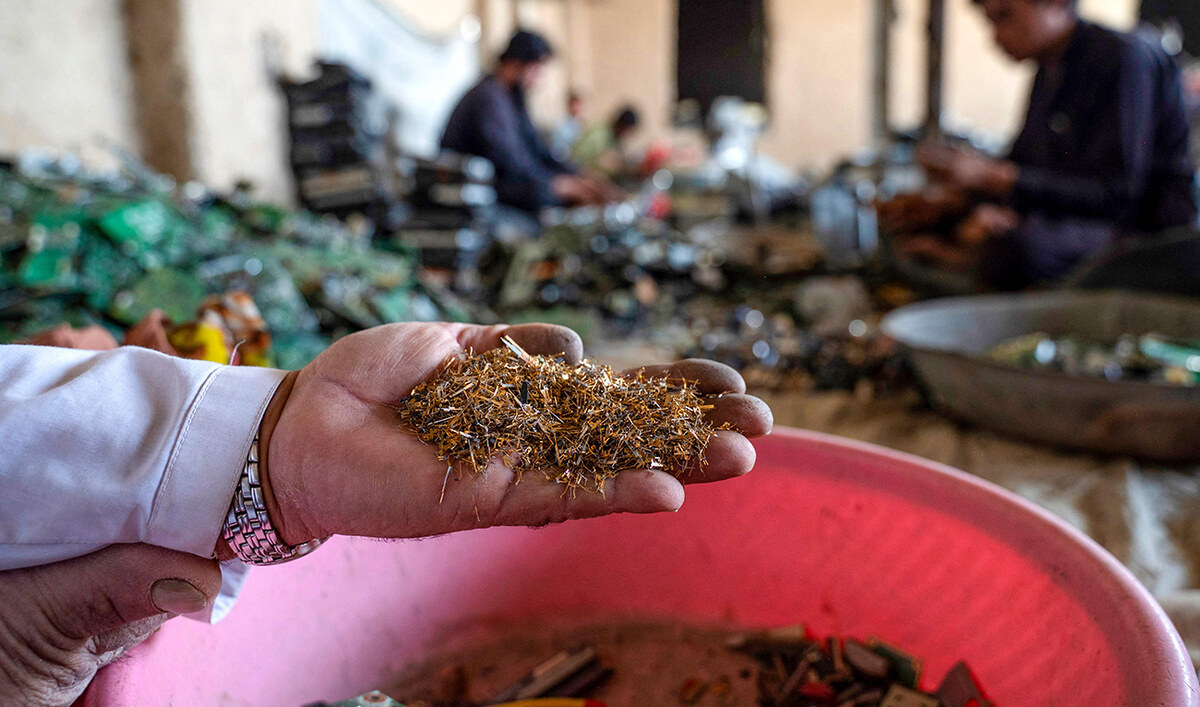
In this photo taken on August 25, 2024, Afghan smelters extract gold from cameras and car navigation screen devices at a workshop near the Afghanistan-Pakistan border in Spin Boldak district, Kandahar province. (AFP)
In one of the poorest countries in the world, the buying and selling of gold is still a thriving business.
At Afghan weddings, brides are adorned with as many gold bangles, necklaces and rings as the families can afford, often getting into debt for years as a result.
“The more weddings there are, the better our business is,” says Mohammad Reza, a 36-year-old jeweller who is working on a rose gold tiara for an engagement.
There are two types of clients, explains Ahmad Shekeb Mushfiqi, the vice president of an association of jewellers in the city, from his shop near the old bazaar of Kandahar.
“People from the city who appreciate elaborate designs and those from the countryside who like simpler designs.”
The tradition of owning jewelry, however, acts as a safety net for all families.
“In times of need, they can resell their gold,” he says.
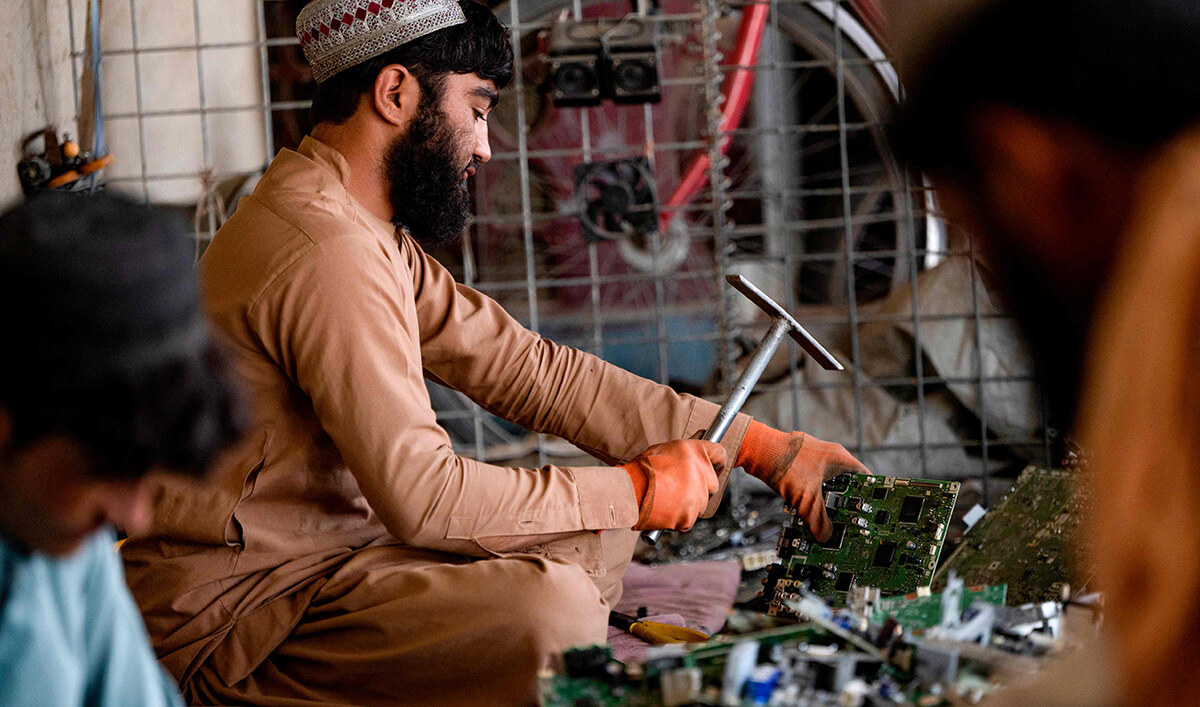
In this photo taken on August 25, 2024, Afghan smelters extract gold from cameras and car navigation screen devices at a workshop near the Afghanistan-Pakistan border in Spin Boldak district, Kandahar province. (AFP)