NEW DELHI: Terrified for her safety, Indian actress Sreelekha Mitra remembers pushing chairs and a sofa against her hotel door after she said an award-winning veteran director sexually harassed her.
Mitra waited 15 years to speak out about the incident, one of several cases exposing the dark underbelly of India’s Malayalam-language “Mollywood” film industry that has won awards at Cannes.
Her revelation was spurred by an explosive government report documenting widespread sexual harassment in an industry dominated by powerful and wealthy men who believe that an actress willing to kiss on screen would do the same in real life.
“That entire night I stayed awake,” Mitra, 51, told AFP.
Mitra was invited to a gathering at the director’s house, where she said he lured her into his room for a phone call with a cinematographer.
“He started playing with my hair and neck... I knew if I did not say anything then, his hand would roam around other parts of my body,” she said, describing events from 2009, when she was 36.
She left and returned to her hotel.
“The intentions behind his moves were pretty clear to me... I was petrified.”
Her case and close to a dozen others have triggered a MeToo reckoning in the industry, with at least 10 prominent figures accused, according to Indian media.
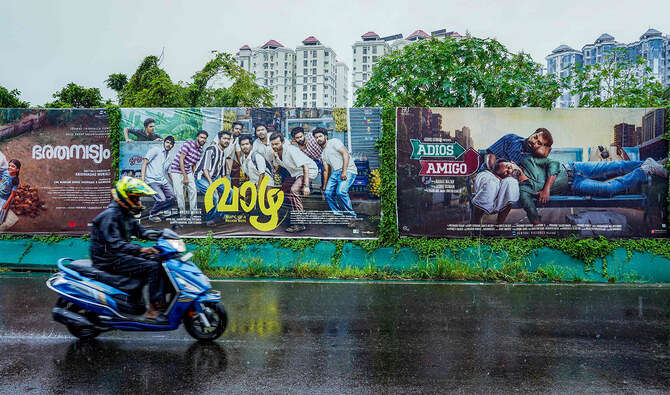
Kerala-based Mollywood is known for critically acclaimed movies with strong and progressive themes, a change from the big dance and song numbers of India’s giant Hindi-language Bollywood in Mumbai.
The industry is prolific, producing up to 200 films a year, loved not only by southern India’s 37 million Malayalam speakers, but also dubbed and streamed across the rest of India and abroad.
Internationally, its films have won awards, including the 1999 satire Marana Simhasanam (“Throne of Death“), winner of the Camera d’Or at Cannes.
This year’s “Manjummel Boys,” a survival thriller, took $29 million at the box office, the highest-grossing Malayalam movie ever and the fifth-most successful in India this year.
The industry report, released August 19, said women actors faced the widespread “worst evil” of sexual harassment.
The report was released by the Hema Committee, headed by a former high court judge, set up after a leading Malayalam actress reported she was sexually assaulted in 2017.
Gopalakrishnan Padmanabhan, a prominent Malayalam actor better known by his stage name Dileep, was arrested for allegedly orchestrating the assault.
He was imprisoned for three months before being released on bail. The case continues.
But the release of the report has opened discussion on the far wider issue of chronic violence against women, encouraging people like Mitra to speak out in public for the first time.
It said that women who considered speaking out about sexual assault were silenced by threats to their life, and to their families.
Award-winning actress Parvathy Thiruvothu, 36, called the investigation a “game changer” and a “historic moment.”
“There was this idea that women working in the industry should feel grateful for having been given an opportunity by the men who were hiring them,” said Thiruvothu, a member of the campaign group Women in Cinema Collective.
Allegations of abuse in Indian cinema are not new.
It witnessed a wave in 2018, shortly after the 2017 MeToo movement erupted in Hollywood against disgraced US movie producer Harvey Weinstein.
But Thiruvothu called the latest allegations more than “MeToo Part Two.”
“It’s shaking everything,” she told AFP. “It isn’t an individual-to-individual complaint anymore. It’s about a systemic structure that has continued to fail women.”
Since the report, several top actors have been accused.
The Association of Malayalam Movie Artists was dissolved following the resignation of its chief on “moral grounds” with some members among the accused.
Ranjith Balakrishnan, 59, chairman of the state’s film academy, has also quit.
Balakrishnan, who denies any wrongdoing, was the man Mitra accused of sexual harassment.
Police have filed a case against him for outraging a woman’s modesty, a non-bailable offense.
Mitra, who until the release of the report had only mentioned the incident to an industry colleague, told AFP that Balakrishnan had misused “his power.”
Thiruvothu offered a message to all women in the film industry who have survived sexual assault.
“You are a skilled artist... do not listen to anyone who tells you to find another job if it is so difficult for you,” she said.
“This is your industry, as much as it is anybody else’s. Speak up, so that we are taking the space that is rightfully ours.”


India’s ‘Mollywood’ cinema rocked by MeToo abuse claims
https://arab.news/zg8eu
India’s ‘Mollywood’ cinema rocked by MeToo abuse claims

- Explosive government report has documented widespread sexual harassment in an industry dominated by powerful and wealthy men
- Case of Sreelekha Mitra and close to a dozen others have triggered a MeToo reckoning in the industry, with 10 prominent figures accused

In the ‘Paris of the Middle East,’ Brigitte Bardot is mourned alongside memories of a golden era
- Bardot’s visit in 1967 coincided with Lebanon’s cultural zenith
- Nation highlighted as center of global style and sophistication
DUBAI, BEIRUT: The death of French film legend Brigitte Bardot at 91 has focused attention on one of the 20th century’s most captivating cultural icons — and a remarkable, if brief, moment when her star power intersected with Lebanon’s own golden age.
In March 1967, Bardot arrived in Beirut for a four-day visit that would briefly place the French screen legend at the heart of a Middle Eastern hotspot of glamor and modernity.

At the time, Beirut was celebrated as the “Paris of the Middle East,” known for its luxuriant hotels, lively nightlife and cosmopolitan mix of cultures.
Mimi Raad, a noted Lebanese image consultant who is the Head of Image Department at MBC1, said to Arab News, “The 60s were considered the Golden Age of Beirut. Lebanese women, known at that time as the most ‘avant-garde’ and stylish women in the Middle East, were fascinated by Brigitte Bardot’s iconic style as well as by her carefree attitude and freedom. The Lebanese high society would look up to the European glamour and Brigitte Bardot was this breath of novelty in style and attitude.”
“Her visits to Lebanon cemented Lebanon's image as a glamorous Mediterranean destination, often compared to Saint-Tropez, reinforcing Beirut's reputation as a cosmopolitan hub and a trendy holiday destination that mirrored the chicest parts of Europe during that era.”
Meanwhile, Lebanese style consultant Hadia Sinno spoke to Arab News about her lifelong admiration of Bardot. “Since I was young, Brigitte Bardot was an icon I deeply admired, not just for her beauty, but for her effortless style, her natural simplicity and that unmistakable French art de vivre. I was always captivated by her look, especially the headbands she wore in her hair and those signature off-the-shoulder tops,” she said.
“For us as Lebanese, there was always a special connection. We have a deep love for French style, and her visit to Lebanon remains a legendary milestone that bridged our two cultures. Beyond the silver screen, she became a force of nature, leading the anti-fur movement that shocked the world and the fashion industry.
“With her flowing skirts, messy hair and playful confidence, she didn’t just wear clothes, she defined an era. A true icon.
“And even though we hadn’t heard much about her in recent years, it was deeply sad to hear of her passing.”

Novelist Hassan Daoud told Arab News, “Beirut at that time was teeming with artistic and cultural life, and some of the city's oldest restaurants still display photographs of famous French and American artists who frequented them.”
Daoud recounted a story from a friend who worked in the General Security Directorate at the time. He said that when Bardot arrived in Beirut by ship and needed to be transferred to a small boat to reach the shore, he helped her by holding her hand. He didn't wash his hands all day so he could retain the feeling of her hand against his own.
Bardot stayed in the famed, five-star Phoenicia Hotel where international celebrities lounged by the pool and rubbed shoulders with jet-set elites. Paparazzi captured her in relaxed celebrity mode by the poolside, emblematic of both her global appeal and Beirut’s vibrant scene.
During her short stay the actress wandered through the old Beirut souk, the bustling marketplace that was then a fusion of merchants selling jewelry, watches, and luxury goods.
She visited Assaad Georges Daou, a jeweler celebrated for designing pieces for royalty and film stars — a testament to Beirut’s reputation as a fashion and style hub in the region.
Bardot also ventured beyond the capital to Byblos, an ancient Phoenician port city with sparkling sea views and historic ruins.
There she strolled the scenic harbor and old souk, sampled local seafood and soaked up seaside leisure that mirrored the relaxed Mediterranean allure she embodied onscreen.
Her departure from Lebanon was part of a Mediterranean cruise. According to some accounts, the voyage was interrupted by mechanical trouble that stranded the vessel briefly at sea.
Researcher and writer Walid Nuwayhid, specializing in philosophy and history, spoke about that era when Beirut was a magnet for actors, artists and intellectuals of various nationalities.
“They came to relax on its famous beaches, including the Saint George pool and the pools in the Ramlet Al-Bayda area, which disappeared with the outbreak of the civil war in the 1970s.
Nuwayhid said, “Famous artists, including Johnny Hallyday, frequented the Phoenicia and Vendome hotels, as well as Zaytouna Street, which was bustling with bars and lively nightlife venues. They also frequented Casino du Liban, the only casino in the Middle East at that time.”
“Lebanon was a location for filming foreign movies and hosted the Beirut International Film Festival. Despite Lebanon's limited resources, the festival held a significant position on the global art scene,” he added.
He further noted, “Beirut Airport was the only major gateway from Europe to Asia at that time. There was no Dubai airport, and Egypt was undergoing socialist nationalization, which prompted the exodus of foreign communities there to leave either to Lebanon or back to Europe. Lebanon was the only refuge because of its openness and the freedom it enjoyed. The generations before us knew the importance of this country, so they built an economy based on providing services that meet needs, it is an economy based on the airport, the port, the printing press, the hospital, the school, and the cafe, all of which provided services to the region and its surroundings, so they left Alexandria and came to Beirut.”

Bardot became a global star after appearing in “And God created Woman” in 1956, and went on to appear in about 50 more movies before retiring in 1973.
Bardot then dedicated over four decades to protecting animals, a mission that resonated with animal welfare groups globally, including in Lebanon.
Beirut for the Ethical Treatment of Animals took to social media to post a heartfelt tribute, greeting her death with “immense sadness” and highlighting her “unwavering commitment” to their mission.
“Today, we say goodbye to Brigitte Bardot — a legendary soul whose love for animals reshaped countless lives. From the silver screen to the front lines of animal welfare, she devoted more than four decades to protecting those who cannot speak for themselves,” the post read.
“Through the Brigitte Bardot Foundation, she turned compassion into action and inspired the world to care more deeply, love more fiercely, and stand up for the voiceless.
“At BETA, we extend our deepest gratitude to Brigitte Bardot and the Brigitte Bardot Foundation for their generous support and unwavering commitment.
“Your kindness strengthened our mission, brought hope where there was despair, and helped save so many precious lives.”
Bardot’s visit left a lasting image of Lebanon as a center of international style and sophistication.


