



ISLAMABAD: Pakistan is rightsizing all government positions from basic pay scale 1 to 22 in a bid to reduce official expenditures, the finance ministry said on Sunday, days after a prominent economist resigned from the government’s austerity committee saying it “lacks commitment” to measures aimed at reviving the economy.
Since avoiding a default last year, Pakistan, faced with low forex reserves, currency devaluation and high inflation, has been making desperate attempts to boost trade and investment to revive its $350 economy, and reached a staff-level agreement with the International Monetary Fund (IMF) in July for a new $7 billion loan to keep the dwindling economy afloat.
The South Asian country formed an austerity committee in Feb. this year to reduce expenditures and implement institutional rightsizing reforms and included Dr. Kaiser Bengali, who has a master’s degree in economics from Boston University, the United States, and a PhD degree in economics from the University of Karachi, in the panel in March.
Dr. Bengali resigned from the committee on Aug. 29 and said in his resignation letter, seen by Arab News, to the Institutional Reform Cell (IRC) secretary that the government “lacks the commitment to reducing expenditures,” but the Pakistani finance ministry said on Sunday that Dr. Bengali’s observations on the recently approved recommendations of the committee reflected a “lack of communication.”
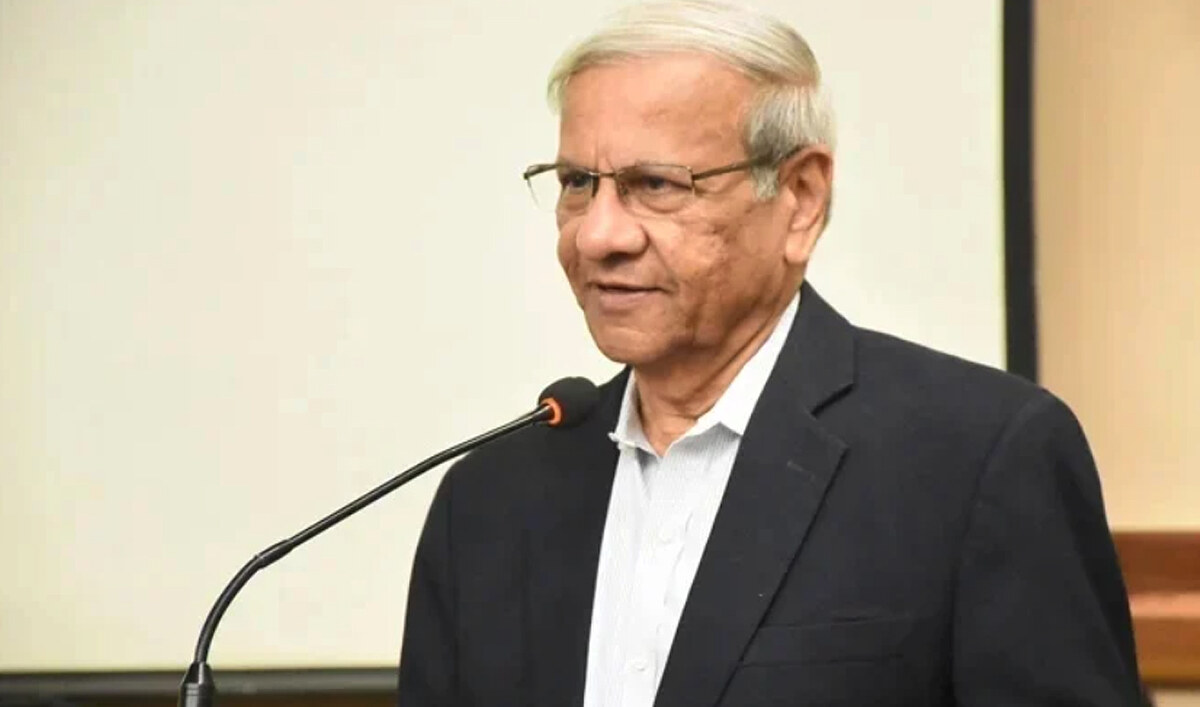
In this file photo, taken on February 20, 2024, Pakistan’s leading economist Dr. Kaiser Bengali speaks at an international conference on the transformation of ideas in Pakistan’s political culture in Karachi. (Photo courtesy: Facebook/Karachi University)
“All government positions in BS-1 to BS-22 are being rightsized, not just positions in BS-1 to 16,” the ministry said, adding that the committee had reviewed six ministries and their entities in the first phase of the rightsizing exercise.
“The estimated 60,000 positions that may be rendered surplus as a result of the exercise also include positions in BS-17 to BS-22.”
The development came a day after Dr. Bengali issued a statement in which he said the government committee had recommended abolishing 150,000 BPS1-16, putting the entire burden of rightsizing on the lower income strata of society, while there was no mention of any of the highly paid positions.
The economist also expressed disappointment that the government committee had only managed to recommend the closure of a “single non-commercial entity” and privatize 17 others out of 70 organizations reviewed in hours-long deliberations.
“The Rightsizing Committee has so far examined six Ministries in the first phase,” the finance ministry said. “One of these Ministries has been approved to be abolished, while two others are being merged, which means that at least two BS-22 and several positions in BS-17 to 21 will be abolished, rendering surplus an equivalent number of officers in same grades.”
It said the government was also working on an “obligatory severance package” in conjunction with requisite amendments in the Civil Servants Act, 1973 to make the package applicable to officials without any favor or preference.
“The rightsizing committee is reviewing ministries, attached departments, autonomous bodies, and state-owned enterprises against the clear criteria assigned to it, objectively and across the board,” the finance ministry added.


