ISLAMABAD: A cyclonic storm, ASNA, that developed in the Arabian Sea has steered away from Pakistan’s commercial hub of Karachi, but it may cause “more severe” rains in the country’s southwestern Balochistan province, Pakistani state media reported on Saturday, citing a top weather official.
The weather system, which developed over India’s Rann of Kutch coast, intensified into the cyclonic storm on Friday. It had drifted westward and was lying at about 230 kilometers southwest of Karachi on Saturday, according to the Pakistan Meteorological Department (PMD).
Chief Meteorologist Dr. Sardar Sarfaraz said despite the cyclone’s trajectory toward Oman, it could cause heavy rains and thunderstorms in the Sindh province, where Karachi is located, but the neighboring Balochistan could face more severe consequences.
“Despite Cyclone ASNA’s trajectory toward Oman, its effects on Pakistan will still be significant,” Sarfaraz was quoted as saying by the state-run APP news agency. “Balochistan, in particular, can expect more severe consequences than Sindh, with intense rainfall.”
In Sindh, the cyclone could impact Karachi, Badin, Thatta, Sujawal, Hyderabad, Tando Mohammad Khan, Tando Allah Yar, Matiari and Jamshoro, while heavy rains and thunderstorms could hit the coastal districts of Hub, Lasbela, Awaran, Kech and Gwadar in Balochistan.
Earlier on Saturday, airport authorities in Karachi directed relocation of all aircraft at the Jinnah International Airport amid a cyclone warning.
Pakistan has already been witnessing monsoon rains, which have claimed 29 lives in Balochistan, 88 in Khyber Pakhtunkhwa, 106 in Punjab, 50 in Sindh, four in Gilgit Baltistan and eight in Azad Jammu Kashmir, according to the National Disaster Management Authority. No loss of lives has been reported in the capital city, Islamabad, so far.
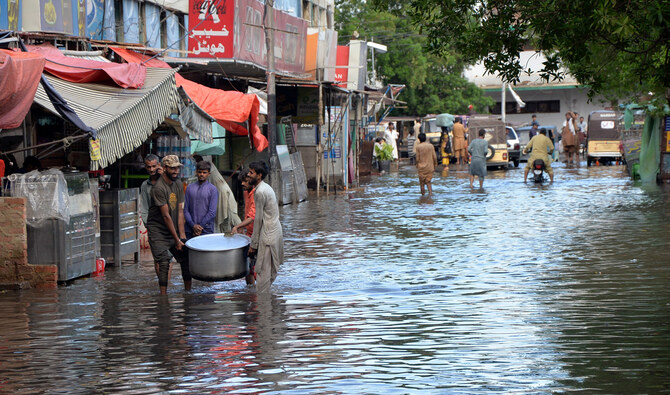
Heavy rains triggered flash floods in Karachi on Friday, causing power outages and closure of schools in the city. A PMD alert on Saturday said heavy rains could inundate low-lying areas of the Makran coast in Balochistan, with sea conditions likely to remain rough.
Pakistan has seen erratic changes in its weather patterns in recent years that scientists have blamed on climate change. This year, the South Asian country recorded its “wettest April since 1961,” with 59.3 millimeters of rainfall, while some areas of the country faced deadly heat waves in May and June.
In 2022, unusually heavy rains triggered floods in many parts of the country, killing over 1,700 people, inflicting economic losses of around $30 billion, and affecting at least 30 million people.


![]()

Cyclone ASNA steers away from Karachi, may cause ‘more severe’ rains in Balochistan — official
Short Url
https://arab.news/8x5nz
Cyclone ASNA steers away from Karachi, may cause ‘more severe’ rains in Balochistan — official
- The weather system has drifted westward and lies at about 230 kilometers southwest of Karachi
- It may cause heavy rains, thunderstorms in Balochistan’s Hub, Lasbela, Awaran, Kech and Gwadar
Latest updates


© 2026 SAUDI RESEARCH & PUBLISHING COMPANY, All Rights Reserved And subject to Terms of Use Agreement.