

Cricket federation aims to attract more Saudi children to the sport

1 / 4
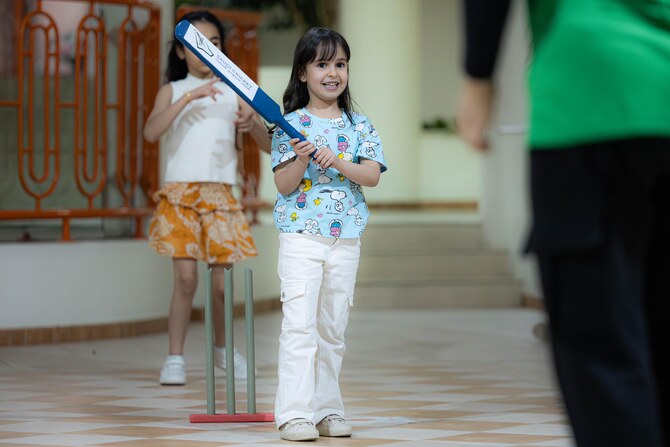
Cricket Saudi's summer camp in schools aims to promote cricket at grassroots level. (Supplied/SACF)
2 / 4
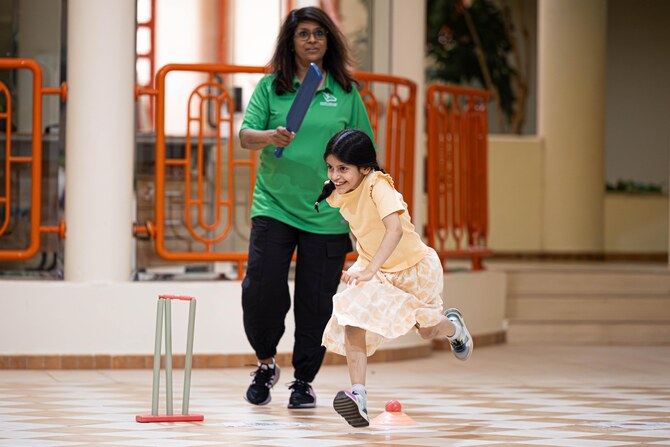
Cricket Saudi's summer camp in schools aims to promote cricket at grassroots level. (Supplied/SACF)
3 / 4
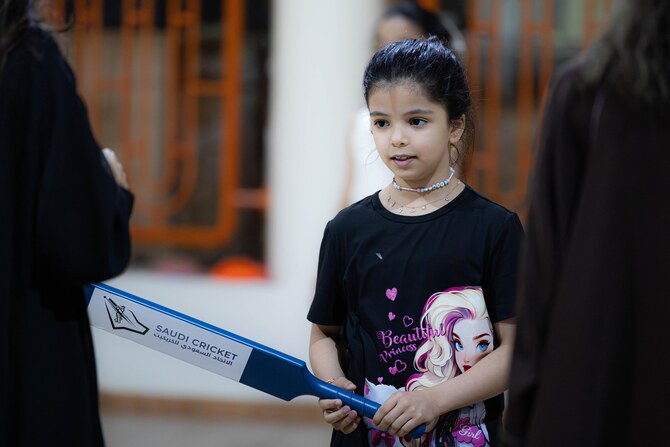
Cricket Saudi's summer camp in schools aims to promote cricket at grassroots level. (Supplied/SACF)
4 / 4
Cricket Saudi's summer camp in schools aims to promote cricket at grassroots level. (Supplied/SACF)
Short Url
Updated 30 August 2024
Follow

Cricket federation aims to attract more Saudi children to the sport

  • We have been working with international schools, and now we are targeting Saudi boys and girls, says coach Kabir Khan

RIYADH: The popularity of cricket is growing among fans and players in the Kingdom, and this year the Saudi Arabian Cricket Federation launched its Schools Cricket program, the aim of which is to promote the sport to boys and girls across the Kingdom.

As part of the program, the SACF recently ran a summer camp at Al-Rowad International Schools that, according to the federation, saw around 100 children take part.

In an exclusive interview with Arab News, SACF head coach Kabir Khan said: “We started our schools program this year. But we have been working closely with all the international embassy schools — like those of Pakistan, India, Sri Lanka and Bangladesh — for the past three years. And now we are targeting Saudi boys and girls.

“We are digging deep into the school system, and more schools are going to be contacted now,” he continued. “Several schools are already aligned, and we are planning go to all the others and engage with as many as we can. We all know, for any sport, if you don’t go deep into schools then you don’t have the junior system, and without a junior team it won’t be a productive and sustainable model. So, to make it more sustainable, and to get more boys and girls to play the game, we have to start from junior cricket and promote cricket at grassroots level.”

Khan said the number of children at the summer camp was “encouraging,” but added that the SACF “has to make an effort as well.”

He said: “It depends a lot on our efforts, so we are focused on how we introduce the game and how we involve them, the new cricketers.” He went on to explain that it was important to stress the fun side of the sport to get children interested, and then “slowly get them to a competitive level.”

One of the biggest challenges the federation has faced is cricket’s image among Saudis.
“There is a general perception that it’s a street game — and a dangerous one as well,” Khan said. “We need to change that perception. Cricket is a sport from England. It’s the national sport in the UK. It’s not a street sport. Basically, it was a game of gentlemen and gradually got famous in different parts of the world. Now, it’s the second biggest sport in the world.”

Cricket is hugely popular across the globe, second only to soccer as the most-watched sport. It has been played in Saudi Arabia for decades, but mainly by expatriate workers from the South Asian countries. Now Khan hopes Saudi children will take it up.

“We are providing proper playgrounds, academies, and a safe environment for all the kids who want to play — whether as a hobby or (with a view to making it) a career. It has got a lot of potential,” he said.

“Saudi schools are going to play a huge role in the future of Saudi Arabian cricket, for both males and females, as part of the vision of our chairman, Prince Saud bin Mishal Al-Saud, and our CEO, Tariq Ziad Sagga. This year, we are just contacting (schools) and creating events. We want all the boys and girls to play for fun and start slowly. Step by step we will make pathways for them so that they go to the national team,” he continued. “In 10 years, we hope there will be enough numbers for the senior male and female national teams to represent Saudi Arabia and make a name for the nation, for them, their families, and for us as well.

“I should say that we don’t want Saudis — whether male or female — in the junior or senior teams just because they are Saudis. We want to train them as hard as we can. And obviously we want people to see that they are talented, that they can perform, and that they are good enough to represent their country,” added Khan. “We don’t just want them to participate; we want them to perform and win as well. That might take a bit of time, but we want to have Saudis reach the highest level. We want them to be as good as anyone in the game.”


Young future stars of Saudi golf enjoy a moment alongside the big names at LIV Golf Riyadh

Updated 07 February 2026
Follow

Young future stars of Saudi golf enjoy a moment alongside the big names at LIV Golf Riyadh

  • Participants in ROSHN Rising Stars program to develop golfing talent in the Kingdom play friendly competition at Riyadh Golf Club before round 3 of the season opener tees off
  • ‘Golf is such a fundamental sport for development … The values of golf can be correlated to the values of society: confidence, resilience and integrity,’ says LIV Golf’s Jake Jones

RIYADH: While much of the spotlight during LIV Golf’s 2026 season opener in Riyadh this week has of course been on the return of some of the sport’s biggest names for the new campaign, a new generation of Saudi golfers is also quietly taking its own first steps into the game.

Participants in the ROSHN Rising Stars program, an initiative designed to introduce and develop young golfing talent across the Kingdom, gathered at Riyadh Golf Club on Friday afternoon for a friendly competition a few hours before the third round of the main event teed off under the lights.

“The real focus is getting golf into the lives of young people in the Kingdom,” Jake Jones, LIV Golf’s senior vice president of impact and sustainability told Arab News as the young golfers took to the course under cloudy skies.

“We wanted to do something a little bit different, something sustained, with a long-term outcome, and that’s how this program was created.”

The program runs for 20 weeks, during which the participants receive weekly coaching and instruction sessions at Riyadh Golf Club from Golf Saudi professionals.

“This takes them from never having held a golf club before to reaching a point where they’ve now played in a competition,” Jones said.

The fact that the LIV Golf season opens in Riyadh provides another key benefit for the participants, as they get to experience the professional game up close, and this access to world-class players and events forms a key part of their journey.

“We give them exposure to our LIV Golf events, here and internationally,” Jones added.

Beyond this, and teaching people how to play the game, the program offers participants insights into the wider aspects of the world of golf, including career opportunities.

“They’ve had behind-the-scenes tours, pitch-and-putt sessions, long-drive competitions and visits to places like the media center,” Jones said. “It’s about showing them what it’s like not just to play golf, but work in the sport as well.”

Friday’s event in Riyadh marked the conclusion of the 20-week program for its participants.

“Today is really the celebration point,” Jones said. “We’re at the graduation phase of this journey, where they’ll compete in a three-hole challenge. We then crown a winner and celebrate with them back at the ROSHN Fan Village.”

As golf continues to grow in popularity in the region, Jones believes initiatives such as Rising Stars will have a lasting effect on the development of next generation of players.

“Golf is such a fundamental sport for development; it’s not just about physical activity and having fun,” he said. “The values of golf can be correlated to the values of society: confidence, resilience and integrity.

“Imagine playing golf and you miss the ball or you end up in the sand; you have to get back up and try again. You block the noise around you and focus on the ball to make the right shot.”

Jones highlighted in particular the importance of integrity as one of golf’s defining characteristics, and how that can help shape personal development.

“The rules of golf are reliant on you following them,” he said. “That sense of honesty and self-discipline is something young players can carry beyond the course” into the roles they play in their communities, societies and countries.

“The role that golf can have with young people in Saudi Arabia is actually another layer of baking in those core societal skills, to ensure that they are fit and robust for the future,” Jones added.

This is particularly important given the youthful nature of the Saudi population, more than half of which is under the age of 30, he said, and they now have the chance to benefit from golf in one way or another.

“Golf is now another avenue that they can explore. Whether it’s playing, working in the sport or simply finding a community, we want to give them another reason to get excited.

“We believe that golf can do all of that and, hopefully, it can spark a lasting passion among the Saudi youth.”