NAIROBI: Ethiopia on Wednesday warned that a new African Union-led mission for Somalia could worsen tensions in volatile East Africa, after Egypt said it sent military aid to the conflict-ridden nation.
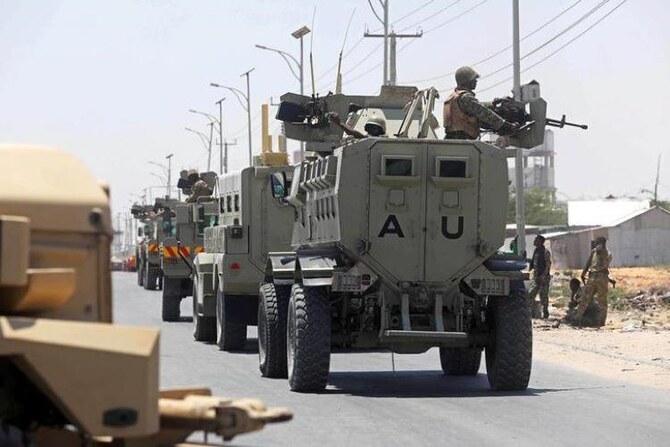
The new mission, known as AUSSOM, is due to replace in January an AU peacekeeping force that is deployed in Somalia to fight the Al-Shabab extremist group.
Addis Ababa warned it was “fraught with dangers” and accused Somalia of colluding with unnamed actors seeking to destabilize the volatile Horn of Africa.
The concern came after Egypt — which has long been at odds with Ethiopia — sent military equipment to Somalia in a move likely to escalate tensions between Cairo and Addis Ababa.
“The region is entering into uncharted waters,” Ethiopia’s foreign ministry said in a statement.
“Ethiopia cannot stand idle while other actors are taking measures to destabilize the region,” it said, adding that it was monitoring the developments.
Cairo and Addis Ababa have been at loggerheads for years, trading incendiary words over Ethiopia’s mega-dam project on the Blue Nile, which Egypt says threatens its fragile water security.
Egypt has long viewed the massive $4.2-billion dam as an existential threat, as it relies on the Nile for 97 percent of its water needs.
Protracted negotiations over the dam since 2011 have thus far failed to bring about an agreement between Ethiopia and its downstream neighbors.
Relations between Mogadishu and Addis Ababa also nosedived after Ethiopia in January struck a controversial maritime deal with the breakaway Somali region of Somaliland.
Somaliland, a former British protectorate of 4.5 million people, has not had its independence claim recognized by the international community.
Egypt and Somalia have meanwhile drawn closer together and signed a military cooperation agreement this month.
It was not immediately clear what Egypt had sent to Somalia but Somali ambassador to Egypt Ali Abdi on Wednesday lauded the consignment as important.
“It is the first practical step to implement the outcomes of the Egyptian-Somali summit held recently in Cairo between President Hassan Sheikh Mahmoud and President Abdel Fattah El-Sisi,” the statement quoted Abdi as saying.
He added that Egypt will be the first country to deploy forces to support the Somali security after the withdrawal of the current AU force, known as ATMIS, according to a statement published by local media.
ATMIS, which operates with a mandate from the AU but is also mandated by the UN Security Council, is due to fully withdraw and hand over security responsibilities to the Somali army and police by the end of 2024.
The mission comprises troops from Burundi, Djibouti, Ethiopia, Kenya and Uganda.

Ethiopia fears ‘dangers’ of new Somalia peace mission
Short Url
https://arab.news/9f5gk
Ethiopia fears ‘dangers’ of new Somalia peace mission
- New mission, known as AUSSOM, is due to replace in January an AU peacekeeping force that is deployed in Somalia to fight the Al-Shabab extremist group
- Addis Ababa warned it was ‘fraught with dangers’ and accused Somalia of colluding with unnamed actors seeking to destabilize the volatile Horn of Africa
Sarkozy describes his prison stay and advises on appealing to the far right in his new book
PARIS: Former French President Nicolas Sarkozy described the prison where he spent 20 days as a noisy, harsh “all-grey” world of “inhuman violence” in a book released Wednesday that also offered political advice about how his conservative party should appeal to far-right voters.
In “Diary of a Prisoner,” the 70-year-old says his own tough-on-crime stance has taken on a new perspective as he recounts the uncommon turn in his life after being found guilty of criminal association in financing his winning 2007 campaign with funds from Libya.
The court sentenced him in September to five years in prison, a ruling he appealed. He was granted release under judicial supervision after 20 days behind bars.
The book provides a rare look inside Paris’ La Santé prison, where Sarkozy was held in solitary confinement and kept strictly away from other inmates for security reasons. His loneliness was broken only by regular visits from his wife, supermodel-turned-singer Carla Bruni-Sarkozy, and his lawyers.
Sarkozy wrote that his cell looked like a “cheap hotel, except for the armored door and the bars,” with a hard mattress, a plastic-like pillow and a shower that produced only a thin stream of water. He described the “deafening noise” of the prison, much of it at night.
Opening the window on his first day behind bars, he heard an inmate who “was relentlessly striking the bars of his cell with a metal object.”
“The atmosphere was threatening. Welcome to hell!”
Sarkozy said he declined the meals served in small plastic trays along with a “mushy, soggy baguette” — their smell, he wrote, made him nauseous. Instead, he ate dairy products and cereal bars. He was allowed one hour a day in a small gym room, where he mostly used a basic treadmill.
Sarkozy says he was informed of several violent incidents that took place during his time behind bars, which he called “a nightmare.”
“The most inhumane violence was the daily reality of this place,” he wrote, raising questions about the prison system’s ability to reintegrate people once their sentences are served.
Sarkozy, known for his touch rhetoric on punishing criminals, said he promised himself that “upon my release, my comments would be more elaborate and nuanced than what I had previously expressed on all these topics.”
Political reflections
Beyond recounting prison life, Sarkozy used the book to offer strategic political advice for his conservative Republicans party and revealed he spoke by phone from prison with far-right leader Marine Le Pen, once a fierce rival.
Le Pen’s National Rally is “not a danger for the Republic,” he wrote. “We do not share the same ideas when it comes to economic policy, we do not share the same history … and I note that there may still be some problematic figures among them. But they represent so many French people, respect the results of the elections and participate in the functioning of our democracy.”
Sarkozy argued that the reconstruction of his weakened Republicans party “can only be achieved through the broadest possible spirit of unity.”
The Republicans party has in recent years been moving away from a position held among parties for decades that any electoral strategy must be aimed at containing the far right, even if it means losing a district to another competitor.
Still, political analyst Roland Cayrol said Sarkozy’s comments came like “a thunderclap” in the decades-long position of French conservatives that the National Rally doesn’t “share the same values” and “no electoral alliance is possible” with the far right.
The former president from 2007 to 2012 has been retired from active politics for years but remains very influential, especially in conservative circles.
In the wake of Sarkozy’s comments, the Republicans’ top officials have stopped short of calling for any actual cooperation deal with the National Rally, but instead indicated they want to focus on ways to get far-right voters to choose conservative candidates.
Strained ties with Macron
Sarkozy also mentioned his former friendship with centrist President Emmanuel Macron. The two men met at the Élysée presidential palace just days before Sarkozy entered prison.
According to Sarkozy, Macron raised security concerns at La Santé prison and offered to transfer him to another facility, which he declined. Instead, two police officers were assigned to the neighboring cell to protect him around the clock.
Sarkozy said he lost trust in Macron after the president did not intervene to prevent him from being stripped of the Legion of Honor, France’s highest distinction, in June.
Last month, Sarkozy was convicted of illegal campaign financing of his 2012 reelection bid, in a major blow to his legacy and reputation. He was sentenced to a year in prison, half of it suspended, which he now will be able to serve at home, monitored with an electronic bracelet or other requirements to be set by a judge.
Last year, France’s top court upheld an appeals court decision that had found Sarkozy guilty of trying to bribe a magistrate in exchange for information about legal proceedings in which he was involved.
In “Diary of a Prisoner,” the 70-year-old says his own tough-on-crime stance has taken on a new perspective as he recounts the uncommon turn in his life after being found guilty of criminal association in financing his winning 2007 campaign with funds from Libya.
The court sentenced him in September to five years in prison, a ruling he appealed. He was granted release under judicial supervision after 20 days behind bars.
The book provides a rare look inside Paris’ La Santé prison, where Sarkozy was held in solitary confinement and kept strictly away from other inmates for security reasons. His loneliness was broken only by regular visits from his wife, supermodel-turned-singer Carla Bruni-Sarkozy, and his lawyers.
Sarkozy wrote that his cell looked like a “cheap hotel, except for the armored door and the bars,” with a hard mattress, a plastic-like pillow and a shower that produced only a thin stream of water. He described the “deafening noise” of the prison, much of it at night.
Opening the window on his first day behind bars, he heard an inmate who “was relentlessly striking the bars of his cell with a metal object.”
“The atmosphere was threatening. Welcome to hell!”
Sarkozy said he declined the meals served in small plastic trays along with a “mushy, soggy baguette” — their smell, he wrote, made him nauseous. Instead, he ate dairy products and cereal bars. He was allowed one hour a day in a small gym room, where he mostly used a basic treadmill.
Sarkozy says he was informed of several violent incidents that took place during his time behind bars, which he called “a nightmare.”
“The most inhumane violence was the daily reality of this place,” he wrote, raising questions about the prison system’s ability to reintegrate people once their sentences are served.
Sarkozy, known for his touch rhetoric on punishing criminals, said he promised himself that “upon my release, my comments would be more elaborate and nuanced than what I had previously expressed on all these topics.”
Political reflections
Beyond recounting prison life, Sarkozy used the book to offer strategic political advice for his conservative Republicans party and revealed he spoke by phone from prison with far-right leader Marine Le Pen, once a fierce rival.
Le Pen’s National Rally is “not a danger for the Republic,” he wrote. “We do not share the same ideas when it comes to economic policy, we do not share the same history … and I note that there may still be some problematic figures among them. But they represent so many French people, respect the results of the elections and participate in the functioning of our democracy.”
Sarkozy argued that the reconstruction of his weakened Republicans party “can only be achieved through the broadest possible spirit of unity.”
The Republicans party has in recent years been moving away from a position held among parties for decades that any electoral strategy must be aimed at containing the far right, even if it means losing a district to another competitor.
Still, political analyst Roland Cayrol said Sarkozy’s comments came like “a thunderclap” in the decades-long position of French conservatives that the National Rally doesn’t “share the same values” and “no electoral alliance is possible” with the far right.
The former president from 2007 to 2012 has been retired from active politics for years but remains very influential, especially in conservative circles.
In the wake of Sarkozy’s comments, the Republicans’ top officials have stopped short of calling for any actual cooperation deal with the National Rally, but instead indicated they want to focus on ways to get far-right voters to choose conservative candidates.
Strained ties with Macron
Sarkozy also mentioned his former friendship with centrist President Emmanuel Macron. The two men met at the Élysée presidential palace just days before Sarkozy entered prison.
According to Sarkozy, Macron raised security concerns at La Santé prison and offered to transfer him to another facility, which he declined. Instead, two police officers were assigned to the neighboring cell to protect him around the clock.
Sarkozy said he lost trust in Macron after the president did not intervene to prevent him from being stripped of the Legion of Honor, France’s highest distinction, in June.
Last month, Sarkozy was convicted of illegal campaign financing of his 2012 reelection bid, in a major blow to his legacy and reputation. He was sentenced to a year in prison, half of it suspended, which he now will be able to serve at home, monitored with an electronic bracelet or other requirements to be set by a judge.
Last year, France’s top court upheld an appeals court decision that had found Sarkozy guilty of trying to bribe a magistrate in exchange for information about legal proceedings in which he was involved.
© 2025 SAUDI RESEARCH & PUBLISHING COMPANY, All Rights Reserved And subject to Terms of Use Agreement.


