

Saudi tourism launches travel roadshow in Malaysia

The Saudi Tourism Authority launches a travel roadshow at the IOI Mall in Putrajaya, Malaysia’s administrative capital, on Aug. 28, 2024. (AN Photo)
Short Url
Updated 28 August 2024
Follow

Saudi tourism launches travel roadshow in Malaysia

  • 5-day event spotlights Kingdom’s main heritage and cultural sites
  • Tens of thousands of Malaysians visit Saudi Arabia every year for Hajj and Umrah

PUTRAJAYA: The Saudi Tourism Authority launched a travel roadshow in Malaysia on Wednesday, inviting visitors to explore the Kingdom’s top heritage destinations and thriving sports and entertainment scene.

The Saudi tourism sector has been thriving under Vision 2030, as the Kingdom positions itself as a dynamic, diverse, year-round tourism destination and market that will contribute 10 percent to gross domestic product by 2030.

The STA’s event, which will run through Sunday, is being held at the IOI Mall in Putrajaya, Malaysia’s administrative capital, where more than a dozen cubicles and booths present different tourist and cultural attractions.

“We are here to send a message to all the Malaysian people ... to welcome them to come to Saudi (Arabia),” Alhasan Aldabbagh, STA president for Asia-Pacific markets, said during the exhibition’s launch.

Touting the Kingdom as one of the fastest-growing tourism destinations, he said that Malaysia was one of the countries whose citizens could easily apply for an electronic visa to enter Saudi Arabia.

“Malaysians can go online by themselves and get the e-visa within minutes,” he said.
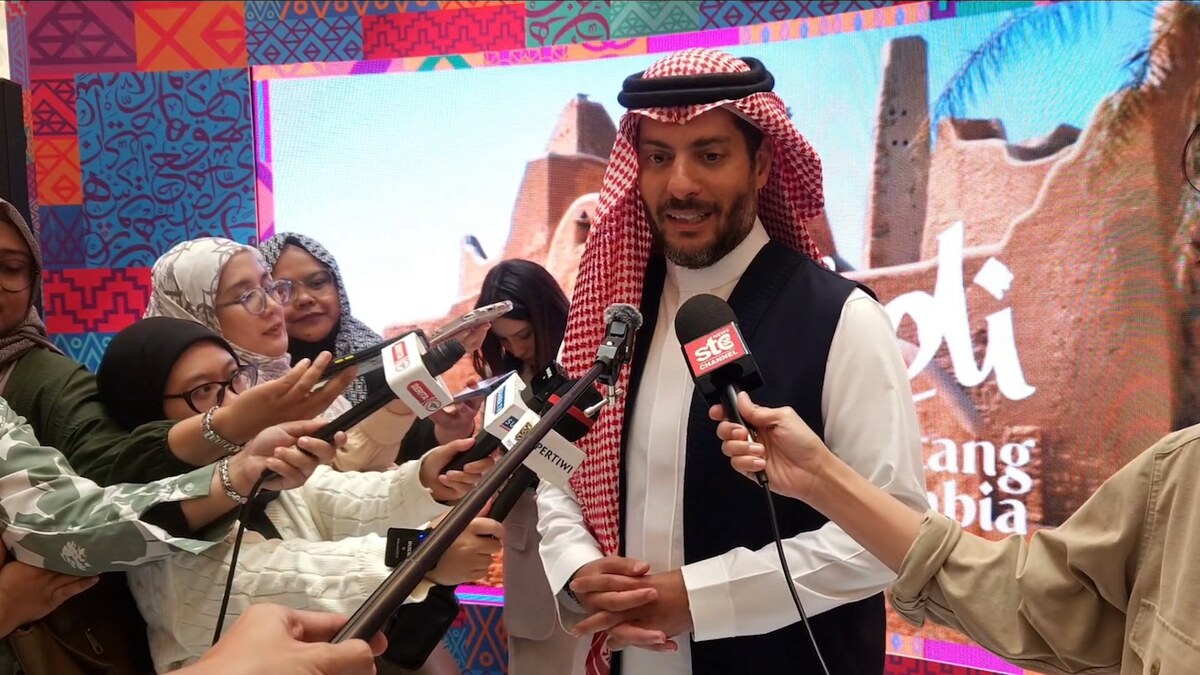


Alhasan Aldabbagh, STA president for Asia-Pacific markets, speaks to Malaysian reporters in Putrajaya on Aug. 28, 2024. (AN Photo)

Tourists from Southeast Asia have made a beeline for the Kingdom, with more than 1.5 million people from across the region visiting Saudi Arabia every year.

Tens of thousands of visitors from Malaysia travel to the Kingdom every year to perform the Hajj and Umrah pilgrimage.

Many curious Malaysians who stopped by the exhibition were greeted with dates and gahwa, the traditional Arabic coffee. They were invited to also explore the Kingdom’s heritage sites and numerous sports and entertainment events.

“There is a lot that Saudi is offering today. Saudi is very rich in culture and heritage,” Aldabbagh said, adding that there were a lot of attractions to go with Riyadh Season — a series of entertainment, cultural and sporting events that run in the Saudi capital throughout the winter months, starting in October.

“In March 2025, we will also host Formula One.”

The Malaysia roadshow follows similar events held by the STA in other Asian countries over the past few years.

In May, it launched its first show exhibition in Indonesia, and in June signed an agreement with a leading Saudi investment company to develop an integrated residential ecosystem with accommodation offerings tailored to visitors from China.

Since early 2023, the STA has also intensified promotional activity in India, which is expected to become the Kingdom’s top tourism source market by 2030.


Report highlights role of British Muslim charitable giving in supporting UK public services

Updated 7 sec ago
Follow

Report highlights role of British Muslim charitable giving in supporting UK public services

  • The study, “Building Britain: British Muslims Giving Back,” finds that donations from British Muslims are helping to bolster overstretched service

LONDON: British Muslim charitable giving is playing an increasingly significant role in supporting frontline public services across the UK, according to a new report by policy and research organization Equi.

The study, “Building Britain: British Muslims Giving Back,” finds that donations from British Muslims are helping to bolster overstretched services, including local councils, the NHS and welfare systems, at a time of growing financial pressure.

The report estimates that Muslim donors contribute around £2.2 billion ($2.9 billion) annually, making them the UK’s most generous community.

This figure is around four times the national giving average and rises to almost 10 times the average among higher earners.

According to the findings, Muslim-led charities are providing a wide range of support, including housing assistance, emergency cash grants, food provision and mental health services, easing demand on statutory services.

Equi points to evidence from 2023 showing that housing support delivered by the National Zakat Foundation helped prevent evictions that would have cost councils an estimated £28.8 million, with every £1 of charitable spending generating £73 in public sector savings.

The report also highlights a generational shift, with younger British Muslims increasingly directing their donations toward domestic causes such as homelessness, child poverty and mental health challenges.

Despite their growing impact, Muslim charities face a number of barriers, including de-banking, restrictive funding rules, securitization measures and what the report describes as limited recognition from government. Equi argues that these challenges are constraining the sector’s ability to maximize its contribution.

“British Muslim giving is not just generosity but a lifeline for public services that needs recognizing,” said Equi Managing Director Prof. Javed Khan.

“From preventing evictions to supporting mental health, these donations are saving millions for the taxpayer and strengthening communities across Britain. The evidence is clear that Muslim-led action is delivering frontline support where the state is struggling,” he added.

Equi is calling on policymakers to engage more closely with Muslim-led charities and to move beyond what it describes as symbolic recognition.

The report recommends measures such as UK-based match-funding schemes and greater faith literacy within policymaking, which it says could unlock billions of pounds in additional domestic spending while maintaining the UK’s global humanitarian commitments.

The study concluded that with greater collaboration between government and Muslim charities, charitable giving could play an even more transformative role in strengthening public services and social cohesion across the country.