



ISLAMABAD: Traders in Pakistan went on strike today, Wednesday, shutting down their businesses in all major cities and urban areas to protest a rise in electricity costs, new taxes imposed on shop owners and brisk inflation.
Most of the public markets across the country remained shut, though pharmacies and grocery stores selling basic food items were open. Stores were shuttered in the Pakistani capital of Islamabad, the nearby garrison city of Rawalpindi, as well as in the city of Lahore, the country’s culture capital, and the main economic hub of Karachi.
Traders in the northwestern Khyber Pakhtunkhwa and the southwestern Balochistan provinces observed a partial strike, keeping some stores open while closing others. The strike call was backed by a major Pakistani religio-political party, the Jamaat-e-Islami (JI), as well as the opposition Pakistan Tehreek-e-Insaf party.
In Pakistan’s financial hub Karachi, the Anjuman-e-Tajiran Sindh announced the complete closure of business while most main markets in the city remained closed through the day and traffic on the roads was thin around usually busy bazaars.
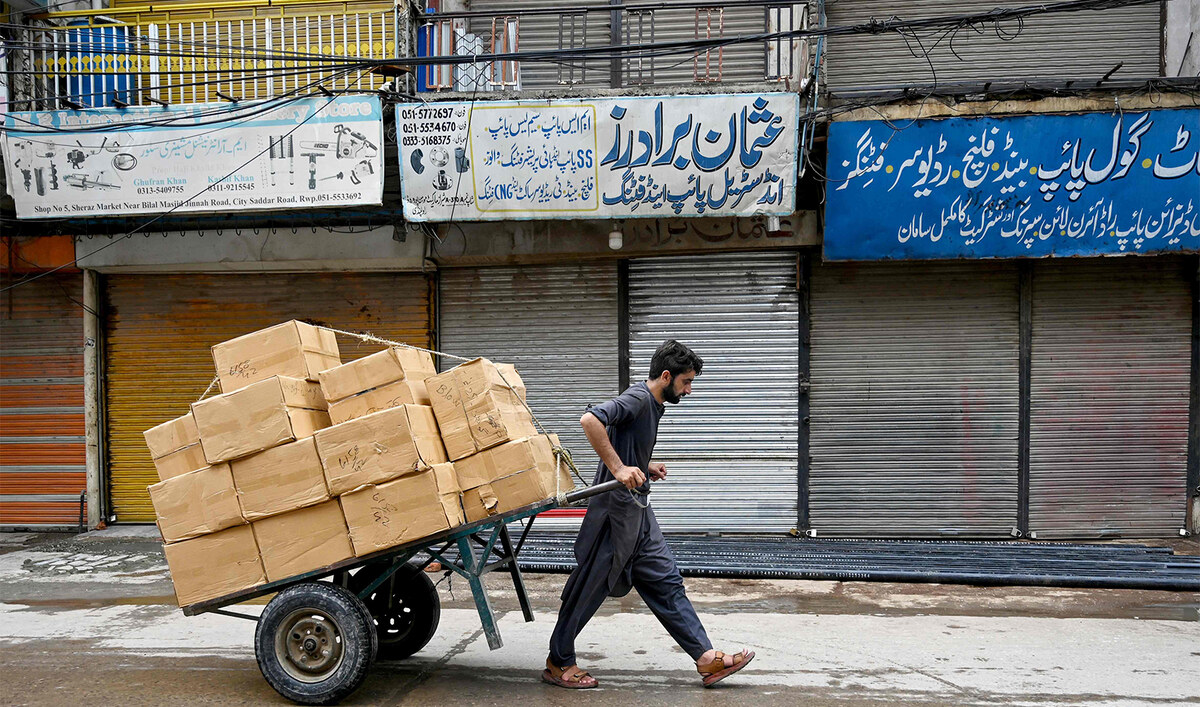
A labourer pulls a hand cart past closed shops at a market in Rawalpindi on August 28, 2024, amid a nationwide strike by trade organizations against high electricity bills, excessive taxes and absence of business-friendly policies. (AFP)
“From Karachi to Khyber, in all cities of the country, it was a completely successful shutter-down [strike],” Kashif Chaudhary, president of the Markazi Tanzeem-e-Tajran Pakistan, a leading trade union, told Arab News.
“In all cities and villages about 10 million shops and businesses were totally closed today,” he said, adding that money transactions around Rs500 billion did not take place due to the strike.
Chaudhary said traders would announce the next phase of their protest movement if the government failed to address their demands, which included the withdrawal of taxes on retailers and slashing electricity prices.
“We can announce a march to Islamabad of hundreds of thousands of traders from Karachi to Khyber,” he said. “We can also decide to shut down this country’s industries and businesses for an indefinite period.”
A complete shutter-down strike was observed in Baluchistan’s provincial capital of Quetta, where business markets remained closed for the entire day and traffic remained thin on the streets.
Abdul Rahim Kakar, president of the traders union of Balochistan, said if the government doesn’t fulfill traders’ demands, the strikes could escalate into protests and sit-ins.
“The traders in Balochistan have followed the call by the central trade union and business activities were completely shut across the province,” Kakar told Arab News.
In KP’s provincial capital Peshawar and other major cities of the province, traders observed a partial strike as some shops including groceries and pharmacies remained open.
Addressing a traders’ protest demonstration in Charsadda, Khyber Pakhtunkhwa, Awami National Party’s President Aimal Wali Khan said inflation was at its peak while heavy taxes were imposed on the public and businessmen.
“The decision to impose monthly tax on retailers should be withdrawn immediately,” he demanded, extending full support to traders.
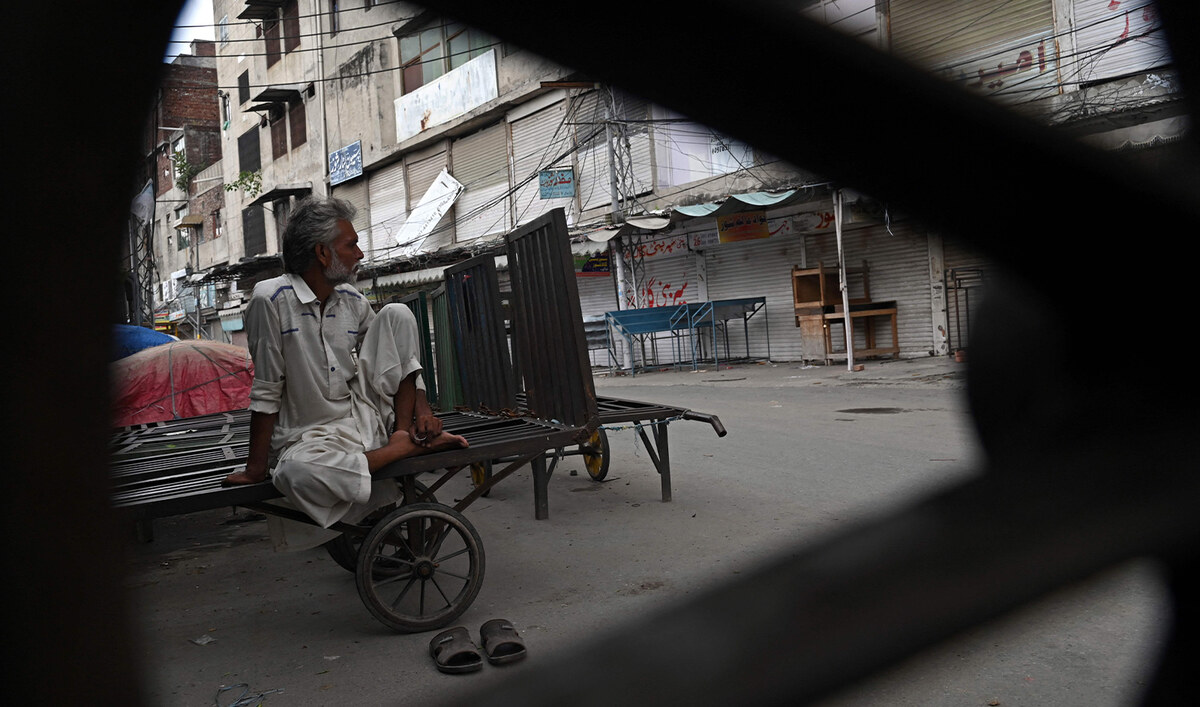
A labourer sits in a closed market area during a nationwide strike called by trade organizations against the high electricity bills, excessive taxes, and the absence of business-friendly policies, in Lahore on August 28, 2024. (AFP)
“WILL NOT STOP HERE”
A two-week-long sit-in by the JI in Rawalpindi to pressure the government to cut electricity bills and retract new taxes imposed in the budget 2024-25 was called off earlier this month after the party reached an agreement with the federal government.
As per the deal, the government promised to form a mechanism to reduce electricity prices and review contracts with independent power producers (IPPs) within 45 days. IPP agreements have come under scrutiny in recent weeks as households have received steep electricity bills. Many members of the public and independent policy analysts say Pakistan has been saddled with electricity bills it has no possibility of paying because of faulty contracts signed with IPPs, which produce expensive power.
“The Jamaat-e-Islami had given this call for a strike against inflation, inflated electricity bills and policies against traders,” JI spokesperson Amir Baloch told Arab News.
“This will not stop here but under the “Give People Their Rights” movement, we will go to the traders and lawyers community as well as those belonging to every section of the society.”
Tough measures that are part of a 37-month $7 billion loan program IMF bailout deal signed last month, such as raising tax on agricultural incomes and raising electricity prices, have also prompted concerns about poor and middle class Pakistanis grappling with rising inflation and the prospect of higher taxes.
The government raised power prices 26 percent during the last fiscal year, which ended June 30, before tacking on another 20 percent increase on July 13. Officials say the increases were needed to meet conditions set by the International Monetary Fund for a $7 billion loan deal reached last month.
The government has also added a confusing bevy of taxes on top of the base price, adding up to a bill that has more than doubled for some Pakistanis.


