

Qassim region produces 35% of Saudi Arabia’s dates

1 / 3
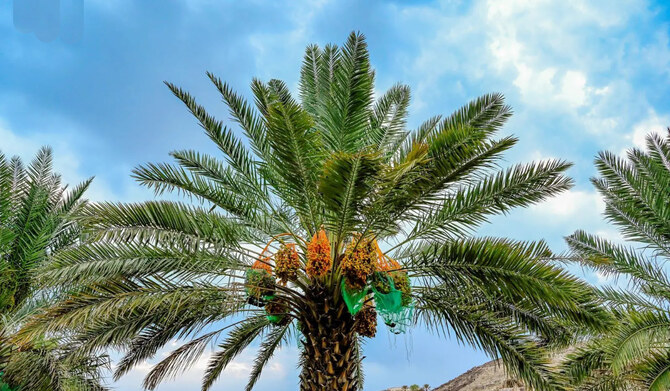
Palm farmers in Qassim are renowned for their commitment to quality and variety, cultivating over 80 distinct date varieties. (SPA)
2 / 3
Palm farmers in Qassim are renowned for their commitment to quality and variety, cultivating over 80 distinct date varieties. (SPA)
3 / 3
Palm farmers in Qassim are renowned for their commitment to quality and variety, cultivating over 80 distinct date varieties. (SPA)
Short Url
Updated 27 August 2024
Follow

Qassim region produces 35% of Saudi Arabia’s dates

  • The Ministry of Environment, Water and Agriculture branch in Qassim plays a pivotal role in supporting the region’s palm cultivation efforts

RIYADH: Qassim region, renowned for its fertile soil, abundant freshwater, and favorable climate, has flourished as a hub for palm cultivation.

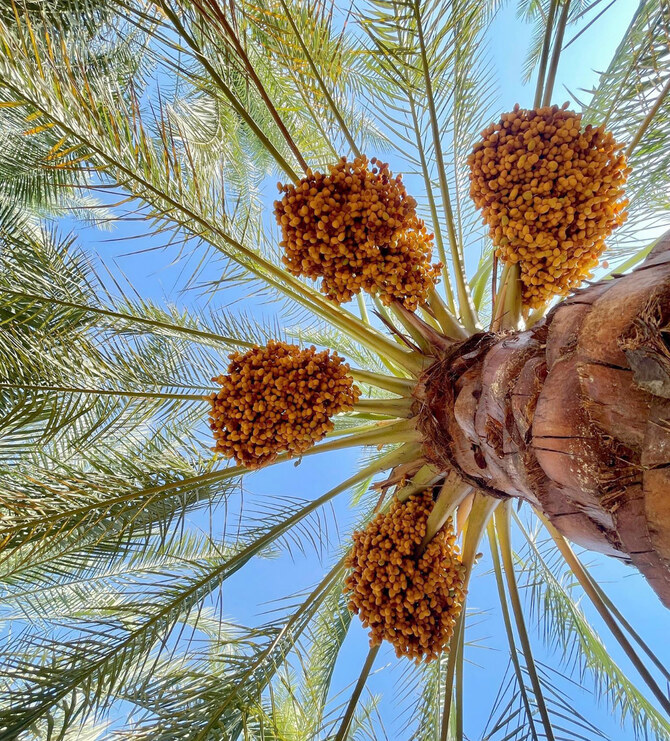
Home to over 11 million palm trees, the region produces approximately 528,000 tonnes of dates annually, accounting for roughly 35 percent of the Kingdom’s total date production of 1.6 million tonnes.


Palm farmers in Qassim are renowned for their commitment to quality and variety, cultivating over 80 distinct date varieties. (SPA)

Palm farmers in Qassim are renowned for their commitment to quality and variety, cultivating over 80 distinct date varieties. Among these, Sukkari stands out as a highly sought-after variety due to its exceptional taste, quality, and ease of preservation.

Other notable date varieties in the region include saq’i, shaqra, hashishi, nabut ali, khalas, sukkariya hamra, ruthan, halwa, maktoumi, wanana and buraimi, the Saudi Press Agency reported.


Palm farmers in Qassim are renowned for their commitment to quality and variety, cultivating over 80 distinct date varieties. (SPA)

The palm tree has been a cornerstone of food production in the region since ancient times, offering a sustainable and adaptable source of nutrition. Its fruits are rich in proteins, fats, and minerals, while various parts of the palm tree have been utilized for daily living and traditional crafts.

With advancements in agricultural and irrigation techniques, palm cultivation in Qassim has expanded significantly, transforming the region into a picturesque landscape of thriving date palm farms.

The Ministry of Environment, Water and Agriculture branch in Qassim plays a pivotal role in supporting the region’s palm cultivation efforts. By focusing on agricultural development and pest control, the ministry helps ensure the quality and sustainability of date production.


Saudi Cabinet condemns ‘blatant’ Iranian aggression; affirms Kingdom’s right to respond to threats

Updated 50 min 19 sec ago
Follow

Saudi Cabinet condemns ‘blatant’ Iranian aggression; affirms Kingdom’s right to respond to threats

RIYADH: Saudi Arabia has warned it reserves the “full right” to respond to Iranian aggression following a series of “blatant and cowardly” strikes targeting the capital and the Eastern Province.

The warning came during a late-night Cabinet session on Tuesday, chaired by Crown Prince and Prime Minister Mohammed bin Salman via videoconference, according to the Saudi Press Agency (SPA).

During the session, the Cabinet “reaffirmed Saudi Arabia’s full solidarity with the brotherly countries whose territories were subjected to blatant Iranian aggression”, signaling a united front against regional threats.

The session followed a dramatic escalation of hostilities, including a direct drone attack on the US Embassy in Riyadh. 

Major General Turki al-Malki, spokesperson for the Ministry of Defense, confirmed that while air defenses intercepted multiple threats, the embassy compound sustained a “limited fire and minor material damage.”

General Al-Malki further announced that Saudi forces successfully intercepted and destroyed eight additional drones targeting the cities of Riyadh and Al-Kharj early Tuesday morning.

In a sharp rebuke of the embassy strike, the Saudi Ministry of Foreign Affairs (MOFA) cited a flagrant violation of the 1949 Geneva Convention and the 1961 Vienna Convention on Diplomatic Relations.

“The repetition of this flagrant Iranian behavior... will push the region toward further escalation,” the Ministry stated, underscoring that these provocations occurred despite Riyadh’s explicit policy of not allowing its airspace or territory to be used as a launchpad for strikes against Iran.

Global condemnation and solidarity

The Cabinet expressed deep appreciation for the wave of international support as world leaders condemned Tehran’s “indiscriminate” behavior.

In a joint show of force, the US and GCC member states (Bahrain, Kuwait, Qatar, Saudi Arabia and the UAE) along with Jordan stood united, labeling the strikes a “dangerous escalation” and reaffirming a collective right to self-defense.

Leaders from the United Kingdom, France, and India. — including Prime Minister Narendra Modi — voiced strong solidarity with the Kingdom. The UK government confirmed its forces are engaged in “defensive actions” to maintain regional stability.

Amid the heightened military tension, the Cabinet reviewed the Kingdom’s hospitality efforts for GCC citizens currently stranded at Saudi airports due to regional airspace closures. The crown prince reaffirmed that the state would mobilize all capabilities to support brotherly nations in any measures they take to restore regional peace and stability.
