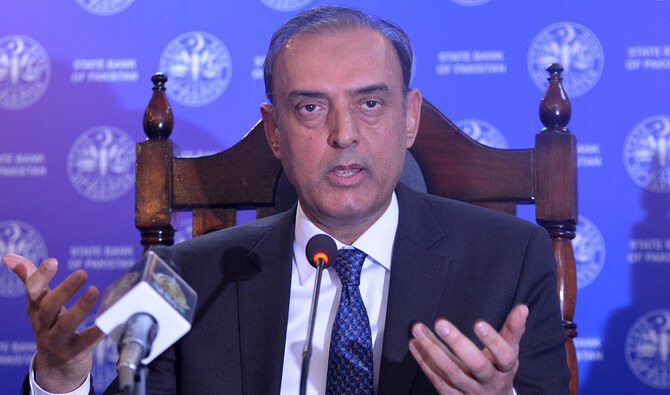
KARACHI: Pakistan aims to raise up to $4 billion from Middle Eastern commercial banks by the next fiscal year, the country’s central bank chief told Reuters on Tuesday, as the country looks to plug external financing gaps.
In a wide-ranging interview, his first with any media organization since taking office in 2022, State Bank of Pakistan Governor Jameel Ahmad said Pakistan was also in the “advanced stages” of securing $2 billion in additional external financing required for International Monetary Fund approval of a $7 billion bailout program.
Pakistan and the IMF reached an agreement on the loan program in July, subject to approval from the IMF’s executive board and it obtaining “timely confirmation of necessary financing assurances from Pakistan’s development and bilateral partners.”
Asked about monetary policy, Ahmad said recent interest rate cuts in Pakistan have had the desired effect, with inflation continuing to slow and the current account remaining under control, despite the cuts.
Pakistan’s annual consumer price index inflation was 11.1 percent in July, having fallen from highs of over 30 percent in 2023.
“The Monetary Policy Committee will review all these developments,” Ahmad said, adding that future rate decisions could not be pre-determined.
Pakistan’s central bank cut rates for two straight meetings from a historic high of 22 percent to 19.5 percent, and will meet again to review monetary policy on September 12.
“Now we have to focus on growth and other related areas because those are also equally important for job creation and other socioeconomic issues,” said Ahmad.
He added that the central bank’s mandate was to ensure price and financial stability before shifting its focus toward growth.


![]()

Pakistan eyes $4 billion from Middle Eastern banks to plug financing gap — central bank chief
Short Url
https://arab.news/z3zkc
Pakistan eyes $4 billion from Middle Eastern banks to plug financing gap — central bank chief
- Ahmad says Pakistan in “advanced stages” of securing $2 billion in additional external financing required for IMF approval of $7 billion bailout
- Governor SBP says recent interest rate cuts had desired effect with inflation continuing to slow, current account remaining under control
Latest updates


Recommended


© 2026 SAUDI RESEARCH & PUBLISHING COMPANY, All Rights Reserved And subject to Terms of Use Agreement.