LONDON: Prime Minister Keir Starmer said on Tuesday it would take a long time to rebuild Britain and rid it of the rot he says took hold under the previous Conservative government, warning “things will get worse before they get better.”
Starmer, elected in a July landslide election victory, has vowed to rebuild the fabric of British society, saying this month’s anti-migrant riots reflected the divisions that built up during the Conservative Party’s 14 years in power.
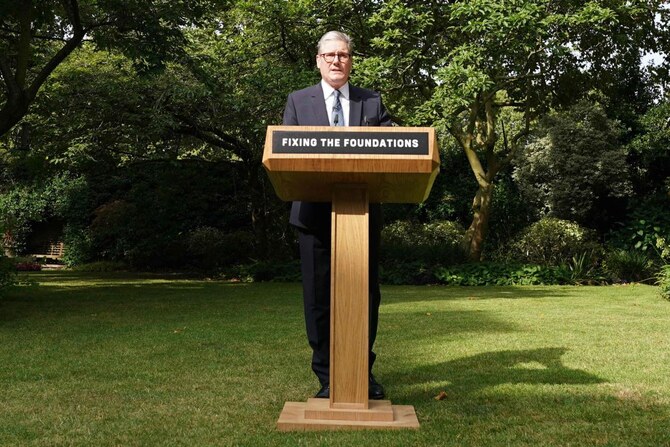
He made his speech in the Rose Garden at Downing Street, where former prime minister Boris Johnson held one of many parties during COVID lockdowns, events that Starmer said shattered the trust between the public and its politicians.
“We have inherited not just an economic black hole but a societal black hole and that is why we have to take action and do things differently. Part of that is being honest with people about the choices we face and how tough this will be,” he said.
“Frankly, things will get worse before we get better.”
Addressing an audience of people he met during this year’s election campaign such as apprentices, teachers, nurses and small business owners, Starmer said change would not happen overnight.
But, speaking a week before Britain’s parliament returns from a summer break, he said his government was determined to tackle a multitude of problems ranging from overflowing prisons to a shortage of housing and long waiting lists for health services.
The former director of public prosecutions was forced to cancel his summer holiday this month to tackle far-right riots that targeted Muslims and migrants. The riots began after the killings of three young girls in northern England was wrongly blamed on a Muslim migrant based on online misinformation.
Starmer said the Conservative government’s failure to tackle problems, and its focus on the “snake oil” of populism, had widened cracks in society, divisions that would take time to heal.


![]()

UK’s Starmer says things will get worse before they get better
Short Url
https://arab.news/5fkr8
UK’s Starmer says things will get worse before they get better
- Starmer vowed to rebuild the fabric of British society after anti-migrant riots
- Government determined to tackle a multitude of problems ranging from overflowing prisons to a shortage of housing and long waiting lists for health services


Latest updates


© 2026 SAUDI RESEARCH & PUBLISHING COMPANY, All Rights Reserved And subject to Terms of Use Agreement.