- Targeted killings will only embolden resistance, key official warns
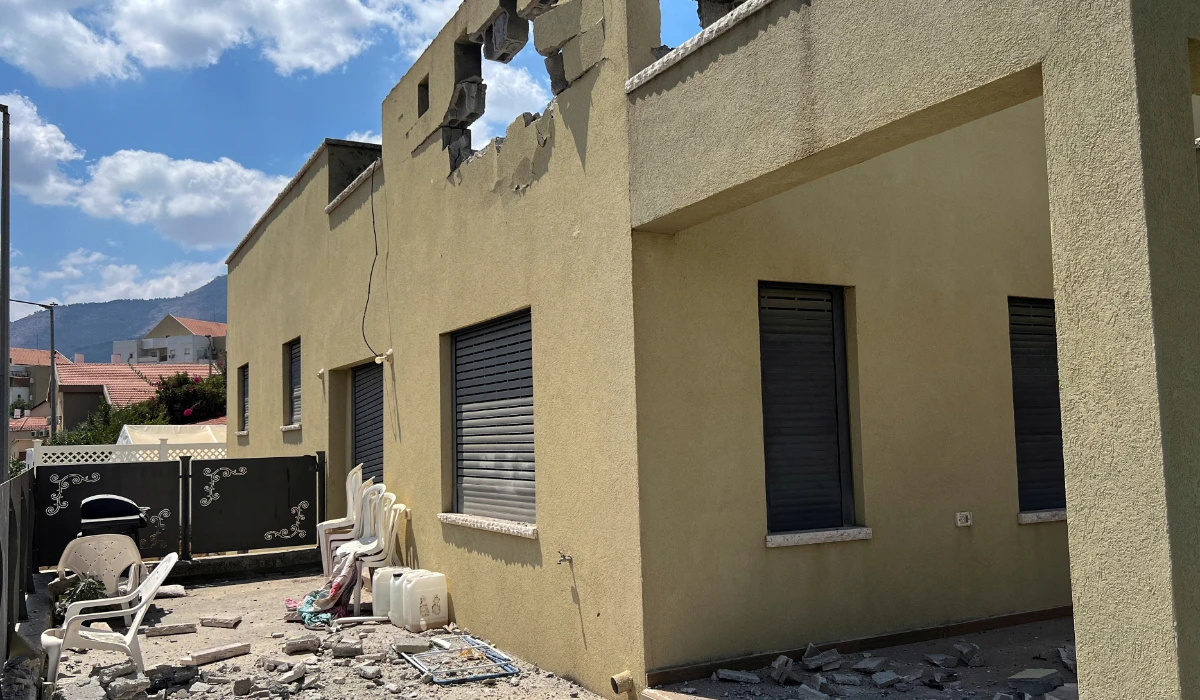
BEIRUT: Hezbollah on Saturday attacked Israeli cities, settlements, and military outposts, including some that were struck for the first time since hostilities erupted more than 10 months ago.
The attacks were in response to Israeli army assassinations of Hezbollah members the previous day in strikes that also killed several children.
Hezbollah’s first operations targeted the largest residential community in northern Israel, Kiryat Ata, north Haifa — the first time the city has been targeted since the outbreak of hostilities on Oct. 8.
Israel’s Channel 12 said that interceptor rockets were launched over Kiryat Ata, while the Israeli army said that it intercepted a “suspicious aerial target” launched from Lebanon toward the city.
BACKGROUND
The Israeli military has been trading fire with Hezbollah across Lebanon’s southern border in parallel with the Gaza war, with hostilities ramping up recently amid fears that a full-scale regional war could erupt.
Explosions were heard in Tamra and I’billin, east Haifa, in the Lower Galilee, while sirens sounded as an incoming missile warning.
“This is the first time Hezbollah has bombed the largest residential community in the north — known as the Krayot in the Zevulun Valley of the Haifa Bay area — with Kiryat Ata as its largest city by population,” Israeli media outlets reported.
No casualties were reported in the attack.
Hezbollah said on Saturday afternoon that it struck Israeli soldiers in the Hermon site with an attack drone, and later said it also destroyed surveillance equipment in the Al-Raheb site with a drone strike.
Subsequently, Hezbollah announced the death of its member Ibrahim Hassan Fadel, 21, from Tulin, south Lebanon, who “succumbed to his wounds.”
Hezbollah also targeted Israeli soldiers in the vicinity of the Misgav Am outpost.
According to its statements, the group carried out “an aerial attack with attack drones on the headquarters of the newly established western Brigade south of the Yaara settlement, targeting the positioning of its officers and soldiers.”
Sirens sounded in the Kfar Yuval settlement and the Galilee Panhandle.
The Israeli Army Radio said that “several rockets launched from Lebanon toward an army’s position in Shtula, west Galilee, exploded, causing no casualties.”
Eight Hezbollah members were killed on Friday after they were pursued by Israeli military drones while riding motorcycles or traveling in vehicles in border regions.
Israeli journalist Eddie Cohen wrote on his social media account about an Israeli intention to “prevent Hezbollah members from moving or traveling in vehicles within a 20-km radius of the Israeli border, and that our airplanes will attack any terrorist who violates this directive.”
The outskirts of Aitaroun and Maroun Al-Ras in the Bint Jbeil district of Lebanon experienced sporadic artillery shelling from Israeli forces.
Sheikh Mohammed Yazbek, head of Hezbollah’s religious committee, said that Israel was still operating “within the established rules of engagement.”
However, he said the group would respond accordingly, if Israel escalated the conflict.
“If they seek a comprehensive war, we are prepared for it.”
Yazbek said that “since the July war until today, we have been preparing for an impending confrontation with the enemy, ensuring that we are not caught off guard.”
He said: “The support front in southern Lebanon will only cease when the aggression and war against our people in Gaza come to an end, after which we will address each situation as it arises.
“No matter how much Netanyahu attempts to present himself as strong and supported by America and the West, such efforts will be futile.”
Yazbek said that “the front in southern Lebanon serves to support our people in Gaza, to engage the enemy, and also to protect Lebanon.”
He added: “Israel, US, and their warships, aircraft carriers, and destroyers do not intimidate us, as we are confident that we are right.”
Referring to the assassination of Hezbollah military leader Fuad Shukr late last month, he said that “revenge is inevitable.”
He added: “However, we will determine the appropriate time. We will honor the blood of our martyrs and remember our captives.”
Yazbek also said: “The actions taken by Israel through assassinations will not deter the resistance; instead, they will strengthen its resolve.
“For over 40 years, America has sought revenge against Fuad Shukr because he caused them pain, just as he caused Israel distress.”