


RIYADH: Saudi Arabia’s startup ecosystem continues to see robust growth, with a diverse range of sectors attracting significant investment.
Companies across food technology, fintech, and loyalty platforms have secured funding to accelerate their expansion, both domestically and internationally.
Resal, a Saudi-based e-gifting platform, has successfully raised $9 million in a series A round to fuel its growth.
The round was backed by prominent investors, including Derayah Ventures Fund, Al-Wafrah AlThanya Investment Co., and Venture Souq FinTech Fund, as well as ADDiriyah Asset Management, Nomad Holdings, Bugshan Investment Group, and several family offices, alongside angel investors.
Founded in 2016 by Fouad Al-Farhan and Hatem Kameli, Resal provides digital solutions designed to connect merchants, companies, and individuals through a unified platform.
The company offers services that facilitate the management and exchange of loyalty points, prepaid cards, and vouchers across various sources.
The latest funding will be used to accelerate Resal’s business expansion within Saudi Arabia.
“Our success in securing these investments is a significant testament to the investors and partners’ belief in Resal’s role and its team’s efforts in developing an effective digital ecosystem that contributes to providing innovative solutions in loyalty programs, digital rewards, and alternative payments, in alignment with Saudi Arabia’s Vision 2030,” Kameli, the company’s CEO, said.
He further claimed that the company recently doubled its sales growth and has increased the number of beneficiaries to more than 1.5 million users and over 1,000 entities and organizations across more than 15 sectors.
Saudi Arabia’s Yalla Plus secures $2.7m seed funding for POS innovation
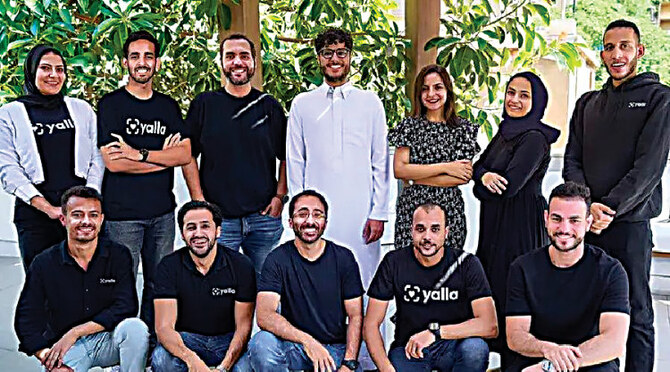
Yalla Plus, a Saudi food tech startup, has closed a $2.7 million seed investment round led by Merak Capital.
The round also saw participation from Khwarizmi Ventures, Isometry Capital, and a mix of regional and international angel investors.
Established in 2022 by Abdullah Al-Rabeh and Bader Al-Nasser, Yalla Plus provides an integrated point-of-sale system that encompasses payment management, customer feedback processing, and delivery solutions.
The company has reportedly served thousands of entrepreneurs across 11 countries and plans to scale its reach to 100,000 entrepreneurs in 50 countries, spanning the Middle East, Europe, and Southeast Asia.
Mithu raises $500k pre-seed to aggregate loyalty programs
Saudi-based Mithu, a loyalty platform aggregator, has raised $500,000 in a pre-seed funding round led by Web3 venture builder Adaverse.
Founded in early 2024 by Mohsin Qureshi and Asif Ali, Mithu aims to streamline loyalty programs by consolidating them into a single, gamified app.
It is designed to boost customer engagement, particularly in the food and beverage sector.
Mithu claims to have already secured agreements with around 200 restaurants in Riyadh. The company’s gamification strategy is positioned to help businesses increase customer retention through enhanced loyalty interactions.
Asas secures $320k for AI-driven developer-sharing platform
Saudi Arabia’s Asas Specialized Information Technology has raised $320,000 in a pre-seed round for its flagship product, Resquad AI.
The round was backed by angel investors, and the investment will be used to expand the company’s operations within the Kingdom.
Founded by Abdullah Abdulaziz Al-Jafaari in 2024, Resquad AI facilitates flexible collaboration among software development firms by allowing them to share developers with other companies or external clients.
Asas plans to enhance its platform and drive growth in the Saudi IT sector with the new capital.
UAE-based Meteora Developers acquires property crowdfunding platform Maisour
UAE-based real estate developer Meteora Developers has acquired Emirati property crowdfunding platform Maisour in a multimillion-dollar deal.
Founded in 2022 by Praveen Sharma, Meteora has developed a diverse real estate portfolio across the UAE.
Maisour, launched in 2021 by Ahmed Nour, Haytham Assaal, and Sari Safi, offers global investors the opportunity to participate in the UAE’s real estate market through fractional ownership.
With this acquisition, current and future investors on the Maisour platform will gain access to Meteora’s extensive offerings, further expanding their opportunities in the UAE property sector.
Falcon Gate Ventures launches $100m Web3 innovation fund
Singapore-based Gate Ventures, the venture capital arm of Gate.io, and the Blockchain Center in Abu Dhabi have teamed up to launch a $100 million fund to promote Web3 innovation globally.
Named Falcon Gate Ventures, the fund aims to accelerate the adoption of decentralized technologies and infrastructure.
It will focus on fostering innovation in regions such as the US, Asia, Europe, and the MENA region, targeting key areas of Web3 development.
Both Gate Ventures and the Blockchain Center intend to leverage their combined expertise to support emerging talents and advance the digital economy.
Pakistan’s PostEx raises $7.3m to drive expansion into the GCC
Pakistan-based fintech startup PostEx has secured $7.3 million in a pre-series A round led by Conjunction Capital, alongside Dash Ventures, Sanabil500, VSQ, FJ Labs, and Zayn VC.
Founded in 2020 by Muhammad Khan, PostEx offers upfront payments to e-commerce businesses while providing a reliable delivery network.
Prior to this round, the company had raised $8.6 million from investors such as Global Founder Capital, MSA Capital, and Shorooq Partners.
The company intends to utilize the fresh capital to expand its services into the Gulf Cooperation Council region, further bolstering its fintech and logistics solutions.
Egypt’s NoorNation secures investment from KBW Ventures for clean energy solutions
Egypt-based climate tech startup NoorNation has received an undisclosed investment from KBW Ventures, founded by Saudi Prince Khaled bin Al-Waleed.
NoorNation, which was launched in 2021 by Ragy Ramadan and Mohamed Khaled, focuses on delivering decentralized energy and water infrastructure to off-grid areas across Egypt and Sub-Saharan Africa.
NoorNation’s flagship product, LifeBox, provides clean energy and safe water to rural communities, farms, and tourism businesses at affordable prices.
The company has gained recognition for its work, including being named Best Green Tech Startup of the Year in Northern Africa by the Global Startup Awards 2024. This marks KBW Ventures’ first investment in Egypt’s startup ecosystem.
UAE fintech Yuze raises $30m for SME financial inclusion
UAE-based fintech startup Yuze has raised $30 million in a funding round led by Osten Investments.
Founded in 2022 by Rabih Sfeir, Yuze offers business accounts tailored to startups, micro, and small enterprises, with a focus on financial inclusion in emerging markets.
The company plans to utilize the funds to expand into new markets and aims to reach one million small and medium-sized enterprise and professional customers within the next five years.
Yuze’s expansion strategy is intended to bridge the financial inclusion gap for underserved businesses across various regions.


