WASHINGTON: A group of lawyers with deep ties to the Republican Party scrambled over the weekend to rescue an effort to get independent presidential candidate Cornel West on the Arizona ballot, offering one of the clearest examples yet of the GOP’s extensive involvement in furthering the left-wing academic’s long-shot bid.
As a deadline loomed to submit the needed paperwork, two well-known Republican lawyers in the state and a GOP attorney working to get West on the ballot elsewhere learned that two of their would-be electors — Jerry Judie and Denisha Mitchell — were not interested in fulfilling the role. The electors’ decisions led to a barrage of text messages and phone calls looking to keep the operation alive. When those efforts failed, two Republican lawyers visited Judie’s and Mitchell’s homes, seemingly seeking to persuade them to reconsider.
The Arizona Secretary of State’s office said Monday that West did not file the paperwork needed to get on the ballot before Saturday’s deadline.
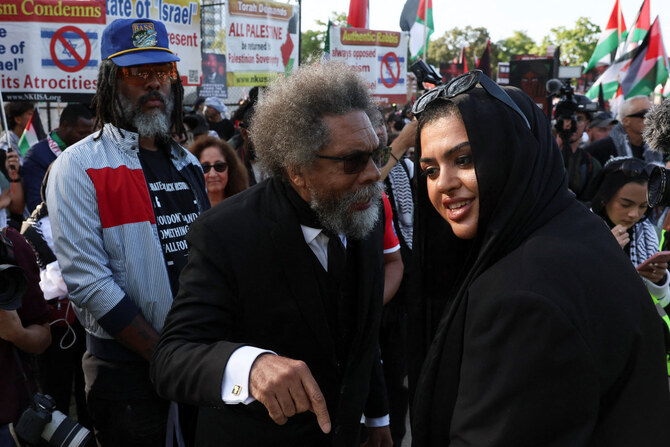
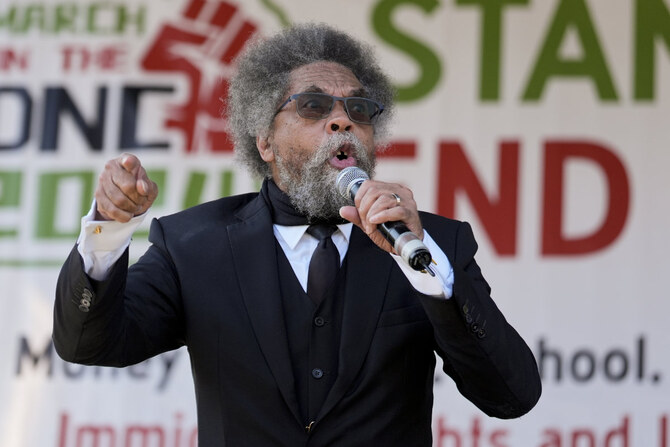
In a brief interview, West expressed ambivalence about Republican efforts to help him, which Democrats fear could benefit Donald Trump by siphoning away left-leaning voters who would probably support the Democratic nominee otherwise.
“So much of American politics is highly gangster-like activity,” West told The Associated Press on Monday. “I have no knowledge of who they are or anything — none whatsoever. We just want to get on that ballot. And that’s the difficult thing.”
The work by the GOP attorneys appears to be part of a broader effort by conservative activists and Republican-aligned operatives across the country to push West’s candidacy and subvert the integrity of the ballot in the months leading up to November’s presidential election.
“I am officially no longer interested in being elector,” Judie, a 62-year-old retired park ranger for the city of Phoenix, said when an operative working to get West on the ballot texted him and asked if he could meet at a local hotel to sign another document.
Judie told the AP he had been a fan of West since his 20s, drawn to his ideas and passion. He was excited earlier this year when he learned that West was running for president and pursued a chance to be an elector to the progressive’s campaign. Judie began to sour on that idea, however, when President Joe Biden ended his campaign last month, making way for Vice President Kamala Harris to be the Democratic nominee.
“When she was in the driver’s seat, that changed the game,” he said. “That changed everything for me, my family, and the people that I know. It was like magic.”
To qualify for the ballot, Arizona law requires independent presidential candidates to put forward a slate of electors who would cast Electoral College votes for them. After Judie informed the operative that he was no longer interested in representing West’s campaign, he received a series of phone calls, according to call records provided to the AP, from people working on the effort, along with a visit to his house by two Republican lawyers hoping to get West on the ballot.
“I am sorry ... we have been calling the crap out of you,” Paul Hamrick, an attorney who has been involved in getting West on the ballot in other states, said in a voicemail to Judie obtained by the AP. “The reason we have been trying to get in touch with you is we found out in the last 24 hours we have got to have everybody sign a letter that Dr. West has also signed.”
Hamrick then relayed that he knew Judie no longer wanted to be an elector. “Is there anything you can tell me about that or has anyone encouraged you not to be?” Hamrick asked.
Judie said two people came to his door looking to speak with him after he received the voicemail. He didn’t answer or talk to them — assuming they were looking to speak about West — but someone Judie knows spoke with them and they identified themselves as Amanda Reeve and Brett Johnson, two well-known lawyers from the law firm Snell & Wilmer.
Reeve is a former Republican state representative and Johnson is a member of the Republican National Lawyers Association. Reeve and Johnson’s firm has done extensive work for the Republican National Committee, GOP candidates and conservative groups, according to campaign finance disclosures.
Republicans and their allies have worked to get West on the ballot in Arizona, Wisconsin, Virginia, North Carolina, Nebraska, Michigan, Pennsylvania and Maine, all in the hope that West will help boost former President Donald Trump’s chances of winning later this year by pulling support from Harris. West does not need to win a state to serve as a spoiler candidate — a few thousand votes in battleground states could be decisive.
Reeve also called Mitchell after the AP reported Friday that she has signed an affidavit stating that she did not agree to be a West elector and never signed her name to a filing, alleging that the document that was filed in her name was forged.
“We need to get this information in as soon as possible,” Reeve said to Mitchell in a Friday voicemail in which she said her firm represented “the Cornel West campaign.”
“It’s due tomorrow morning,” Reeve stressed.
On Saturday, two people — one resembling Johnson and another Reeve — visited Mitchell’s home, according to footage from her doorbell camera obtained by the AP. The two rang the doorbell and left, not speaking with anyone in the home.
Neither Johnson nor Reeve responded to calls or emails requesting comment for this story.
Mitchell said after the AP story was published Friday — in which said she “didn’t even know what an elector was” and that the paperwork was “forged” and riddled with errors — she received a call from someone who had been handling the West petition work. She missed the call, but when she called back, she was connected to Hamrick.
Hamrick, an Alabama-based attorney, said the allegations against him were “false” when reached Sunday night, but declined to comment further.
Mitchell’s and Judie’s cases are the latest examples of the dubious tactics used to get West on ballots nationwide.
Mitchell, who had been drawn to West’s progressive message before she learned Republican-aligned operatives were working to get him on the ballot, told the AP on Friday that she was unaware who filled out the paperwork in her name, calling it “forged.” She and her husband previously worked for a signature-gathering contractor called Wells Marketing, collecting signatures to get an initiative on the ballot that would raise the wages of tipped workers in Arizona.
Wells Marketing, a mysterious Missouri limited liability company, was also leading the effort to gather the signatures needed to get West on the ballot in Arizona.
Judie, reflecting on his chaotic last three days, said he was left with an uneasy feeling, especially because he still respects West.
“They had only one reason they were doing it,” Judie said. “Just to get him on the ballot so some votes would go to him and not go to other people.”


Republicans scrambled to get Cornel West on the Arizona ballot. The left-wing academic is OK with it
https://arab.news/8fan9
Republicans scrambled to get Cornel West on the Arizona ballot. The left-wing academic is OK with it

- West expressed ambivalence about Republican efforts to help him, which Democrats fear could siphon away left-leaning voters
- “I have no knowledge of who they are or anything — none whatsoever. We just want to get on that ballot," West tells AP


Trump downplays importance of Russia reportedly sharing intel with Iran to help it hit US targets
- Critics charge that Trump was giving Russia a break that will provide Moscow with badly needed revenue as it looks to keep funding its war machine
- Ukraine, in the four years since it was invaded by Russia, has received US intelligence to help defend against incoming missiles from Russia as well as to help Kyiv hit certain Russian targets
DORAL, Florida: President Donald Trump said Saturday that it was inconsequential if Russia has provided Iran with information to help Tehran target US military personnel and assets in the Middle East as the week-old war rages.
The president dismissed the import of such information-sharing after he attended the dignified transfer for six Army reservists who were killed in a drone strike in Kuwait the day after the US and Israel launched a war on Iran that has unsettled the global economy.
Trump stopped short of confirming reports by The Associated Press and other news outlets that US intelligence officials believe Russia has provided Iran with such targeting information. But if Moscow is passing on such details, he said Iran was getting little out of it.
“If you take a look at what’s happened to Iran in the last week, if they’re getting information, it’s not helping them much,” Trump told reporters on Air Force One as he flew to Miami, where he’s spending the rest of the weekend.
The president also waved off a question about how Russia assisting Iran in such a way might affect his view of the US-Russia relationship.
“They’d say we do it against them,” Trump responded. “Wouldn’t they say that we do it against them?”
Ukraine, in the four years since it was invaded by Russia, has received US intelligence to help defend against incoming missiles from Russia as well as to help Kyiv hit certain Russian targets.
Downplaying the significance of Russia handing off battlespace intelligence to Iran came after the US Treasury Department announced earlier this week that it was temporarily allowing India to keep buying crude oil and petroleum products from Russia for a month, until April 4.
The administration decision to grant the world’s most populous country a temporary exemption faced bipartisan blowback. Critics charge that Trump was giving Russia a break that will provide Moscow with badly needed revenue as it looks to keep funding its war machine.
Rep. Don Bacon, R-Nebraska, condemned the move, saying in a post on X that “weakness toward Russia is appalling.”
Rep. Ted Lieu, D-Calif., in his own X post directed at Treasury Secretary Scott Bessent, also decried the administration’s decision.
“Reverse your decision to lift oil sanctions on Russia. It is traitorous conduct for you to help Russia,” Lieu said. “Meanwhile, Russia is assisting Iran in targeting American troops.”
Trump has decided to give India leeway on oil purchases from Russia as global oil prices surge and investors across sectors worry about how long the Iran war will last.
The waiver for Prime Minister Narendra Modi’s government followed Trump announcing weeks ago that he was cutting tariffs on India after their officials agreed to reduce its reliance on cheap Russian crude.
India has taken advantage of reduced Russian oil prices as much of the world has sought to isolate Moscow for its February 2022 invasion of Ukraine.
The price of oil has surged higher and shows no signs of halting a week into a war that the US and Israel launched and has widened through the Middle East as Tehran strikes back. Ships that carry roughly 20 million barrels of oil a day are unable to safely pass through the Strait of Hormuz, the narrow mouth of the Arabian Gulf that is bordered on its north side by Iran.
The shipping disruption and damage to key Middle East oil and gas facilities has interrupted supplies from some of the world’s largest oil producers.
Asked whether he was willing to take other steps to ease oil prices, Trump said that “if there were some, I would do it, just to take a little of the pressure off.”
He appeared Saturday to wave off, at least for now, the possibility of tapping the nation’s Strategic Petroleum Reserve, saying the US has a “lot of oil.”
The reserve — a supply of oil that the US government can tap in case of emergencies — held more than 415 million barrels as of the end of last month, up from about 395 million barrels at this time in 2025. In total, when full, the SPR can hold more than 700 million barrels.
“We’ve got a lot of oil. Our country has a tremendous amount,” Trump said. “There’s a lot of oil out there. That’ll get healed very quickly.”