

75% of Muslims in UK fear for safety after far-right riots: Survey

Three-quarters of Muslims in the UK are concerned for their safety following a spate of far-right riots across the country, according to a survey. (File/AFP)
Short Url
Updated 18 August 2024
Follow

75% of Muslims in UK fear for safety after far-right riots: Survey

  • Just 16% said they felt the same before the violence erupted
  • Charity chief warns hate crime on the rise, urges victims to report incidents to authorities

LONDON: Three-quarters of Muslims in the UK are concerned for their safety following a spate of far-right riots across the country, according to a survey by the Muslim Women’s Network.

Just 16 percent said they felt the same before the violence erupted. Nearly 20 percent said they had encountered hostility in the UK before the first riot on July 30 in Southport, which was sparked after a mass stabbing at a youth club left three young girls dead and multiple others injured.

Misinformation spread on social media attributed the attack variously to a Muslim or an asylum-seeker.

The alleged attacker was later identified as 17-year-old Axel Rudakubana, who was born in Cardiff.

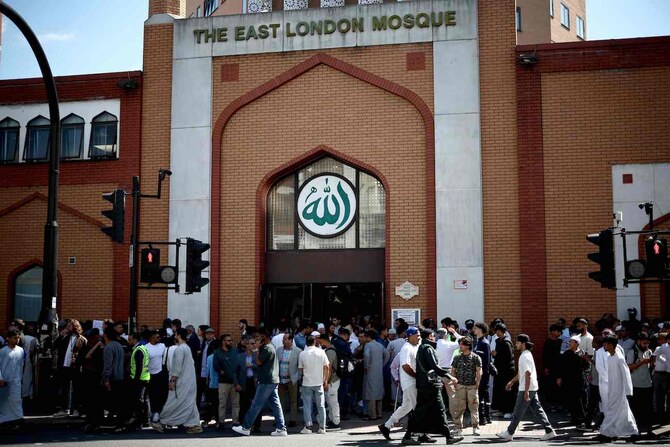
Rioting spread to other major cities across the UK, with mosques being targeted at numerous locations.

In an interview with Sky News, two Muslim women who were at one of the mosques targeted by rioters — Abdullah Quilliam Mosque in Liverpool — voiced their fears about the prevailing climate in the UK.

Lila Tamea, a 26-year-old student, said: “There was almost a sense of the police aren’t going to protect us. And so, it was really important that there was that show of solidarity from not just the Muslim community.

“It was quite a lot of the non-Muslim kind of community who came out that Friday to defend the mosque.”

Amina Atiq, a 29-year-old poet, told Sky News: “I felt as if it was not fair that we didn’t get a chance as a Muslim family to grieve for the three little girls. Because soon after that, we felt as if we were more suspect to that attack.”

The CEO of the Muslim Women’s Network, Baroness Shaista Gohir, told Sky News: “Hate crime has gone up in the last decade, and the Hate Crime Strategy is out of date.”

She added: “I want to see hate crime legislation strengthened with the term ‘hostility’ defined.”

Gohir said the charity is setting up a helpline and more people, especially Muslim women, need to report hate crimes for society to better understand their frequency.

“What’s really worrying me is when women are calling up saying, ‘we were abused, and we were with our children.’”


Five miners trapped deep underground after mudslide hits South African diamond mine

Updated 4 sec ago
Follow

Five miners trapped deep underground after mudslide hits South African diamond mine

  • The miners have been trapped since the early hours of Tuesday, according to a labor alliance
  • The mine is in the central city of Kimberley, which is renowned for its diamond mines
JOHANNESBURG: Five miners were trapped deep underground at a South African diamond mine after a mudslide flooded a shaft they were working in, mine officials and a labor union said Thursday.
The miners have been trapped since the early hours of Tuesday, according to the Congress of South African Trade Unions — an alliance of labor unions that includes the main mineworkers union. The congress said the miners were thought to be trapped around 800 meters (half a mile) underground.
Ekapa Mining General Manager Howard Marsden, whose company operates the mine, told national broadcaster SABC on Wednesday that rescuers were pumping water out of the shaft while a separate team was trying to drill a hole to where the miners were believed to be trapped to try to establish communication with them “or any proof of life.”
The mine is in the central city of Kimberley, which is renowned for its diamond mines and was at the heart of the global industry after diamonds were discovered in the area in the late 1800s.
The Minerals Council of South Africa said this month in its annual safety report that 41 miners died in mining accidents in South Africa last year, a record low and down from hundreds a year in the 1990s and early 2000s.
South Africa is among the world’s biggest producers of diamonds and gold, and the top producer of platinum.