NEOM awards honor social responsibility initiatives

The event honored 19 winners across three main award categories, NEOM Sectors, NEOM Partners and NEOM Individuals, with a further five sub-categories.
Short Url
Updated 01 October 2024
Follow

NEOM awards honor social responsibility initiatives

NEOM, the sustainable development taking shape in northwest Saudi Arabia, held its inaugural “NEOM Social Responsibility Awards” ceremony on Aug. 14. The celebratory event hosted by NEOM Social Responsibility honored the outstanding contributions being made by NEOM’s employees, sectors, departments, partners and communities in the region.
NEOM CEO Nadhmi Al-Nasr congratulated the award winners, saying: “Our commitment to social responsibility is a reflection of our core values and aligns seamlessly with NEOM’s vision and the ambitions of Saudi Vision 2030. Sustainability, as one of NEOM’s pillars, drives us to innovate and act in ways that create lasting, positive impact. The remarkable efforts of our teams and individuals in driving meaningful change demonstrate our dedication to building a sustainable future that benefits not only our communities but also our nation. We are proud and happy to celebrate these contributions as a testament to our shared vision for a prosperous and inclusive future.”
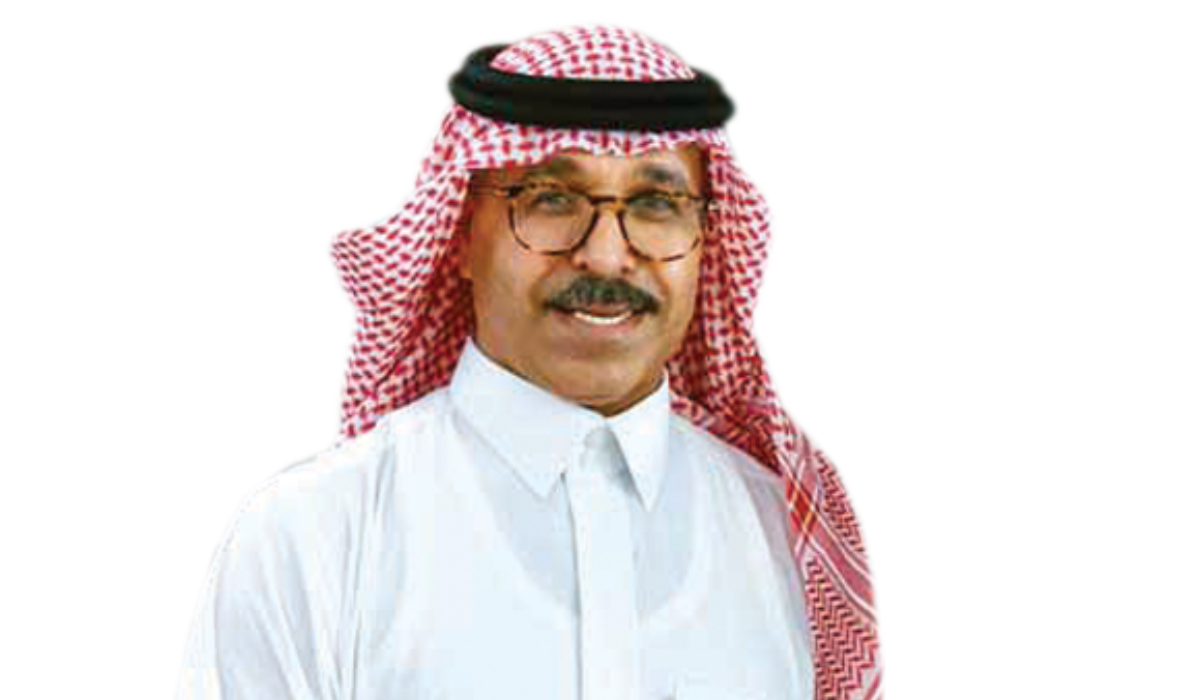


Sustainability, as one of NEOM’s pillars, drives us to innovate and act in ways that create lasting, positive impact, says Nadhmi Al-Nasr
CEO of NEOM

Attending the first such awards ceremony were NEOM executives, employees, business partners, school students and members of the local NEOM and Tabuk communities. The event honored 19 winners across three main award categories, NEOM Sectors, NEOM Partners and NEOM Individuals, with a further five sub-categories: NEOM Employees, NEOM Families, NEOM Community School Students, Partner Employees and Local Community.
Within the NEOM Sectors category, three winners were recognized: NEOM Operations, THE LINE proponent and Oxagon. Another three winners were awarded in the NEOM Partners category: Nesma and Partners, Ernst and Young, and King Fahd University for Petroleum and Minerals. In the NEOM Individuals category, 13 winners were honored: Bader Aljishi, Waleed bin Salman, Farida Qtishat, Salima Rahim, Juanita van Tonder, Gunay Aghayeva, Amarah Rahim, Aritom Pokidysevn, Nadirah Rahim, Thadickal V Joydas, Sultan Alharbi, Reema Alfakhri and Anas Alshafi.

NUMBER

50,000 people benefited from NEOM’s social responsibility programs in 2023.

Designed to highlight the best practices and exemplary contributions of individuals and institutions, the NEOM Social Responsibility Awards acknowledge and pay tribute to those who demonstrate a genuine commitment to social responsibility. In line with NEOM’s commitment to empowering local communities and enhancing human capacity through sustainable projects, the award aims to inspire wider participation in social initiatives by individuals and enterprises.
The NEOM Social Responsibility Awards are an important component in NEOM SR’s journey toward accelerating progress, enhancing the quality of life and embedding value for the communities of NEOM and Tabuk. In 2023, 50,000 people benefited from NEOM’s social responsibility programs. A total of 26 projects were awarded to companies in Tabuk and 583 individuals from NEOM and Tabuk benefited from employment opportunities.

The previous year, NEOM introduced its first integrated volunteering ecosystem, engaging more than 1,300 volunteers across 68 different opportunities to serve their communities.
Through its role as an enabler, facilitator and catalyst of socioeconomic growth, NEOM SR promotes a culture of social responsibility across NEOM, its regions and its sectors to inspire all stakeholders to contribute to shaping the future of responsible communities. These efforts demonstrate NEOM’s adherence to the overarching objectives of Saudi Vision 2030 and its commitment to creating a legacy that makes the world a better place.


World Defense Show 2026: KPMG highlights human capital as strategic defense asset

Updated 03 February 2026
Follow

World Defense Show 2026: KPMG highlights human capital as strategic defense asset

KPMG published a series of four white papers as official knowledge partner for the World Defense Show 2026, reinforcing its commitment to supporting Saudi Arabia’s Vision 2030 and the Kingdom’s ambition to build a sovereign, future-ready defense ecosystem grounded in integrated capability development, localization, and digital readiness.

As global defense priorities evolve from procurement-led models toward capability-driven ecosystems, one of the papers in the defense integration series highlights a clear inflection point for the sector. According to KPMG analysis, defense localization in Saudi Arabia has increased from around 4 percent in 2018 to 24.9 percent in 2024, with the Kingdom targeting 50 percent localization by 2030. At the same time, local content across the defense sector has reached 40.7 percent, up from 38.4 percent in 2023, reflecting deeper integration across procurement, industrial participation, technology adoption, and workforce development.

KPMG’s findings emphasize that modern defense power is no longer defined by platforms and equipment alone, but by the ability to design, operate, integrate, and sustain advanced systems at scale. While technology, infrastructure, and capital investment remain critical enablers, the firm’s WDS position paper highlights that defense transformation has a significant human-capital focus, recognizing that skills, data literacy, and local expertise are essential to maximizing the performance, resilience, and sovereignty of advanced defense capabilities.

Christopher Moore, head of defense and security, said: “Saudi Arabia’s defense transformation has a significant human-capital focus, alongside major investments in technology, equipment, and industrial capacity. The progress we are seeing in localization and local content demonstrates that the Kingdom is not only acquiring advanced systems, but also building the skills, institutions, and operating models required to sustain them. Through our partnership with the World Defense Show, KPMG is proud to contribute insight and frameworks that help translate Vision 2030 ambition into operational readiness.”

This human-capital perspective forms part of a broader KPMG defense thought-leadership series developed for WDS 2026, which examines defense transformation through multiple, interconnected pillars. These include accelerating sovereign defense ecosystems, integrating business and technology infrastructure, financing future deterrence through public-private partnerships, strengthening industrial and technological autonomy, and building a future-ready defense workforce — reflecting KPMG’s holistic view of defense as an integrated national ecosystem.

KPMG’s research also situates Saudi Arabia’s progress within a global economic context. International benchmarks cited in the firm’s WDS analysis show that every $1 billion in defense manufacturing output in the US supports approximately 5,700 jobs, while the UK defense sector contributes around £25 billion ($34.2 billion) to GDP and sustains 260,000 skilled jobs. Across the EU, defense industries employ more than 1.6 million people and generate approximately 70 billion euros ($82.9 billion) in annual value. KPMG notes that similar dynamics are beginning to emerge in Saudi Arabia as localization accelerates and private-sector participation expands.

To support measurable progress, KPMG has proposed a Defense Workforce Capability Index — a framework that links workforce outcomes directly to operational readiness. The index tracks localization rates, technical qualification levels in advanced and digital systems, and the share of maintenance and sustainment conducted domestically, aligning human-capital metrics with broader defense performance objectives.

Taking place in Riyadh from Feb. 8 to 12, the World Defense Show will bring together senior government leaders, defense manufacturers, and technology innovators from around the world. The other three papers in the defense integration series focus on sovereignty, financing and technology.