

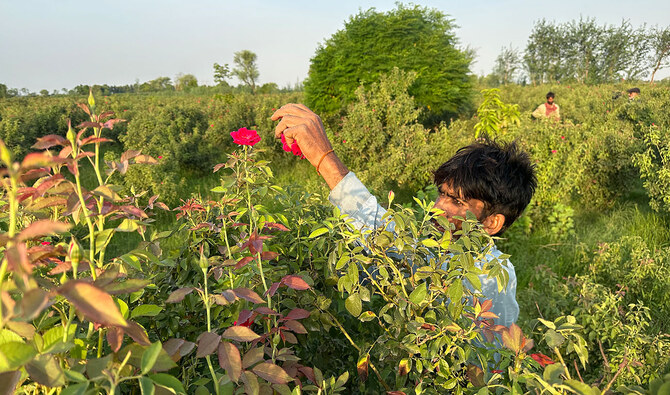

MASU BHURGRI, Sindh: As dawn breaks, casting a soft glow over the sprawling rose fields of Masu Bhurgri, Shaukat Ali is already hard at work. His hands, rough and scarred from years of tending the delicate fields, move with efficiency. Yet the beauty he cultivates stands in stark contrast to the harsh realities of his life.
For farmers like Ali, life is anything but a bed of roses. They toil under the scorching sun with their backs bent over thorny bushes, only to see the fruits of their labor reaped by middlemen who fetch hefty prices for the roses in city markets.
“We produce flowers, do the work of fragrance, but in our lives there are always thorns and thorns,” a dejected Ali told Arab News.
Rose farming is a profession that requires a lot of labor and doesn’t pay well. As Pakistan groans under the weight of double-digit inflation, supporting a family of 12 for a poor man like Ali can be a herculean task.
“We have to take care of it for a whole year, till its soil, give it fertilizer and water it,” Ali explained the process of growing roses. “Its work continues for seven days and then finally it becomes ready.”
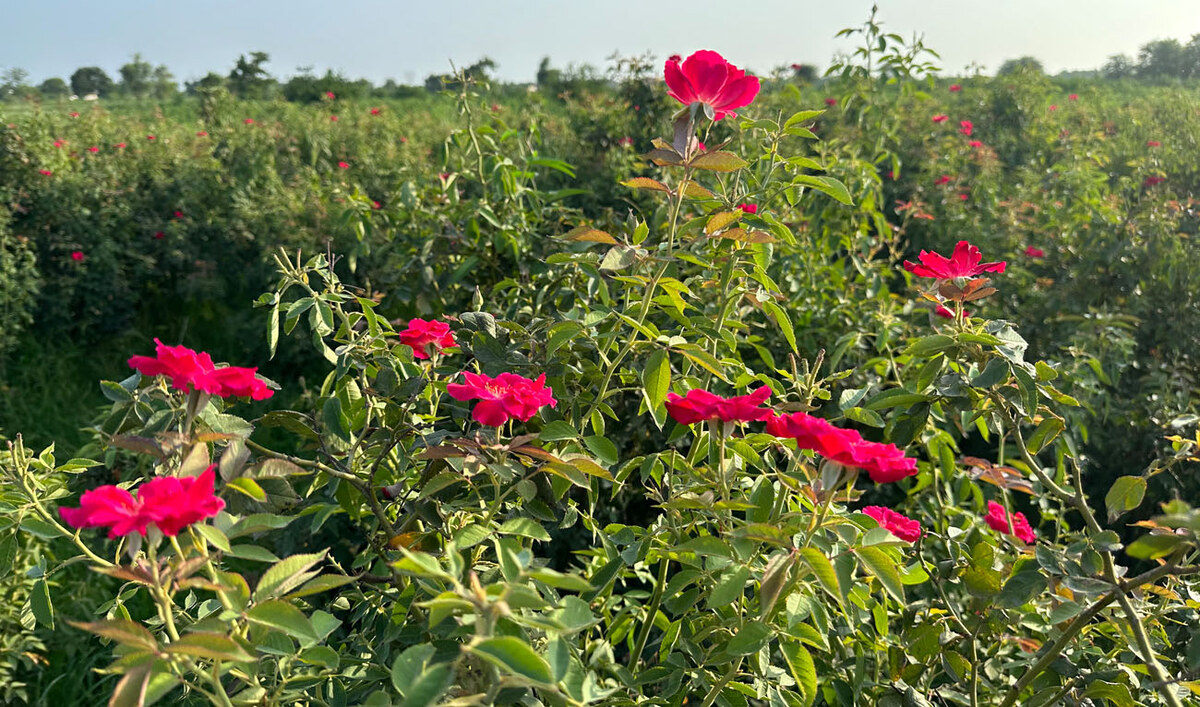
This photograph, taken on August 10, 2024, shows roses at a field in Masu Bhurgi district of Sindh province. (AN Photo)
Javed Vighio, a local trader, acknowledged rose farmers for toiling in the fields. He said Sindh’s Hyderabad and neighboring Matiari districts are key producers of red roses. The flowers are cultivated on around 50,000 acres of land in the two districts and produce up to 40 truckloads per day to meet the demands of the flower markets of Hyderabad and Karachi cities.
“Most of the hard work is done by the farmer,” Vighio admitted while weighing a sack of roses and recording its weight in a register. His helpers packed the roses in buckets with ice in between, a handy tactic to keep them fresh till they are delivered to the Teen Hatti flower wholesale market in Karachi, around 180 kilometers away.
While rose farmers toil in the sun all day long, the fruits of their labor are enjoyed by middlemen who walk away with the lion’s share of the revenue.
Vighio and other local traders pay an advance sum of Rs50,000 [$179.49] to Rs100,000 [$358.97] per year to the farmers for one acre of land. They buy the roses at a price of Rs85-90 [$0.31-0.32] per kilogram from the farmers and in Karachi, sell them to other traders for up to Rs200 [$0.72] per kilogram.
But when sold to buyers, a single rose fetches a lucrative price of Rs40-100 [$0.14-0.36].
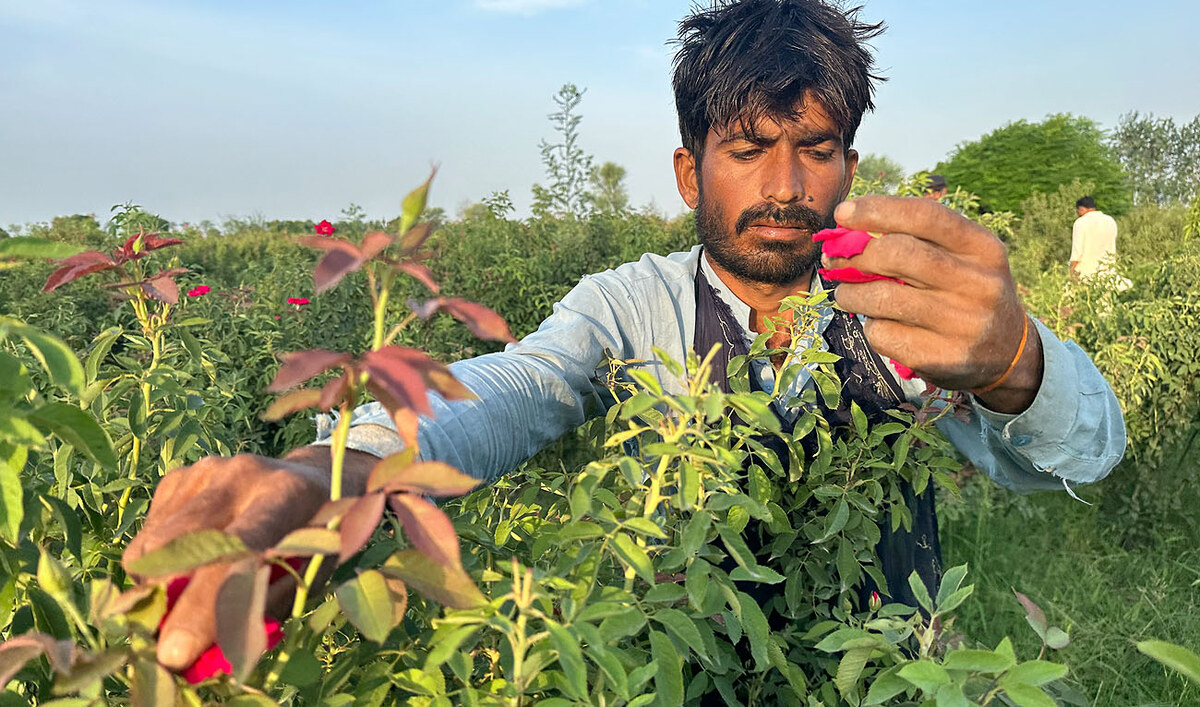
In this photograph, taken on August 10, 2024, Pakistani farmer, Shaukat Ali, plucks roses at a field in Masu Bhurgi district of Sindh province. (AN Photo)
While red roses dominate these districts in Sindh, other seasonal flowers are also grown.
In Karachi, major traders like Syed Arif Raza Naqvi and others await trucks of red roses to unload them. These roses are then sorted out for various uses, including the making of medicines, perfumes, drinks, bouquets, garlands, and decorations for weddings and funerals.
“The rose petals arrive from Punjab’s Multan and Lahore cities but they arrive in the form of petals, which takes one or two days,” he told Arab News, explaining the process. “This is a journey of hours from Hyderabad, so the fresh roses arrive from there.”
Naqvi said that if there are excess petals left, they are dried and exported to the US, Canada, Europe, the Middle East and Sri Lanka.
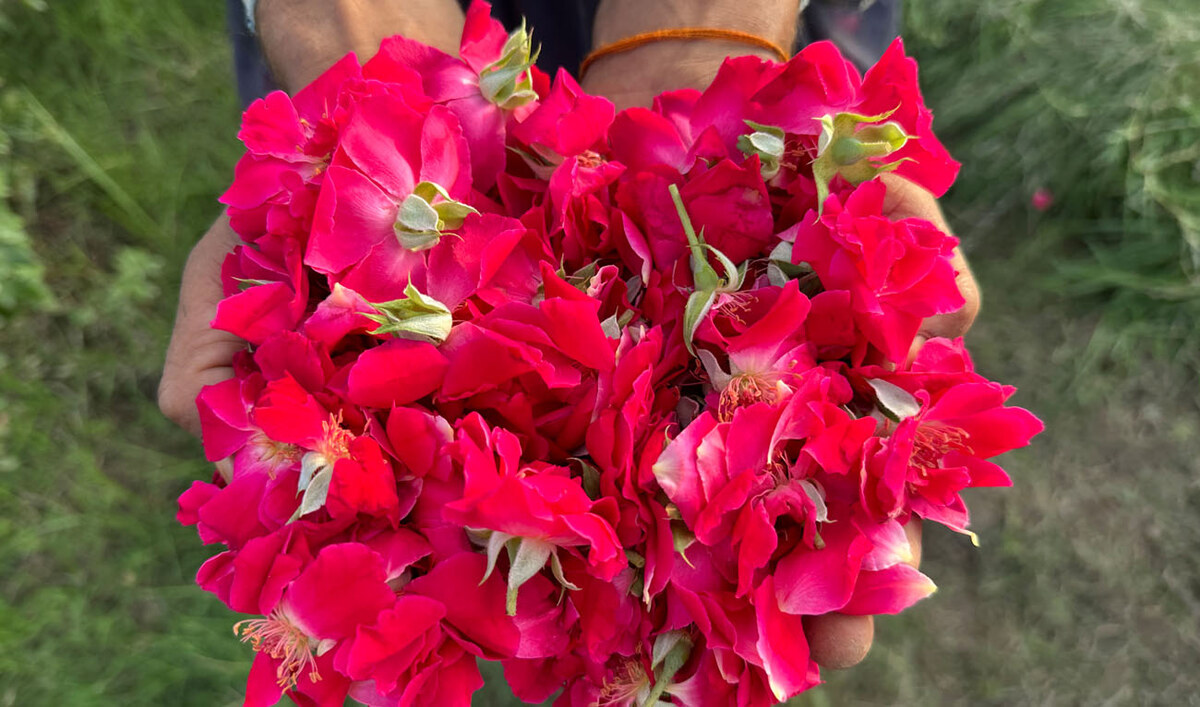
In this photograph, taken on August 10, 2024, Pakistani farmer, Shaukat Ali, shows plucked roses at a field in Masu Bhurgi district of Sindh province. (AN Photo)
During the off-season, Naqvi said around 15,000 kilograms of flowers are traded, meeting local market needs and providing roses for flower shops across different cities in Sindh.
In the fields of Hyderabad and Matiari, farmers say their hard work doesn’t pay much.
“We wake up very early in the morning at Fajr [early morning prayers] time and come to harvest in the dark,” Ali said while picking flowers. “We do the work, but people from the city eat the fruits of our labor.”
Ali pointed out how he couldn’t afford to educate his children, who were old enough to go to school.
“Flowers are very good, but we know the thorns that prick us,” he said wistfully.
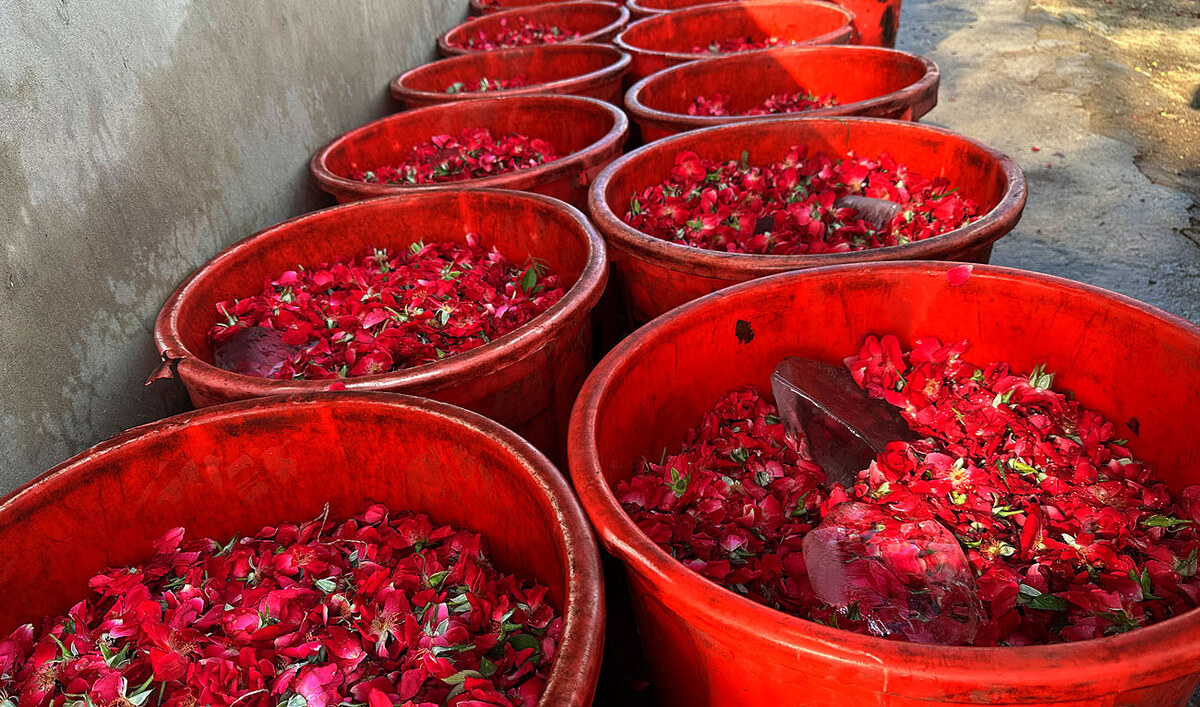
This photograph, taken on August 10, 2024, shows buckets full of roses assembled for sell in Masu Bhurgi district of Sindh province. (AN Photo)


