

Pakistan’s young population stuck between hope and despair as nation marks 78th Independence Day

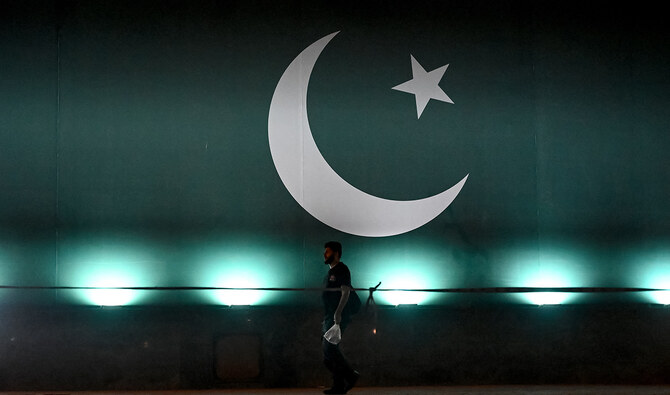
A man walks past Pakistan's national flag on the eve of the country’s independence day, in Karachi on August 13, 2024. (AFP)
Short Url
Updated 14 August 2024
Follow

Pakistan’s young population stuck between hope and despair as nation marks 78th Independence Day

  • Economic hardships, limited job opportunities are stifling aspirations of young Pakistanis
  • Young people feel politically disenfranchised, say speaking up for rights may lead to violence 

KARACHI: As Pakistan marks its 77th Independence Day, the nation’s young people find themselves caught between hope and despair, reflecting the broad spectrum of challenges the country faces and also highlighting the strength of their bond with it.

Pakistan was formed in the rupture of independence from British-ruled India in 1947, triggering a mass migration marred by bloodshed and violence on both sides. About 15 million people changed countries, mainly based on religion, and more than a million were killed in religious riots, according to independent estimates.

Today, approximately 64 percent of Pakistan’s population is under the age of 30, one of the youngest demographics in the world, presenting both a challenge and an opportunity, particularly in terms of education, employment and social development.

However, enduring economic challenges like inflation and a lack of job opportunities has dampened the hopes and ambitions of Pakistan’s young citizens.

“The state of the national economy is dire, inflation is rising and the youth population is very large,” Virsa Pirzado, the first female Central President of the Progressive Students Collective, which works for social justice, told Arab News.

“Despite our educational degrees, we face a lack of employment opportunities.”

Lack of rights and a sense of political disenfranchisement were also major problems for the youth, she added. 

Indeed, as the country’s young population has ballooned to around half its electorate in recent years, there has been a growing frustration with dynastic politics and corruption. Former cricketer and ex-PM Imran Khan, arguably Pakistan’s most popular politician even from behind bars, has capitalized on young people’s yearning for change, stirring a political awakening for their generation.

Now, his party faces a state-led crackdown and many young people say speaking up for rights is becoming increasingly difficult. 

“There are significant human rights problems,” Pirzado said. “People are distressed as they are not getting their rights, and when they speak up, they are targeted by violence.”

Muhammad Yaqoob, a struggling actor and engineering student, said Pakistan’s prolonged economic challenges were creating a sense of urgency to search for greener pastures.

“Many young people you see are going abroad because they are not receiving proper facilities or good job opportunities in Pakistan,” he said. “Going abroad seems to be the best option.”

For some it seems like the only option, and hundreds make perilous sea journeys to illegally reach European shores. Last June, a large number were killed when a fishing trawler carrying hundreds of illegal migrants capsized near the Greek coast.

“The purpose for which Quaid-e-Azam [Muhammad Ali Jinnah] founded this country is not visible in the freedom we experience today,” Sarfaraz Khan, a young banker, said. 

“Inflation is evident, and we are being crushed under its weight. Heavy taxes have been imposed on us, electricity bills are soaring, and water is not adequately available. If you visit hospitals, you’ll see their poor condition. It’s unclear where the country is heading.”

Huda Mehmood, a 24-year-old graphic designer, agreed that young people had little reason to hope for a better future.

“Seventy-seven years is a long time, and I still feel that we are somewhat stuck,” she told Arab News. “We hear promises about what will be done for the youth, but nothing actually changes.”

However, Mehmood said her sense of frustration over these unfulfilled promises had not diluted her bond with Pakistan.

“I love Pakistan very much, even though there are many things in Pakistan that are up and down,” she added. 

“Even if I go abroad, I will still wish for Pakistan to be in a good position, so that people can give the example of our country, saying, ‘Look at where Pakistan has reached’.”


Pakistan to launch AI screening in January to target fake visas, agent networks

Updated 5 sec ago
Follow

Pakistan to launch AI screening in January to target fake visas, agent networks

  • New system to flag forged-document travelers before boarding and pre-verify eligibility
  • Move comes amid increasing concern over fake visas, fraudulent agents, forged papers

ISLAMABAD: Pakistan will roll out an AI-based immigration screening system in Islamabad from January to detect forged documents and prevent illegal overseas travel, the government said on Thursday. 

The move comes amid increasing concern over fake visas, fraudulent agents and forged papers, with officials warning that such activity has contributed to deportations, human smuggling and reputational damage abroad. Pakistan has also faced scrutiny over irregular migration flows and labor-market vulnerability, particularly in the Gulf region, prompting calls for more reliable pre-departure checks and digital verification.

The reforms include plans to make the protector-stamp system — the clearance required for Pakistani citizens seeking overseas employment — “foolproof”, tighten labor-visa documentation, and cancel the passports of deportees to prevent them from securing visas again. The government has sought final recommendations within seven days, signalling a rapid enforcement timeline.

“To stop illegal immigration, an AI-based app pilot project is being launched in Islamabad from January,” Interior Minister Mohsin Naqvi said following a high-level meeting chaired by him and Minister for Overseas Pakistanis Chaudhry Salik Hussain.

Naqvi said the new screening technology is intended to determine travelers’ eligibility in advance, reducing airport off-loads and closing loopholes exploited by traffickers and unregistered agents.

The interior minister added that Pakistan remains in contact with foreign governments to improve the global perception and ranking of the green passport, while a uniform international driving license will be issued through the National Police Bureau.

The meeting also approved zero-tolerance measures against fraudulent visa brokers, while the Overseas Pakistanis Ministry pledged full cooperation to streamline the emigration workflow. Minister Hussain said transparency in the protector process has become a “basic requirement,” particularly for labor-migration cases.

Pakistan’s current immigration system has long struggled with document fraud, with repeated cases of passengers grounded at airports due to forged papers or agent-facilitated travel. The launch of an AI screening layer, if implemented effectively, could shift the burden from manual counters to pre-flight verification, allowing authorities to identify risk profiles before departure rather than after arrival abroad.

The reforms also come at a moment when labor mobility is tightening globally. Gulf states have begun demanding greater documentation assurance for imported labor, while European and Asian destinations have increased scrutiny following trafficking arrests and irregular-entry routes from South Asia. For Pakistan, preventing fraudulent departures is increasingly linked to protecting genuine workers, reducing deportation cycles and stabilizing the country’s overseas employment footprint.