ISLAMABAD: Pakistan President Asif Ali Zardari has granted a 90-day remission to prisoners under specific categories in order to provide relief to inmates on the occasion of the 78th Independence Day of Pakistan, state media reported on Monday.
Pakistan celebrates its Independence Day every year on August 14. The remission will apply to male prisoners of 65 years and above and female inmates above 60 years, who have served one-third of their term.
It will also be applicable to female prisoners serving their sentences with their children as well as inmates under the age of 18 years, the state-run Radio Pakistan broadcaster reported.
“The President granted the remission of the sentence under Article 45 of the Constitution of Pakistan,” the report read.
Article 45 empowers the president to “grant pardon, reprieve and respite, and to remit, suspend or commute any sentence passed by any court, tribunal or other authority.”
The remission will not be applicable to prisoners involved in “anti-state activities, espionage, murder, rape, theft, robbery, kidnapping and terrorism,” according to the report.
“Those involved in financial crimes, causing loss to the national exchequer, and convicted under the Foreigners Act 1946, and Narcotics Control (Amendment) Act 2022 will also be ineligible to get this remission,” it read.
Pakistani leaders have often announced reduction in sentences of prisoners on religious occasions and days of national significance.
In March, President Zardari approved a special remission for prisoners on the occasion of Pakistan Day and Eid Al-Fitr. In 2022, Prime Minister Shehbaz Sharif had approved a two-month reduction in prisoner terms on account of Eid Al-Fitr.


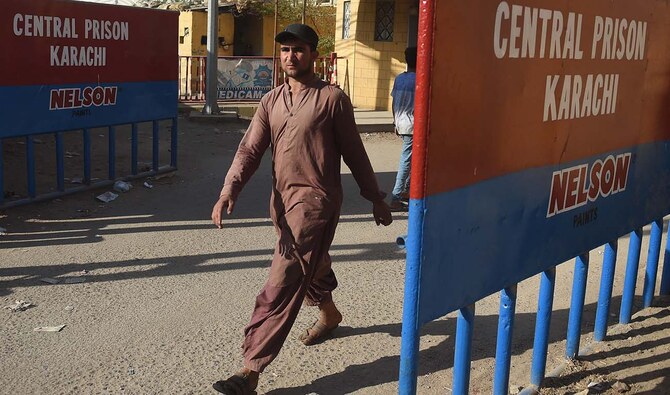
Pakistan president grants remission in sentences to prisoners for 78th Independence Day
https://arab.news/43qv5
Pakistan president grants remission in sentences to prisoners for 78th Independence Day

- The remission was granted under Article 45 of the constitution
- Prisoners convicted of serious crimes won’t be benefitted by it
Pakistan bank enables Shariah-compliant digital payment facility for passengers at Islamabad airport

Pakistan bank enables Shariah-compliant digital payment facility for passengers at Islamabad airport
- Pakistan is a cash-dominated market where a significant portion of transactions in the informal sector are made without any taxes, officials say
- The move comes amid Pakistan’s efforts to introduce a cashless model at airports under which only digital service providers can provide services
KARACHI: Aik, Pakistan’s first Islamic digital bank, has enabled fully digital payments at Islamabad International Airport to offer travelers and passengers secure, Shariah compliant digital transaction facility.
The development comes amid Pakistan’s efforts to introduce a cashless model at airports across the country, under which only digital service providers can provide services to customers.
Aik, a subsidiary of Bank Islami, said it has onboarded merchants across the Islamabad airport and integrated QR code deployments at key touchpoints to allow passengers and visitors to make secure, seamless, and Shariah-compliant digital transactions at all counters, retail outlets, and service points.
It said the implementation complies with the regulations and framework set by the State Bank of Pakistan (SBP) and is a working model for a large-scale adoption of cashless systems in public infrastructure.
“This deployment reflects our commitment to building practical digital infrastructure that improves everyday transactions,” Aik Chief Officer Ashfaque Ahmed said in a statement.
“By enabling a fully cashless environment at a major national gateway, we are supporting efficiency, transparency, and financial inclusion at scale. This is not only a project; it is a foundation for Pakistan’s cashless future.”
Pakistan is a cash-dominated market where a significant portion of transactions, particularly in the informal sector, are conducted in cash. Officials say many of these transactions are aimed at avoiding taxes.
In recent years, the SBP has taken steps to ensure a transition toward a more cashless economy so that transactions are more traceable, reducing chances of tax evasion and corruption.
By digitizing Islamabad airport, aik said it continues to invest in secure and accessible financial solutions that “expand digital participation and support national economic modernization.”


