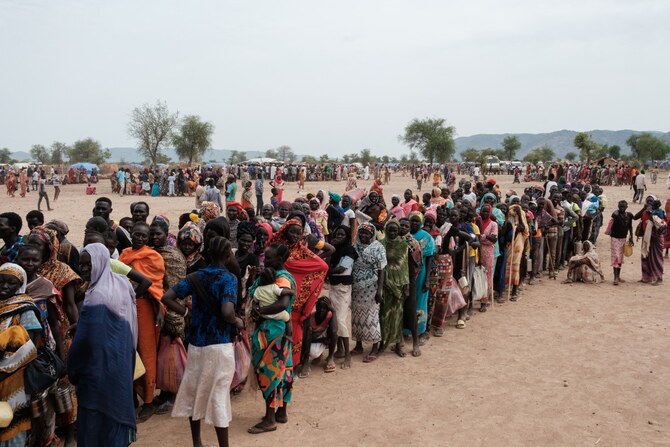

GENEVA: Sudan is at a catastrophic “breaking point,” with tens of thousands of preventable deaths looming due to multiple crises, the United Nations’ migration agency warned Monday.
The International Organization for Migration said famine and floods were adding to a catalogue of challenges facing millions of people in the war-torn country, amid the world’s largest displacement crisis.
“Make no mistake: these conditions will persist and worsen if the conflict and restrictions on humanitarian access continue,” Othman Belbeisi, IOM Middle East and North Africa director, said in a statement.
“Without an immediate, massive, and coordinated global response, we risk witnessing tens of thousands of preventable deaths in the coming months. We are at breaking point — a catastrophic, cataclysmic breaking point.”
War has raged since April 2023 between the Sudanese army under Abdel Fattah Al-Burhan and the paramilitary Rapid Support Forces, led by his former deputy Mohamed Hamdan Dagalo.
The conflict has left tens of thousands dead, according to the UN.
The IOM said new figures showed more than 10.7 million people are internally displaced within Sudan, with many uprooted several times over.
Meanwhile 2.3 million have fled across the borders into neighboring countries.
Flooding has displaced more than 20,000 people since June across 11 of Sudan’s 18 states, the IOM said, adding that critical infrastructure had been washed away, disrupting the delivery of vital supplies.
Overall, more than 45,000 people have been displaced over the last two weeks, with more than 38,000 of them fleeing across the borders.
The conflict has pushed the Zamzam camp near the besieged Darfur city of El-Fasher into famine, according to the UN-backed Integrated Food Security Phase Classification (IPC) review.
The IOM said humanitarian and protection conditions in Sudan were “among the worst in the world.”
“Restrictions on humanitarian access, including impediments imposed by parties to the conflict, have severely curtailed the ability of aid organizations to scale up and save lives, especially during the current rainy season,” the Geneva-based agency said.
“Urgent funding” is required for “those still in desperate need of food, shelter, water, health services, and specialized protection.”

keywords