Downed Ukraine-launched missile injures 13 in Russia’s Kursk, regional officials say

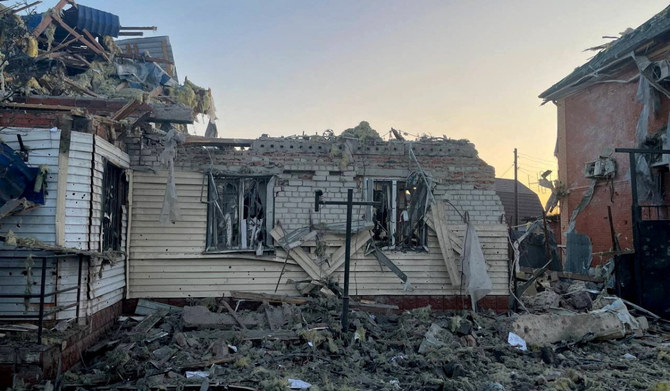
A view shows a damaged house following what local authorities called a Ukrainian military strike, in the course of the Russia-Ukraine conflict in the town of Sudzha in the Kursk Region, Russia, in this handout image released August 6, 2024. (Reuters)
Short Url
Updated 11 August 2024
Follow

Downed Ukraine-launched missile injures 13 in Russia’s Kursk, regional officials say

  • Kutsak posted a photo of a residential building with blown out windows and damaged balconies and facade of a residential building at night

MOSCOW: At least 13 people were injured in the city of Kursk after debris from a destroyed Ukraine-launched missile fell onto a nine-story residential building, officials of the Russian border Kursk region said on Sunday.
Moscow’s forces are in their sixth day of intense battles against Kyiv’s largest incursion into Russian territory since Russia launched a full-scale invasion on its smaller neighbor, with local authorities rushing to evacuate areas at risk.
Alexei Smirnov, Kursk’s acting governor, said in a post on the Telegram messaging app that two of the injured were in serious condition.
Residents of the building were to be evacuated to a temporary accommodations centers, Kursk Mayor Igor Kutsak said on Telegram. He added that the whole city was under air raid alerts.
Kutsak posted a photo of a residential building with blown out windows and damaged balconies and facade of a residential building at night.
Reuters could not independently verify the reports from Kursk. There was no immediate comment from Ukraine.
Both Kyiv and Moscow deny targeting civilians in their attacks in the war, which has killed thousands of people and misplaced millions of Ukrainians, and has no end in sight.


US NATO envoy says allies must ‘pull weight’ after Czech defense cut

Updated 6 sec ago
Follow

US NATO envoy says allies must ‘pull weight’ after Czech defense cut

PRAGUE, March 12 : The United States’ ambassador to ‌NATO said on Thursday that all allies must “pull their weight,” after Czech lawmakers approved a 2026 budget that cuts defense outlays.
Czech Prime Minister ​Andrej Babis’ government, in power since December, pushed a revamped budget through the lower house on Wednesday evening which cut the defense ministry’s allocation versus a previous proposal to 154.8 billion crowns ($7.31 billion), or 1.73 percent of gross domestic product.
That is below a NATO target of 2 percent of GDP already expected before alliance members pledged last year in the Hague ‌to raise defense spending ‌to 3.5 percent of GDP plus ​1.5 percent ‌on ⁠other defense-relevant investments ​over ⁠the next decade.
The Czech Finance Ministry says total defense spending in the budget will reach 2.07 percent of GDP, but the country’s budget watchdog has warned that includes money earmarked elsewhere, like for the transport ministry for road projects, that may not be recognized by NATO.
“All Allies must pull their weight and ⁠honor The Hague Defense Commitment,” US Ambassador to ‌NATO Matthew Whitaker said on X ‌on Thursday with a picture of ​a news headline on the Czech ‌budget approval.
“These numbers are not arbitrary. They are about ‌meeting the moment — and the moment requires 5 percent as the standard. No excuses, no opt-outs.”
European NATO countries are under pressure to raise defense spending amid the Ukraine-Russia war ‌and at US President Donald Trump’s urging.
Babis, whose populist ANO party won elections last year, said ⁠in February ⁠the country was “certainly not” on the path to raising core defense spending to the 3.5 percent target, saying there was a different focus, like on health care.
The budget watchdog on Thursday reiterated “strong doubts” that some spending deemed defense in this year’s budget would meet NATO’s definition.
President Petr Pavel, a former NATO official, has also said defense cuts risked a loss of trust from allies — but has signalled he would not veto the budget.
US Ambassador to Prague Nicholas Merrick said last ​week the Czech Republic may ​slip to the bottom of NATO’s defense-spending ranks.