

PIF-owned property developer ROSHN launches sales for Riyadh’s SEDRA Phase 4

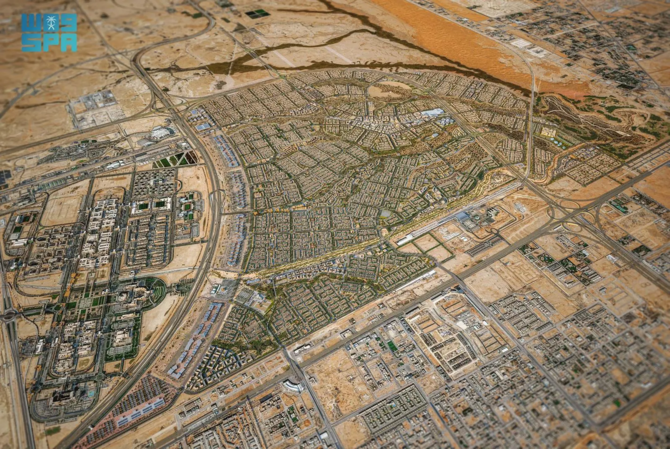
By 2030, ROSHN plans to develop over 400,000 homes, along with 1,000 kindergartens and schools, and over 700 mosques. SPA
Short Url
Updated 01 October 2024
Follow

PIF-owned property developer ROSHN launches sales for Riyadh’s SEDRA Phase 4

  • This phase expands the flagship development by 1.8 million sq. meters
  • Around 40 percent of the area is dedicated to green public spaces, pedestrian walkways, and road networks

RIYADH: Saudi real estate developer ROSHN has opened sales for 1,251 new homes as part of the fourth phase of its northern Riyadh-based SEDRA project. 

This phase expands the flagship development by 1.8 million sq. meters, featuring homes near the natural wadi integrated into the SEDRA masterplan, following high demand and sales for homes in the community, the company said. 

In October last year, the property developer launched the sales for the third phase of SEDRA, introducing 3,438 new residences and a wide range of amenities within the project. 

Announced in 2021, the eight-phase SEDRA project spans 20 million sq. meters and is planned to provide over 30,000 private homes as part of Saudi Arabia’s broader urban development and housing initiatives. 

The project is known for its modern residential communities and integrated amenities, contributing to the Kingdom’s Vision 2030 goals of enhancing urban living and promoting sustainable development. 

A giga-project under the Public Investment Fund, the company said that the fourth phase of the SEDRA community, located north of the third phase, will provide residents with convenient access to shopping and office areas in the ROSHN Front — a mega business and leisure development.

The area also features various amenities, including the Saudi Sports for All Federation Dome, which is part of a broader partnership between ROSHN and the sports body, aimed at providing year-round, all-weather access to sports facilities for all interests and skill levels. 

The project’s name is inspired by the indigenous tree prevalent in Saudi Arabia, symbolizing endurance and aligning with ROSHN’s goal of creating a community that fosters nature preservation and sustainable living in line with Vision 2030. 

The company said that around 40 percent of the area is dedicated to green public spaces, pedestrian walkways, and road networks. 

ROSHN, with a mandate to raise the rate of homeownership to 70 percent in the country, added that the location is easily reachable via Airport Road and is close to two metro stations. 

It is near Princess Nourah bin Abdulrahman University, Imam Mohammad Ibn Saud Islamic University, and King Khalid International Airport, as well as the Saudi Arabia Railways train station. 

By 2030, ROSHN plans to develop over 400,000 homes, along with 1,000 kindergartens and schools, and over 700 mosques. 

It recently announced a deal to build the Aramco Stadium — a 47,000-seat facility in Al-Khobar. The project is expected to be completed and operational by 2026 and will host national and international events, including the 2027 AFC Asian Cup in January of that year. 


Kuwait to boost Islamic finance with sukuk regulation

Updated 05 February 2026
Follow

Kuwait to boost Islamic finance with sukuk regulation

  • The move supports sustainable financing and is part of Kuwait’s efforts to diversify its oil-dependent economy

RIYADH: Kuwait is planning to introduce legislation to regulate the issuance of sukuk, or Islamic bonds, both domestically and internationally, as part of efforts to support more sustainable financing for the oil-rich Gulf nation, Prime Minister Sheikh Ahmad Abdullah Al-Ahmad Al-Sabah said on Wednesday.

Speaking at the World Governments Summit in Dubai, Al-Sabah highlighted that Kuwait is exploring a variety of debt instruments to diversify its economy. The country has been implementing fiscal reforms aimed at stimulating growth and controlling its budget deficit amid persistently low oil prices. Hydrocarbons continue to dominate Kuwait’s revenue stream, accounting for nearly 90 percent of government income in 2024.

The Gulf Cooperation Council’s debt capital market is projected to exceed $1.25 trillion by 2026, driven by project funding and government initiatives, representing a 13.6 percent expansion, according to Fitch Ratings.

The region is expected to remain one of the largest sources of US dollar-denominated debt and sukuk issuance among emerging markets. Fitch also noted that cross-sector economic diversification, refinancing needs, and deficit funding are key factors behind this growth.

“We are about to approve the first legislation regulating issuance of government sukuk locally and internationally, in accordance with Islamic laws,” Al-Sabah said.

“This enables us to deal with financial challenges flexibly and responsibly, and to plan for medium and long-term finances.”

Kuwait returned to global debt markets last year with strong results, raising $11.25 billion through a three-part bond sale — the country’s first US dollar issuance since 2017 — drawing substantial investor demand. In March, a new public debt law raised the borrowing ceiling to 30 billion dinars ($98 billion) from 10 billion dinars, enabling longer-term borrowing.

The Gulf’s debt capital markets, which totaled $1.1 trillion at the end of the third quarter of 2025, have evolved from primarily sovereign funding tools into increasingly sophisticated instruments serving governments, banks, and corporates alike. As diversification efforts accelerate and refinancing cycles intensify, regional issuers have become regular participants in global debt markets, reinforcing the GCC’s role in emerging-market capital flows.

In 2025, GCC countries accounted for 35 percent of all emerging-market US dollar debt issuance, excluding China, with growth in US dollar sukuk issuance notably outpacing conventional bonds. The region’s total outstanding debt capital markets grew more than 14 percent year on year, reaching $1.1 trillion.