ISLAMABAD: Pakistan’s jailed former prime minister, Imran Khan, said on Sunday it would be “foolish” not to have “excellent” relations with the army as he ruled out an out-of-court settlement for himself.
Ahead of Monday’s anniversary of his jailing last August on dozens of charges ranging from corruption to leaking state secrets, Khan said in written responses to Reuters questions that he held no grudges against the United States, whom he has in the past blamed for his 2022 ouster from office. Washington denies any role.
“Given Pakistan’s geographical position and the military’s significant role in the private sector, it would be foolish not to foster such a relationship [with the army],” Khan wrote in replies relayed by his media and legal team. “We are proud of our soldiers and armed forces.”
Khan said his criticisms against the army since his ouster had been directed at individuals, not the military as an institution:
“The miscalculations of the military leadership shouldn’t be held against the institution as a whole.”
On Wednesday, Khan offered to hold “conditional negotiations” with the South Asian nation’s military — if “clean and transparent” elections were held and the “bogus” cases against his supporters were dropped.
Pakistan’s army and government did not immediately respond to requests for comment on Khan’s remarks to Reuters. They have both repeatedly denied his assertions.
In his replies, the 71-year-old former cricket star did not specify what he wanted to discuss with the military.
‘OPEN TO ANY DIALOGUE’ WITH ARMY
The army, which has ruled Pakistan for nearly half its 76-year independent history, plays an oversized role in the politics and governance of the nation of 240 million people, though the current military leadership says it does not interfere in politics.
Khan, who lost power in a parliamentary vote of no confidence after falling out with the generals, has said the army has been backing what he calls the politically motivated cases against him, which the military vehemently denies.
Still, he said, there would be “no harm” in engaging with the generals if he should be released from jail and seek to return to power.
“We are open to any dialogue that could help improve the dire situation in Pakistan,” he said, adding that it was useless to open any such talks with the coalition government of Prime Minister Shehbaz Sharif, which he says does not enjoy public backing because he claims it won a “stolen” election in February. The election commission says polls were free and fair.
Rather, Khan said, it would be “more productive to engage with those who actually wield power.”
The military — which says Khan and his party were behind attacks on military installations on May 9 last year during widespread protests against his detention — has previously ruled out any talks with him.
Khan’s imprisonment has added to the political volatility in Pakistan, which has experienced a prolonged economic crisis and last month received a bailout from the International Monetary Fund.
The political instability since Khan’s ouster from power helped force Islamabad to accept the IMF’s painful fiscal consolidation requirements, which have burdened the people with heavy taxes, analysts say.
The IMF has called for political stability to help put the $350 billion economy on a recovery path.
Khan rejected the idea of reaching an out-of-court settlement with the government or military, unless they accepted that his PTI party had won a majority in February’s election.
“The elections were the most rigged in Pakistan’s history,” Khan told Reuters.


![]()
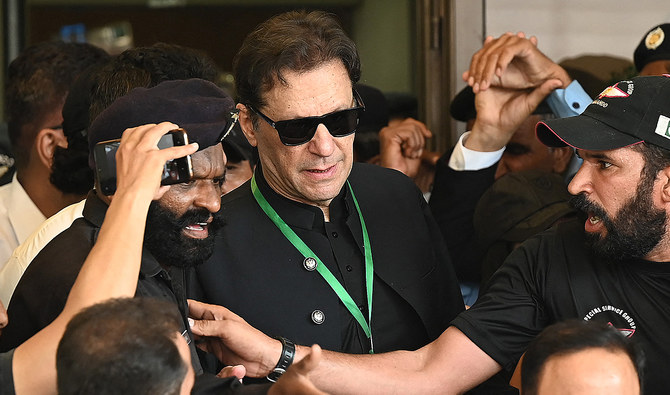
Jailed ex-PM Imran Khan says no out-of-court settlement in the offing

Short Url
https://arab.news/5r8cj
Jailed ex-PM Imran Khan says no out-of-court settlement in the offing
- Khan says would be ‘foolish’ not to have good relations with army
- ‘Open to any dialogue’ with military but not government, Khan says
Latest updates


Recommended


© 2026 SAUDI RESEARCH & PUBLISHING COMPANY, All Rights Reserved And subject to Terms of Use Agreement.