Egypt’s net foreign assets positive for second month in June

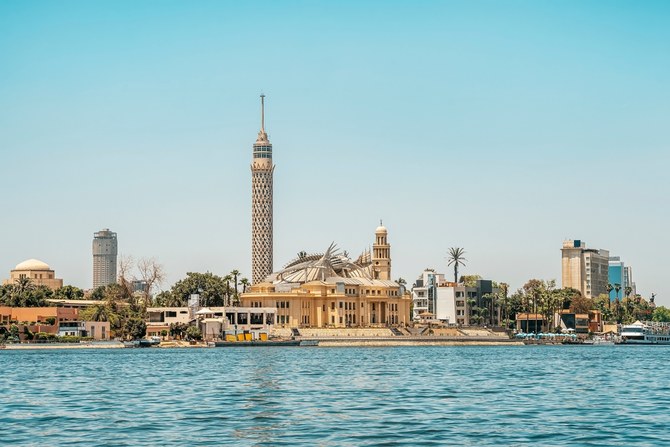
Egypt has been using its NFAs to help prop up its currency since at least September 2021. Shutterstock
Short Url
Updated 04 August 2024
Follow

Egypt’s net foreign assets positive for second month in June

  • NFAs slid to 626.6 billion Egyptian pounds in June from 676.4 billion pounds as of end-May

CAIRO: Egypt’s net foreign assets stayed positive for a second straight month in June having been deeply negative for more than two years, central bank data showed.
NFAs slid to 626.6 billion Egyptian pounds in June from 676.4 billion pounds as of end-May. This works out to $13.05 billion at end-June and $14.31 billion at end-May, according to Reuters calculations based on the official central bank currency rate at the time.
Egypt has been using its NFAs, which include foreign assets at both the central bank and commercial banks, to help prop up its currency since at least September 2021. NFAs turned negative in February 2022.
But in February this year, the government boosted its finances by selling the development rights to Ras El-Hekma on the Mediterranean coast for $35 billion and in March by signing an $8 billion financial support package with the International Monetary Fund.
It also sharply devalued its currency, triggering a flood of portfolio investments and remittances from workers abroad.
Foreign assets fell at commercial banks in June but rose at the central bank, while foreign liabilities rose at both commercial banks and the central bank.


Saudi POS spending jumps 28% in final week of Jan: SAMA

Updated 06 February 2026
Follow

Saudi POS spending jumps 28% in final week of Jan: SAMA

RIYADH: Saudi Arabia’s point-of-sale spending climbed sharply in the final week of January, rising nearly 28 percent from the previous week as consumer outlays increased across almost all sectors. 

POS transactions reached SR16 billion ($4.27 billion) in the week ending Jan. 31, up 27.8 percent week on week, according to the Saudi Central Bank. Transaction volumes rose 16.5 percent to 248.8 million, reflecting stronger retail and service activity. 

Spending on jewelry saw the biggest uptick at 55.5 percent to SR613.69 million, followed by laundry services which saw a 44.4 percent increase to SR62.83 million. 

Expenditure on personal care rose 29.1 percent, while outlays on books and stationery increased 5.1 percent. Hotel spending climbed 7.4 percent to SR377.1 million. 

Further gains were recorded across other categories. Spending in pharmacies and medical supplies rose 33.4 percent to SR259.19 million, while medical services increased 13.7 percent to SR515.44 million. 

Food and beverage spending surged 38.6 percent to SR2.6 billion, accounting for the largest share of total POS value. Restaurants and cafes followed with a 20.4 percent increase to SR1.81 billion. Apparel and clothing spending rose 35.4 percent to SR1.33 billion, representing the third-largest share during the week. 

The Kingdom’s key urban centers mirrored the national surge. Riyadh, which accounted for the largest share of total POS spending, saw a 22 percent rise to SR5.44 billion from SR4.46 billion the previous week. The number of transactions in the capital reached 78.6 million, up 13.8 percent week on week. 

In Jeddah, transaction values increased 23.7 percent to SR2.16 billion, while Dammam reported a 22.2 percent rise to SR783.06 million. 

POS data, tracked weekly by SAMA, provides an indicator of consumer spending trends and the ongoing growth of digital payments in Saudi Arabia.  

The data also highlights the expanding reach of POS infrastructure, extending beyond major retail hubs to smaller cities and service sectors, supporting broader digital inclusion initiatives.  

The growth of digital payment technologies aligns with Saudi Arabia’s Vision 2030 objectives, promoting electronic transactions and contributing to the Kingdom’s broader digital economy.