JERUSALEM: Sitting in a tent in southern Gaza, Palestinian food blogger Hamada Shaqoura surveys cans of beans and tinned meat and longs for something that could conjure a sense of home.
Before the war, before his house was destroyed and his family uprooted three times, the 32-year-old was a YouTuber reviewing Gaza City’s buzziest burger, pizza, and noodle spots.
To satisfy his craving for comfort food on a war-rations diet, he taught himself to cook using food aid packages and whatever fresh vegetable he can scrounge up.
“I had an idea to turn this canned food we have been eating for months into something new, to make delicious food for kids,” he tells AFP in a video call from Khan Younis.

Hamada Shaqoura. (Photo/Social media)
Shaqoura’s cuisine includes beef tacos, “Gazan style,” pizza wraps, and a deep-fried “golden sandwich,” which he films as he cooks and offers to the tent camp’s hungry children.
“Zakee (delicious)!” a boy beams in a video after biting into a sweet “fettuccine crepe” — strips of fried batter mixed with apples and chocolate sauce.
Despite patchy internet, Shaqoura offers a different side of the conflict to document what he calls “resilience and persistence” amidst the rubble of war-devastated Gaza.
He is known as Hamada Shoo online, and his blogs have attracted nearly half a million followers on Instagram and donations from his fans.
“I want to feed as many mouths as possible,” he said.
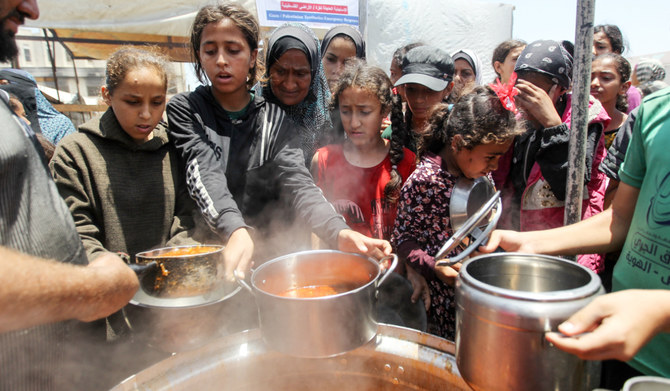
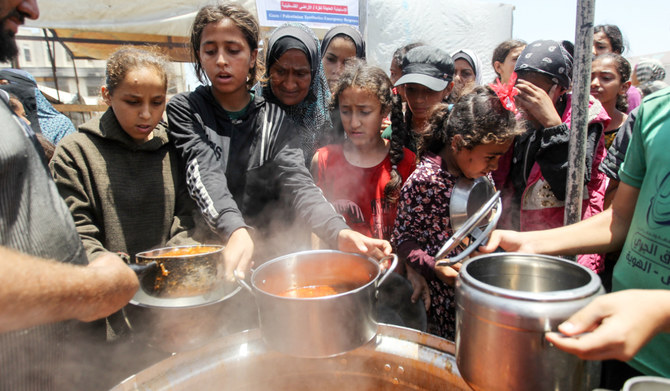
Barefoot children toting empty pots and bowls run through the ruins of Khan Younis to his tent, where the war chef cooks up pea stew in huge pots over an open-pit fire.
While the UN has not officially declared famine in Gaza, experts say hunger is rampant in the Israeli-besieged territory, with little food aid reaching the 2.4 million population.
More than 30 Palestinians have died from malnutrition since Hamas’s Oct. 7 attack on southern Israel set off the war that has devastated infrastructure across Gaza. Palestinians have told AFP of being forced to skip meals and having to boil weeds for
their children to survive.
“There is real famine” in northern Gaza, says Shaqoura, who fled from there in March and had little to go around in the south of the battered territory.
He says he is determined to help feed children. “That is my motivation.”
Shaqoura, who had just married when the war erupted and planned to work in the food industry, is one of several Gaza food bloggers.
He says Their goal is to provide “dignity and a sense of liberation” through food to beleaguered Gazans, not just comfort.
Cooking something that people can identify with is part of the “everyday struggle to stay human and retain your dignity in the face of a brutal occupation intended to strip you of that humanity year after year,” says Laila El-Haddad.
Gaza developed a “distinct” cuisine, with its spirit of innovation forged by two decades of Israeli blockades and sieges, said the food expert.
Shaqoura says he serves “hope on a plate” as an antidote to the deprivations and grief overwhelming Gaza.
During the El-Adha feast, he prepared donuts for the children to help them feel that “there is something worth celebrating.”
On hot days, he offers them refreshing lemon granitas.
He says his videos are meant to show the world that Gazans “are persistent, strong people.”
“We do our best to keep existing.”