

In a first, Pakistan’s Islamabad sets up anti-rape crisis cell at Polyclinic Hospital

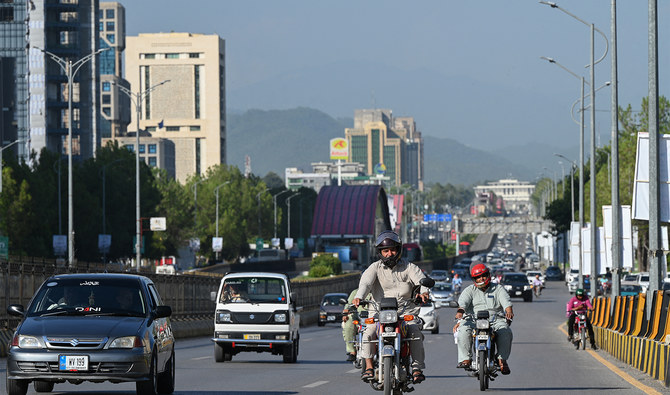
People commute on a road in Islamabad on July 11, 2023. (AFP/File)
Short Url
Updated 02 August 2024
Follow

In a first, Pakistan’s Islamabad sets up anti-rape crisis cell at Polyclinic Hospital

  • Many rape cases go unreported in South Asian nation due to social stigma and a fear of retaliation
  • Activists, experts have called for greater support and stronger laws for survivors to address the issue

ISLAMABAD: In a first, an anti-rape crisis cell (ARCC) was launched at the Polyclinic Hospital in the Pakistani capital on Thursday, the United Nations (UN) said, representing a “unified effort” to combat sexual violence and empower survivors.

The South Asian nation has seen a significant increase in rape cases in recent years, with many incidents going unreported due to social stigma and fear of retaliation. According to the Pakistan National Commission on the Status of Women, over 11,000 cases of rape were reported in 2021 alone.

In August 2023, Pakistan’s first-ever anti-rape crisis cell was launched at the Karachi Police Surgeon’s Office in the southern Sindh province, while another was established at Nishtar Hospital in the eastern province of Punjab. Activists and experts have called for greater support and stronger laws for survivors to address the issue.

“The federal government Polyclinic Hospital with technical support from UN Women and funding from the US Embassy’s Office of International Narcotics and Law Enforcement (INL) has launched the ARCC at Polyclinic Hospital in Islamabad,” the UN Women said in a statement.

Such facilities would serve as essential resource centers, providing a range of services to survivors, including medical and psychological support, legal aid, and counselling, it said, highlighting that the ARCC would operate round the clock with “robust security measures” in place.

The launch of the cell was attended by the Polyclinic Hospital’s Gynecology department head, Dr. Naushin Farooq, UN Women’s Saman Ahsan, US embassy official Carrie Basnight, Deputy Director at National Health Services Ministry Dr. Sophia Younas and Anti-Rape Special

Committee Chairperson Senator Ayesha Raza Farooq among others.

“ARCCs serve as essential pillars in our collective efforts to combat sexual violence and ensure the rights and well-being of rape survivors,” Ahsan said. “By providing comprehensive services and support, these cells play a pivotal role in empowering survivors to reclaim their lives and seek justice.”

Basnight, the US official, appreciated the Pakistani government’s commitment to advocate for the protection of survivor rights.

“I commend the federal government and UN Women for establishing the ARCC,” the official said. “Sexual violence is not only a local issue but a global challenge that requires collective action.”

Dr. Younas of the National Health Services Ministry emphasized the Pakistani government’s commitment to eliminating sexual violence and offering extensive support to survivors.

“As we gather to inaugurate Islamabad’s ARCC, we mark a crucial milestone in our unwavering pursuit of justice and safety for all citizens,” she said. “The creation of this crisis cell highlights the government’s dedication and the collaborative efforts of various stakeholders in our ongoing fight against sexual violence.”

The UN Women said the launch of the facility in Islamabad represented a “significant advancement in the quest for justice and support” for survivors of sexual assaults.


Pakistan says EU notes progress on rights commitments during GSP+ compliance discussions

Updated 7 sec ago
Follow

Pakistan says EU notes progress on rights commitments during GSP+ compliance discussions

  • The review formed part of a wide-ranging EU-Pakistan Joint Commission meeting held in Brussels
  • The two sides also covered irregular migration, climate cooperation and safe Afghan refugee return

ISLAMABAD: The European Union reviewed Pakistan’s compliance with its preferential GSP+ trade scheme this week and welcomed progress on key human rights commitments, according to a statement on Saturday, as Islamabad seeks to protect access to European markets vital for its export-led growth strategy.

The EU’s Generalized Scheme of Preferences Plus (GSP+) grants duty-free access to most European markets for eligible developing countries in return for their commitment to implement 27 international conventions covering human rights, labor standards, environmental protection and good governance. Pakistan, which has benefited from the scheme since 2014, is one of the biggest beneficiaries, with the EU its second-largest trading partner and a destination for roughly a third of its exports.

Pakistan’s GSP+ status has come under scrutiny in the past after, in April 2021, the European Parliament adopted a resolution calling for an immediate review, citing concerns over violence against religious minorities, curbs on media freedom and broader human rights issues. The move followed widespread anti-France protests in Pakistan over the publication of anti-Islamic caricatures, which EU legislators said raised questions about Islamabad’s commitment to fundamental freedoms.

“Both sides reviewed Pakistan’s progress on the implementation of the 27 international conventions as required under the GSP+ framework,” the foreign office said in a statement circulated in Islamabad. “The EU welcomed progress made in bringing Pakistan’s application of the death penalty in line with international standards and encouraged further steps in this regard.”

“It also recognised important first steps against torture, as well as the creation of a Commission on Minorities,” it added.

IRREGULAR MIGRATION, CLIMATE COOPERATION

The discussions took place during the 15th meeting of the EU–Pakistan Joint Commission, held in Brussels on Dec. 17, where officials also addressed irregular migration, including cooperation on the return and readmission of migrants without legal status, and legal mobility pathways under the bloc’s broader migration framework.

The foreign office statement came just a day after Greek authorities said they rescued more than 500 migrants from a fishing boat in the Mediterranean, adding that the group included several Pakistani nationals, highlighting continued migration pressures despite tighter controls.

Climate cooperation was another focus, with both sides reviewing ongoing collaboration on climate resilience, disaster risk reduction and sustainable development, areas of growing importance for Pakistan after repeated climate-related shocks.

The meeting also touched on the situation of Afghan refugees.

The statement said the EU welcomed the ongoing discussions between Pakistan and the UN refugee agency “to identify and compile a list of vulnerable cases, to ensure their adequate protection.”

“The EU appreciated that Pakistan is hosting millions of Afghan nationals for over four decades,” it continued. “They emphasised that any return must be safe, dignified and in line with international standards.”

The two sides agreed to continue engagement under the EU–Pakistan Strategic Engagement Plan, a framework guiding cooperation on political dialogue, trade, development, security and people-to-people exchanges, with the next joint commission meeting scheduled to be held in Islamabad next year.