ISLAMABAD: Pakistan’s foreign office spokesperson on Thursday rejected Iran’s recent statement condemning violent clashes in its northwestern Parachinar town, saying it was “unwarranted” and based on an “incomplete picture” of the situation.
At least 32 people were killed and over 190 injured in clashes that erupted last week in Pakistan’s northwestern Kurram district, particularly its capital Parachinar town.
The Kurram tribal district has witnessed deadly conflicts among tribes and religious groups as well as sectarian clashes and militant attacks over the years. The latest clashes broke out over a property dispute last week and quickly spread to nearby villages and settlements before the warring tribes agreed to a ceasefire on Sunday.
In a statement on Wednesday, Iran’s Foreign Ministry Spokesperson Nasser Kanaani condemned the “terrorist attack,” saying it had targeted Shia Muslims in Pakistan. He stressed the need for decisive action against militant groups to protect the lives of the people of Parachinar.
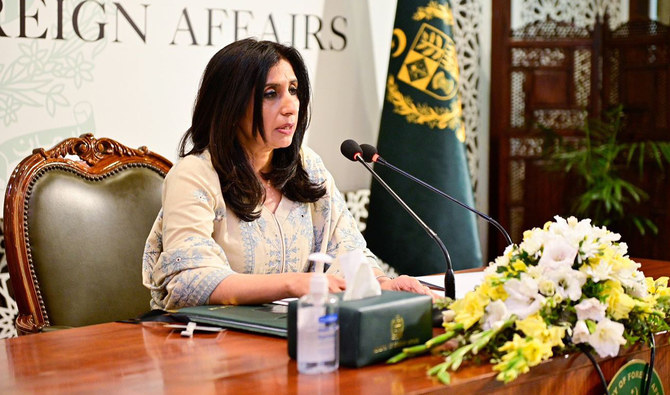
“Such statements about Pakistan’s domestic affairs are therefore unwarranted,” Mumtaz Zahra Baloch, the spokesperson of Pakistan’s Ministry of Foreign Affairs, (MoFA) said during a weekly press briefing.
“While details may be sought from the Ministry of Interior, we believe that these statements are based on an incomplete picture of the situation in Parachinar,” she added.
Baloch said Pakistan values the life, dignity and prosperity of all of its nationals as a multicultural and multifaith society.
“Pakistan is fully determined to foster social harmony, tolerance, and mutual respect,” she said.
Pakistan and Iran have had a history of rocky relations despite several commercial pacts. Their highest profile agreement is a stalled gas supply deal signed in 2010 to build a pipeline from Iran’s Fars gas field to Pakistan’s southern provinces of Balochistan and Sindh.
Pakistan and Iran also find themselves at odds due to the instability along their shared porous border, with their leaders routinely trading blame after militant attacks in their respective territories.
Earlier this year in January, the two countries exchanged airstrikes, with each government claiming to have targeted militant hideouts in the other country. Both states have since made peace overtures and restored bilateral ties through multiple high-level visits.


Pakistan says Iran’s statement on Parachinar clashes ‘unwarranted’
https://arab.news/c7swe
Pakistan says Iran’s statement on Parachinar clashes ‘unwarranted’

- Warring tribes last week clashed over property dispute in Pakistan’s Kurram district, leaving at least 32 dead, 190 injured
- Pakistan says Iran’s statement condemning violence based on “incomplete picture” of situation in Parachinar town
Pakistan reports current account surplus in Jan. owing to improved trade, remittances
- Pakistan’s exports crossed the $3 billion mark in Jan. as the country received $3.5 billion in remittances
- Last month, IMF urged Pakistan to accelerate pace of structural reforms to strengthen economic growth
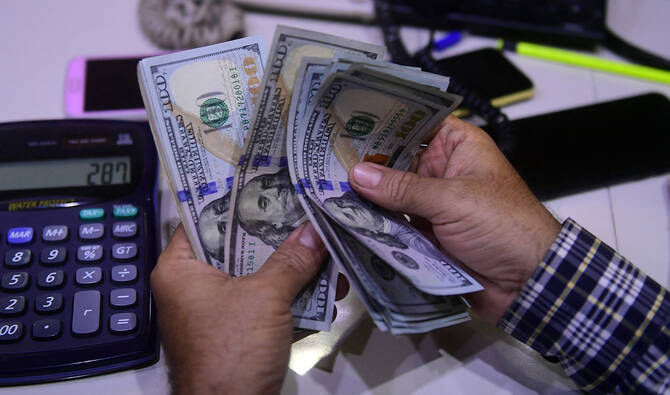
ISLAMABAD: Pakistan recorded a current account surplus of more than $120 million in January, the country’s finance adviser said on Tuesday, attributing it to improved trade balance and remittance inflows.
Pakistan’s exports rebounded in January 2026 after five months of weak performance, rising 3.73 percent year on year and surging 34.96 percent month on month, according to data released by the country’s statistics bureau.
Exports crossed the $3 billion mark for the first time in January to reach $3.061 billion, compared to $2.27 billion in Dec. 2025. The country received $3.5 billion in foreign remittances in Jan. 2026.
Khurram Schehzad, an adviser to the finance minister, said Pakistan reported a current account surplus of $121 million in Jan., compared to a current account deficit of $393 million in the same month last year.
“Improved trade balance in January 2026, strong remittance inflows, and sustained momentum in services exports (IT/Tech) continue to reinforce the country’s external account position,” he said on X.
Pakistan has undergone a difficult period of stabilization, marked by inflation, currency depreciation and financing gaps, and international rating agencies have acknowledged improvements after Islamabad began implementing reforms such as privatizing loss-making, state-owned enterprises (SOEs) and ending subsidies as part of a $7 billion International Monetary Fund (IMF) loan program.
Late last month, the IMF urged Pakistan to accelerate the pace of these structural reforms to strengthen economic growth.
Responding to questions from Arab News at a virtual media roundtable on emerging markets’ resilience, IMF’s director of the Middle East and Central Asia Jihad Azour said Islamabad’s implementation of the IMF requirements had been “strong” despite devastating floods that killed more than 1,000 people and devastated farmland, forcing the government to revise its 4.2 percent growth target to 3.9 percent.
“What is important going forward in order to strengthen growth and to maintain the level of macroeconomic stability is to accelerate the structural reforms,” he said at the meeting.
Azour underlined Pakistan’s plans to privatize some of the SOEs and improve financial management of important public entities, particularly power companies, as an important way for the country to boost its capacity to cater to the economy for additional exports.
“This comes in addition to the effort that the authorities have made in order to reform their tariffs, which will allow the private sector of Pakistan to become more competitive,” the IMF official said.


