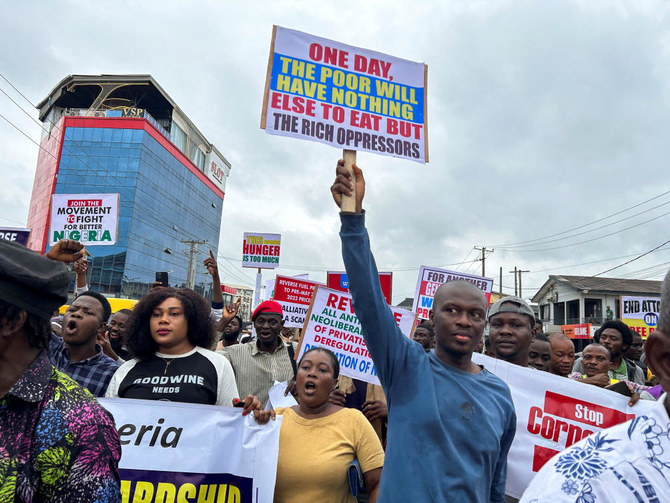

Nigerian police fired tear gas to break up protesters in the capital Abuja and the northern city of Kano on Thursday as thousands of demonstrators in cities across the country joined rallies against the high cost of living.
Africa’s most populous country is struggling with soaring inflation and a sharply devalued naira after President Bola Ahmed Tinubu ended a costly fuel subsidy and liberalized the currency more than a year ago to improve the economy.
Tagged #EndbadGovernanceinNigeria, the protest movement won support with an online campaign, but officials had warned against attempts to copy recent violent demonstrations in Kenya, where protesters forced the government to abandon new taxes.
Many Nigerians are struggling with high costs — food inflation is at 40 percent and fuel is triple the price from a year ago — but many people were also wary about insecurity around protests.
In Kano, the country’s second largest city, protesters set fire to tires outside the state governor’s office and police responded with tear gas, forcing most of the demonstrators back, an AFP correspondent at the scene said.
“We are hungry — even the police are hungry, the army are hungry,” said factory worker Jite Omoze, 38.
“I have two children and a wife but I can’t feed them anymore,” he said, calling for the government to reduce fuel prices.
Protesters later torched and ransacked a digital center of the Nigeria Communications Commission near the governor’s office and police fired shots in the air to disperse them.
Police reported pockets of looting and arson in the city and arrested 13 people.
In Abuja, security forces blocked off roads leading to Eagle Square — one of the planned protest sites — and fired tear gas and set up barbed wire fencing to prevent several hundred protesters from reaching the park.
Security forces also fired tear gas to disperse crowds in Mararaba on the outskirts of the capital, an AFP reporter said.
Around 1,000 people marched peacefully in the mainland area of the economic capital Lagos, where they chanted “Tinubu Ole,” the Yoruba language word for thief.
Local media reported hundreds of protesters came out in the northeastern city of Maiduguri, Bauchi state, and several other states across the country.
“Hunger has brought me out to protest,” said 24-year-old demonstrator Asamau Peace Adams outside the National Stadium in Abuja before tear gas was fired. “It’s all down to bad governance.”
On the eve of the protests, Tinubu government officials urged young activists to reject rallies and allow time for his reforms to take hold and improve the economy.
But protest leaders, a loose coalition of civil society groups, vowed to press on with rallies despite what they say were legal challenges trying to limit them to public parks and stadiums instead of marches.
The government on Wednesday listed aid it has offered to alleviate economic pain, including raising the minimum salary levels, delivering grains to states across the country and aid to the most needy.
“The government of President Tinubu recognizes the right to peaceful protest, but circumspection and vigilance should be our watch words,” said Secretary to the Federation of Government George Akume.
The last major protest in Nigeria was in 2020 when young activists rallied against the brutality of the SARS anti-robbery squad in demonstrations that evolved into some of the largest in Nigeria’s modern democracy.
But the rallies ended in bloodshed in Lagos. Rights groups accused the army of opening fire on peaceful protesters, but the military said troops used blanks to break up a crowd defying a curfew. Amnesty International said at least 10 people died.
Nigeria’s protests come after Kenyan President William Ruto was forced to repeal new taxes and name a new cabinet following weeks of anti-government protests in the worst crisis in his almost two years in office.
In Uganda, officials also arrested dozens earlier this month after they took part in banned anti-corruption protests organized online by young activists inspired by Kenya’s rallies.