MINGORA, Pakistan: Eleven-year-old schoolgirl Hadiqa Bashir’s life changed a decade ago when her parents, influenced by relatives, told her she was to be married off to an elderly taxi driver.
Though child marriages are a norm in Bashir’s conservative Pashtun family in Pakistan’s northwestern Swat Valley, she sought the help of an uncle to defy her parent’s plans and even threatened her family that she would go to the police against them.
Now 22, Bashir has dedicated her life to fighting child marriages in a country where there are 19 million girls who are married off before they turn 18, the sixth highest number in the world, according to UNICEF.
“When you experience something yourself, then you understand it, you know the pain,” Bashir told Arab News at her office in Swat District’s Mingora city. “An incident happened in my life as well due to which I started a campaign against child marriages in Swat.”

The picture taken on July 9, 2024, shows an aerial view of Pakistan’s northwestern Swat Valley. (AN photo)
The legal age of marriage for females in Pakistan is 16, except for Sindh province where the minimum age is 18.
Many poor families are pushed by financial strains to marry their daughters young in order to reduce costs at home, or see marriage as the best option for girls who have limited options to study in remote regions. A largely patriarchal society, conservative social norms and pervasive gender inequality also push trends like child marriage.
Experts say the practice impedes the rights of girls to access education and health services, specifically in rural areas. It also affects their physical health, emotional well-being, education, and future prospects, exposing them to risks such as early pregnancy, domestic violence, and limited opportunities for personal and economic development and stripping away the right of decision-making, exacerbating power imbalances and restricting their autonomy in shaping their lives.
“The situation is very grave ... and you can see that child marriage often leads to early pregnancy before girls’ bodies are fully ready,” Susan Andrew, a child protection specialist at UNICEF Pakistan, told Arab News. “We are witnessing very high rates of infant and maternal mortality as well.”
Andrew added:
“The target should ultimately be that no girl is married before eighteen in Pakistan.”
And that is Bashir’s mission, which is why she set up the non-governmental organization, Girls United for Human Rights, in 2021 to campaign against child marriages. Bashir says she has since reached 90,000 of 1.4 million women and girls in Swat Valley to create awareness against the pervasive practice.
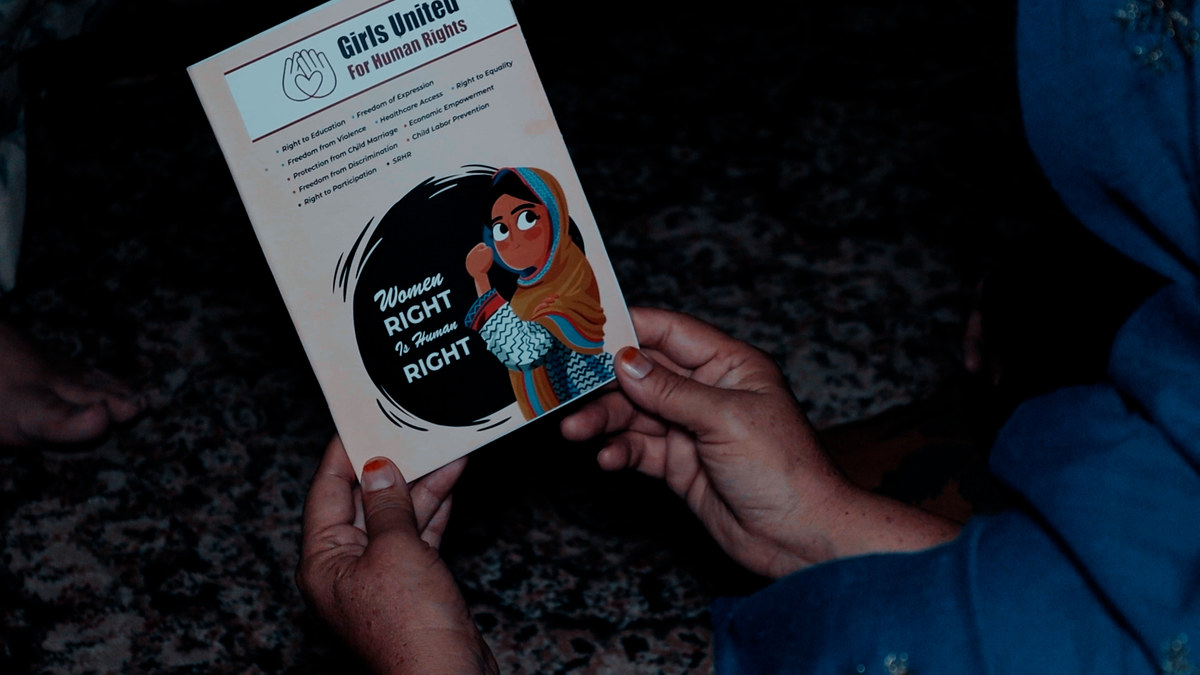
The picture taken on July 9, 2024, shows a woman holding a booklet on women's right in Pakistan’s northwestern Swat Valley. (AN photo)
“I WAS LUCKY”
With a population of 2.6 million, Bashir’s NGO estimates there are currently around 20,000 adolescent girls who could become victims of forced marriages in Swat, known around the world as the hometown of Malala Yousafzai, the Pakistani girl who was shot by the Taliban in 2012 for demanding education for girls and went on to become the youngest person ever to win the Nobel Peace Prize.
“In my own family, my aunt was married at 11-12 years of age, and my grandmother was insisting that we should marry me at 11 and get me out of the school and teach me how to do household chores,” Bashir recalled.
“I was lucky that my uncle told me about human rights, about the Child Marriages Restraint Act, and then bravely I stood up to my grandmother, the first girl in my family to do so, and told her that I don’t want to marry, I want to continue my studies.”
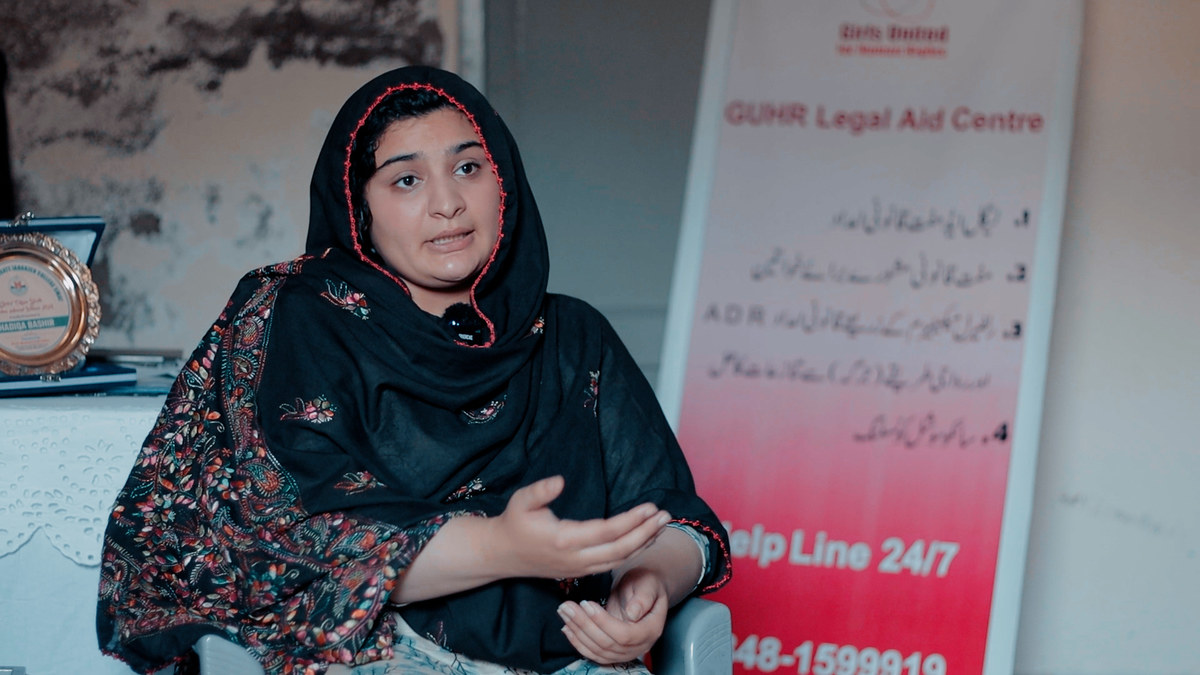
Pakistani activist Hadiqa Bashir speaks to Arab News Pakistan in Pakistan’s northwestern Swat Valley on July 9, 2024. (AN photo)
Bashir is aided in her campaign against early and forces marriages by international bodies like UNICEF and community leaders and religious clerics.
“[We] are getting very positive results [through awareness campaigns] with whoever we inform and educate about medical side effects [of child marriages],” Dr. Saeed Akbar, a community elder engaged with Bashir in Swat, told Arab News.
Akbar said he showed families photos of young brides who had died during pregnancy or childbirth.
“We show them the available records and photo that ‘See, this is the issue, if you keep marrying your daughters at younger age, you may face these problems’,” he said.
“Now some 70 percent people understand this while 20-30 percent don’t want to understand or need more time to understand but our efforts are ongoing and this segment will also be covered soon.”
Fazal Rabbi, a prayer leader in Swat, said there was “no place for child marriages in Islam,” which he also propagated in his sermons.
“If a child is given better education and training, and married after reaching the legal age, this will be beneficial for them,” Rabbi told Arab News. “She will be able to take care of her children’s education and training better as well as of her home.”