WASHINGTON: Israel’s suspected killing of Hamas’ political leader in the heart of Tehran, coming after a week in which Prime Minister Benjamin Netanyahupromised US lawmakers he would continue his war against Hamas until “total victory,” points to an Israeli leader ever more openly at odds with Biden administration efforts to calm the region through diplomacy.
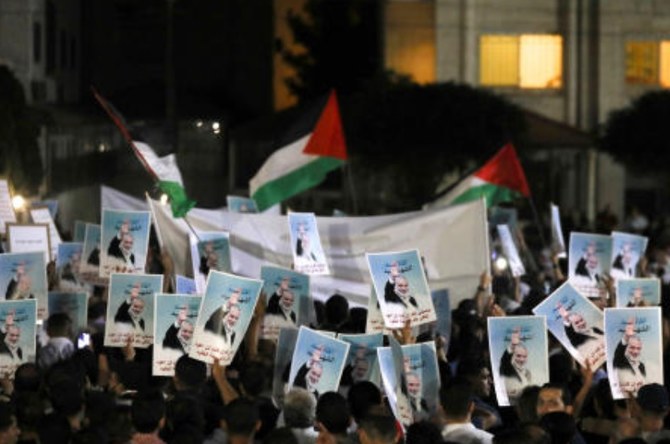
US Secretary of State Antony Blinken, speaking on an Asia trip, was left to tell reporters there that Americans had not been aware of or involved in the attack on Hamas political leader Ismail Haniyeh, whose roles included overseeing Hamas’ side in US-led mediation to bring a ceasefire and release of hostages in the Gaza war.
The US remains focused on a ceasefire in the 9-month-old Israeli war in Gaza “as the best way to bring the temperature down everywhere,” Blinken said after Haniyeh’s killing.
The targeting, and timing, of the overnight strike may have all but destroyed US hopes for now.
“I just don’t see how a ceasefire is feasible right now with the assassination of the person you would have been negotiating with,” said Vali Nasr, a former US diplomat now at the Johns Hopkins University School of Advanced International Studies.
If the expected cycles of retaliation and counter-retaliation ahead start unspooling as feared, Haniyeh’s killing could mark the end of Biden administration’s hopes of restraining escalatory actions as Israel targets what Netanyahu calls Iran’s “axis of terror,” in the wake of Hamas’ Oct. 7 attacks in Israel.
And with the US political campaign entering its final months, it will be more difficult for the Biden administration to break away — if it wants to — from an ally it is bound to through historical, security, economic and political ties.
The killing of Haniyeh, and another suspected Israeli strike on a senior Hezbollah leader in the Lebanese capital of Beirut hours earlier, came on the heels of Netanyahu’s return home from a nearly weeklong trip to the US, his first foreign trip of the war.
The Biden administration had said it hoped to use the visit to overcome some of the remaining obstacles in negotiations for a ceasefire in Gaza and to free Israeli, American and other foreign hostages held by Hamas and other militants.
President Joe Biden has been Israel’s most vital backer in the war, keeping up shipments of arms and other military aid while defending Israel against any international action over the deaths of more than 39,000 Palestinians in the Israeli offensive.
But Biden has also put his political weight behind efforts to secure the ceasefire and hostage release, including publicly declaring that the two sides had both agreed to a framework and urging them to seal the deal.
Netanyahu told a joint meeting of Congress during his visit that Israel was determined to win nothing less than “total victory” against Hamas. Asked directly by journalists on the point later, he said that Israel hoped for a ceasefire soon and was working for one.
Following the visit, Biden administration officials dodged questions about reports that Israel’s far-right government had newly raised additional conditions for any ceasefire deals.
Haniyeh had been openly living in Doha, Qatar, for the months since the Oct. 7 attack. But he wasn’t attacked until he was in Tehran for the inauguration of Iran’s president. Nasr said Iran will see it as a direct Israeli attack on its sovereignty, and respond.
“If you wanted to have a ceasefire, if Haniyeh was in your sights, you might have said, ‘I’ll kill him in a few months. Not now,” said Nasr, who said it suggested overt undermining of ceasefire negotiations by Netanyahu.
Netanyahu’s far-right government says Israel is fighting in Gaza to destroy Iran-allied Hamas as a military and governing power there. Israel warns that it is also prepared to expand its fight further to include an offensive in Lebanon, if necessary to stop what have been near-daily exchanges of rocket fire between Lebanon-based Hezbollah and Israel.
Hezbollah is by far the most powerful of the Iran-allied groups in the Middle East. Analysts and diplomats warn of any such expansion of hostilities touching off uncontrollable conflicts throughout the region that would draw in the United States as Israel’s ally. The US, France and others have urged Israel and Iran and its allies to resolve tensions through negotiations.
In a letter to foreign diplomats made public Tuesday, Israeli Foreign Minister Israel Katz said that Israel “is not interested in all-out war,” but that the only way to avoid it would be to implement a 2006 UN resolution calling for a demilitarized zone along Israel’s border with Lebanon and an end of hostilities with Hezbollah.
US national security adviser John Kirby, who earlier this week called fears of major escalation from the killing of the Hezbollah official in Beirut “exaggerated,” told reporters that the news of the more momentous strike on the Hamas leader in Tehran “doesn’t help ... with the temperature going down in the region. We’re obviously concerned.”
At the same time, Kirby said, “We also haven’t seen any indication...that this process has been completely torpedoed. We still believe that this is a worthy endeavor...and a deal can be had.” The US had a team in the region Wednesday for negotiations, he said.
“We don’t want to see an escalation. And everything we’ve been doing since the 7th of October has been trying to manage that risk,” he said.


![]()

Killing of Hamas political leader points to diverging paths for Israel, US, on ceasefire
Short Url
https://arab.news/g9fvf
Killing of Hamas political leader points to diverging paths for Israel, US, on ceasefire
- The US remains focused on a ceasefire in the 9-month-old Israeli war in Gaza “as the best way to bring the temperature down everywhere,” Blinken said
- “I just don’t see how a ceasefire is feasible right now with the assassination of the person you would have been negotiating with,” said Vali Nasr, a former US diplomat


Latest updates


Recommended


© 2026 SAUDI RESEARCH & PUBLISHING COMPANY, All Rights Reserved And subject to Terms of Use Agreement.