ISLAMABAD: Pakistan’s Planning Minister Ahsan Iqbal on Wednesday expressed optimism the next phase of the China-Pakistan Economic Corridor (CPEC) would bring advanced manufacturing technologies to the country that would help strengthen its industrial base and create more employment opportunities.
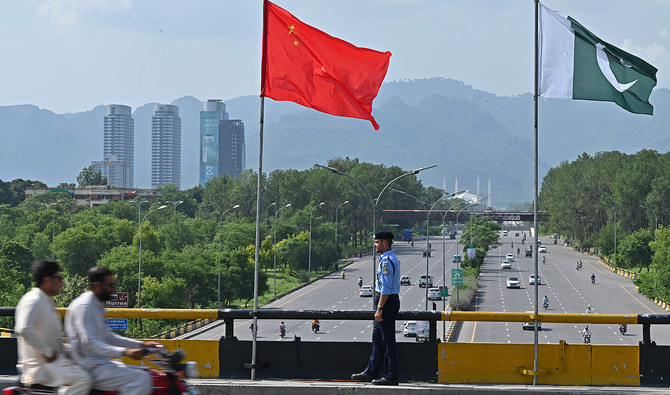
CPEC, a collection of multibillion-dollar infrastructure projects in Pakistan funded by China, is a major part of Beijing’s Belt and Road Initiative, aimed at increasing trade and stimulating economic growth across Asia and beyond.
The first phase of the corridor project primarily concentrated on addressing Pakistan’s energy shortage and included the construction of roads and railways to improve connectivity.
The second phase, often referred to as CPEC 2.0, aims to develop special economic zones, improve transportation networks and the promote industrial cooperation between China and Pakistan to foster economic development.
“CPEC 2.0 represents a broader and more ambitious scope,” Iqbal said while addressing an event in Islamabad. “This new phase will bring advanced manufacturing technologies to Pakistan, enhance our industrial base and create numerous job opportunities for our youth.”
Iqbal said the focus in the next CPEC stage was going to shift beyond infrastructure development to industrial relocation, agricultural modernization, cooperation in science and technology, job creation and enhancing the socioeconomic well-being of people.
He maintained Pakistan wanted to improve food security and uplift farmers’ livelihood through CPEC 2.0, adding it would ensure a sustainable and prosperous future for the agriculture sector by adopting modern production techniques and technologies.
He also noted that China-Pakistan cooperation in the fields of science and technology would drive innovation, fostering a knowledge-based economy in the latter country that would be able to compete globally.
“With the help of China, we will have 200,000 youth trained annually in information technology-related skills that will provide Pakistan the human resource that is necessary to leverage the full potential of our youth to make Pakistan an information powerhouse,” he added.
The minister hoped that CPEC 2.0 would help attract foreign direct investment in export-oriented industries, making Pakistan a reliable destination for exports.
“Our future lies in how fast we go from $30 billion to $100 billion export and creating a sound macroeconomic platform,” he added.
Iqbal explained the trust of international investors depended on four prerequisites that every successful economy had to achieve.
“These are establishing peace, ensuring political stability, safeguarding the continuity of economic policies and demonstrating continuous commitment to reform,” he added.
The minister said the development of Gwadar Port and Free Trade Zone under CPEC 2.0 could further promote regional connectivity and economic integration.
He reiterated the next CPEC stage would herald a shift from a government-to-government model to a business-to-business framework, inviting greater private sector participation and involvement.


![]()

Pakistan eyes advanced manufacturing technologies in next stage of corridor project with China
Short Url
https://arab.news/jjjzq
Pakistan eyes advanced manufacturing technologies in next stage of corridor project with China
- Pakistan’s planning minister says China will help train 200,000 Pakistani youth annually in IT skills
- Ahsan Iqbal says Pakistan’s future depends on increasing exports from $30 billion to $100 billion
Latest updates


© 2026 SAUDI RESEARCH & PUBLISHING COMPANY, All Rights Reserved And subject to Terms of Use Agreement.