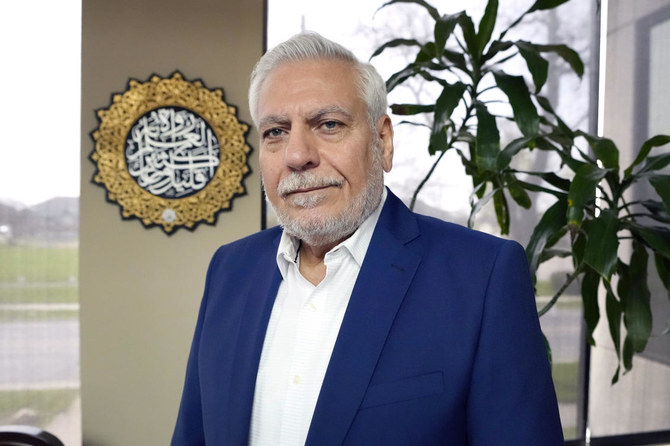
DEARBORN, Michigan: Osama Siblani’s phone won’t stop ringing.
Just days after President Joe Biden withdrew his bid for reelection and endorsed Vice President Kamala Harris for the Democratic presidential nomination, top officials from both major political parties have been asking the publisher of the Dearborn-based Arab American News if Harris can regain the support of the nation’s largest Muslim population located in metro Detroit.
His response: “We are in listening mode.”
Harris, who is moving to seize the Democratic nomination after Biden stepped down, appears to be pivoting quickly to the task of convincing Arab American voters in Michigan, a state Democrats believe she can’t afford to lose in November, that she is a leader they can unite behind.
Community leaders have expressed a willingness to listen, and some have had initial conversations with Harris’ team. Many had grown exacerbated with Biden after they felt months of outreach had not yielded many results.
“The door is cracked open since Biden has stepped down,” said Dearborn Mayor Abdullah Hammoud. “There’s an opportunity for the Democratic nominee to coalesce the coalition that ushered in Biden’s presidency four years ago. But that responsibility will now fall on the vice president.”
Arab American leaders such as Hammoud and Siblani are watching closely for signals that Harris will be more vocal in pressing for a ceasefire. They’re excited by her candidacy but want to be sure she will be an advocate for peace and not an unequivocal supporter of Israel.
But Harris will need to walk a fine line not to publicly break with Biden’s position on the war in Gaza, where officials in his administration have been working diligently toward a ceasefire, mostly behind the scenes.
The divide within Harris’ own party was evident in Washington last week during Israeli Prime Minister Benjamin Netanyahu’s visit to address Congress. Some Democrats supported the visit, while others protested and refused to attend. Outside the Capitol, pro-Palestinian protesters were met with pepper spray and arrests.
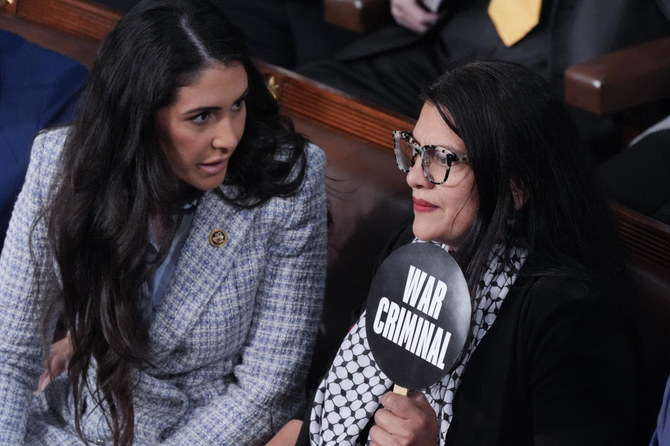
Michigan Rep. Rashida Tlaib, the only Palestinian American in Congress whose district includes Dearborn, held up a sign that read “war criminal” during Netanyahu’s remarks.
Harris did not attend.
Some Arab American leaders interpret her absence — she instead attended a campaign event in Indianapolis — as a sign of good faith with them, though they recognize her ongoing responsibilities as vice president, including a meeting Thursday with Netanyahu.
Her first test within the community will come when Harris chooses a running mate. One of the names on her short list, Pennsylvania Gov. Josh Shapiro, has been public in his criticism of pro-Palestinian protesters and is Jewish. Some Arab American leaders in Michigan say putting him on the ticket would ramp up their unease about the level of support they could expect from a Harris administration.
“Josh Shapiro was one of the first ones to criticize the students on campus. So it doesn’t differentiate Harris very much if she picks him. That just says I’m going to continue the same policies as Biden,” said Rima Meroueh, director of the National Network for Arab American Communities.
Arab Americans are betting that their vote holds enough electoral significance in pivotal swing states like Michigan to ensure that officials will listen to them. Michigan has the largest concentration of Arab Americans in the nation, and the state’s majority-Muslim cities overwhelmingly supported Biden in 2020. He won Dearborn, for example, by a roughly 3-to-1 margin over former President Donald Trump.
In February, over 100,000 Michigan Democratic primary voters chose “uncommitted,” securing two delegates to protest the Biden administration’s unequivocal support for Israel’s response to the Oct. 7 attacks by Hamas. Nationally, “uncommitted” garnered a total of 36 delegates in the primaries earlier this year.
The groups leading this effort have called for — at a minimum — an embargo on all weapons shipments to Israel and a permanent ceasefire.
“If Harris called for an arms embargo, I would work around the clock every day until the election to get her elected,” said Abbas Alawieh, an “uncommitted” Michigan delegate and national leader of the movement. “There’s a real opportunity right now to unite the coalition. It’s on her to deliver, but we are cautiously optimistic.”
Those divisions were on full display Wednesday night when the Michigan Democratic Party brought together over 100 delegates to pitch them on uniting behind Harris. During the meeting, Alawieh, one of three state delegates who did not commit to Harris, was speaking when another delegate interrupted him by unmuting and telling him to “shut up,” using an expletive, according to Alawieh.
The call could be a preview of tensions expected to surface again in August, when Democratic leaders, lawmakers, and delegates convene in Chicago for the party’s national convention. Mass protests are planned, and the “uncommitted” movement intends to ensure their voices are heard within the United Center, where the convention will be held.
Trump and his campaign, meanwhile, are keenly aware of the turmoil within the Democratic base and are actively seeking the support of Arab American voters. That effort has been complicated by Trump’s history of anti-immigrant rhetoric and policy during his one term as president.
A meeting between over a dozen Arab American leaders from across the country and several of Trump’s surrogates was convened in Dearborn last week. Among the surrogates was Massad Boulos, a Lebanese-born businessman whose son married Tiffany Trump, the former president’s younger daughter, two years ago. Boulos is leveraging his connections to rally support for Trump.
Part of the pitch that Boulos and Bishara Bahbah, chairman of Arab Americans for Trump, made in Dearborn was that Trump has shown an openness to a two-state solution. He posted a letter on social media from Palestinian President Mahmoud Abbas and pledged to work for peace in the Middle East.
“The three main points that were noted in the meeting were that Trump needs to state more clearly that he wants an immediate ceasefire in Gaza and that he supports the two-state solution, and that there is no such thing as a Muslim ban,” said Bahbah. “This is what the community wants to hear in a clear manner.”
Before a July 20 rally in Michigan, Trump also met with Bahbah, who pressed him about a two-state solution. According to Bahbah, Trump responded affirmatively, saying, “100 percent.”
But any apparent political opportunity for Trump may be limited by criticism from many Arab Americans about the former president’s ban on immigration from several majority Muslim countries and remarks they felt were insulting.
“I have not heard any individuals saying I’m now rushing to Donald Trump,” said Hammoud, Dearborn’s Democratic mayor. “I have yet to hear that in any of the conversations I’ve had. They all know what Donald Trump represents.”
Siblani, who organized Wednesday’s meeting with Trump surrogates, has spent months serving as an intermediary between his community and officials from all political parties and foreign dignitaries. Privately, he says, almost all express the need for a permanent ceasefire.
“Everybody wants our votes, but nobody wants to be seen as aligning with us publicly,” Siblani said.


![]()
![]()
![]()

Arab American leaders are listening as Kamala Harris moves to shore up key swing-state support

Short Url
https://arab.news/jhkza
Arab American leaders are listening as Kamala Harris moves to shore up key swing-state support
- Top officials from both major political parties have been asking Arab American leaders if Harris can regain the support of the nation’s largest Muslim population located in metro Detroit
- Kamala Harris appears to be pivoting quickly to the task of convincing Arab American voters in Michigan


Latest updates


© 2026 SAUDI RESEARCH & PUBLISHING COMPANY, All Rights Reserved And subject to Terms of Use Agreement.