



BAHRAIN, Swat District: Until a few weeks ago, twenty-year-old shepherd Nizam ud Din Torwali could never have imagined that millions of people would be listening to him singing in an ancient, endangered language spoken only by around 100,000 people worldwide.
Today, Torwali is the breakout star of the latest season of Coke Studio, the longest-running annual TV music show in Pakistan.
The eleventh and final song of this season, “Mehman” — which translates to guest — features popular Pakistan singer-songwriter Zebunnisa (Zeb) Bangash, 18-year-old viral sensation Noorima Rehan and Torwali, who hails from the remote village of Taip Se Ban in northwestern Pakistan and sings in the Torwali language, an Indo-Aryan dialect that before 2007 did not have a written tradition. The song has been viewed almost 7 million times on YouTube since its release over two weeks ago.
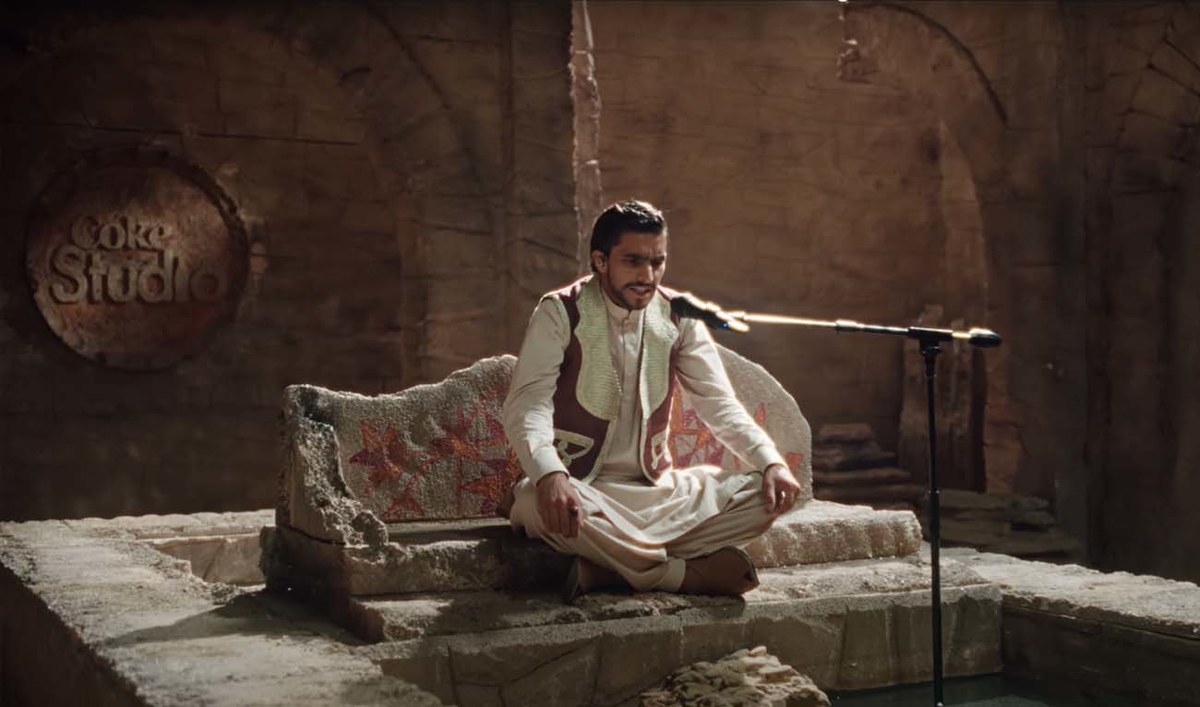
The still image taken from a music video uploaded on July 4, 2024, shows Nizam ud Din Torwali performing at Coke Studio Pakistan. (Photo courtesy: Coke Studio Pakistan / YouTube)
Torwali was first noticed by Coke Studio Pakistan producer Zulfikar Jabbar Khan, popularly known as “Xulfi,” who came across a YouTube video of him singing a “Zo” or “Zjo,” a traditional folk song, while tending to his animals in the highland pastures. The video of the performance, recorded by foreign tourists in 2021, was widely shared on social media platforms.
“Before Coke Studio [appearance], I had never traveled outside Tape Si Baan, nor did I study at school,” Torwali told Arab News in an interview. “I only played cricket, hung out with my friends throughout my life and looked after my cattle. This was my whole life.”
But things have changed after Coke Studio for Torwali:
“I am really happy with the response, respect and fame I have received after the song [featured in Coke Studio] and many people know me now.”
The shepherd has no formal training in singing or music.
“Others used to sing Zo or Zjo at weddings, and I used to learn silently and imitate them since my childhood,” he said. “While cattle grazing, I would sing Zo or Zjo to relax and make myself happy.”
“GREAT HONOR”
The mountainous settlement where Torwali, one of six siblings, lives has about 50 houses and a population of less than 250 people, with its residents’ lives mostly dependent on livestock.
Three years ago, a group of Belgian tourists arrived in the area with a Torwali culture advocate, Malak Abrar Ahmad Khan, and recorded him singing a folk song.
“Nizam came over, performed Zo or Zjo in front of us and we made a video that went viral,” Khan told Arab News. “Later we got a call from Coke Studio’s producer, Xulfi Bhai, who wanted to meet. That’s how the entire process started.”
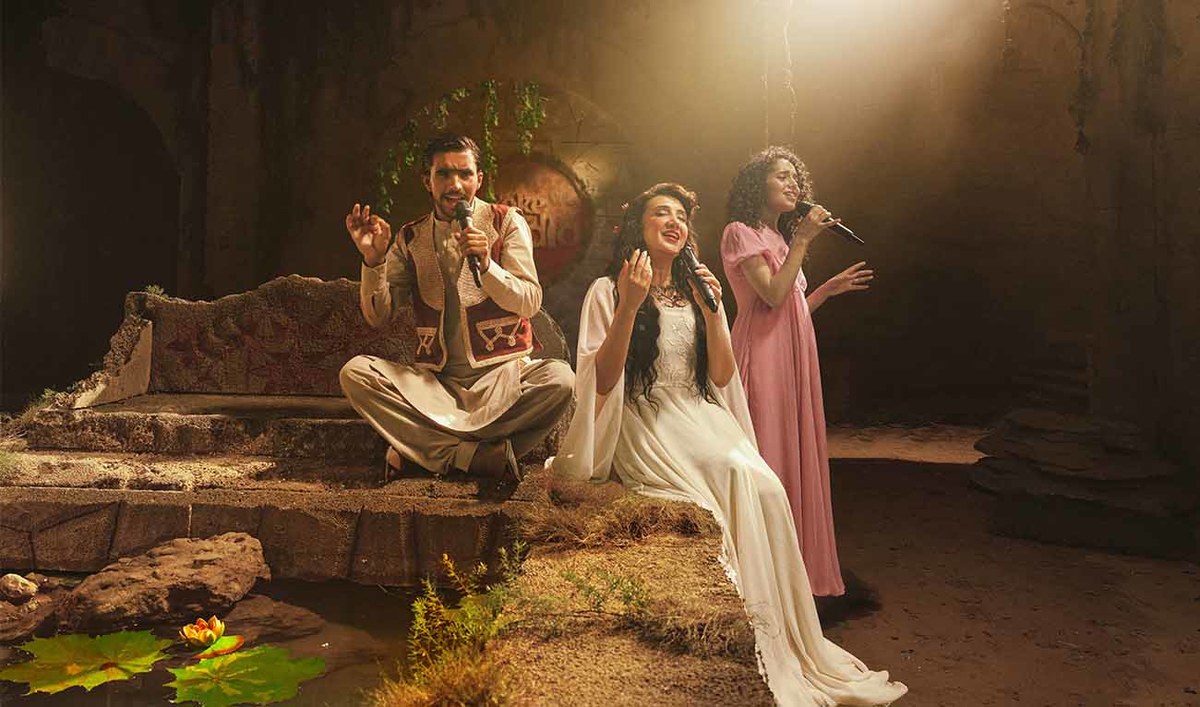
The picture shared by Coke Studio on July 5, 2024, shows singers Noorima Rehan (right), Zebunnisa Bangash (center), and Nizam ud Din Torwali, featured in song “Mehman.” (Coke Studio)
But convincing the young shepherd to leave his village for the recording in Lahore was no easy feat.
“We worked hard to persuade his family and had to delay our trip for three days because Nizam ran away to the meadows,” Khan said, explaining how “overwhelmed” Torwali was by city life when the group finally traveled to Lahore.
Everything has changed for the young man since.
“People come, hug me and take pictures with me,” Torwali said. “For them, I am Nizam Torwali, the one who sang a song at Coke Studio. This is a moment of great honor for me, and it makes me happy.”
Torwali is particularly happy to represent his people and language, considered endangered, on a major music platform and put Torwali culture, with its rich tradition folktales, on the map.
“Nizam is among hundreds of thousands of [Torwali] singers and poets,” Zubair Torwali, a writer and activist advocating for the rights of marginalized ethnic communities in northern Pakistan, told Arab News. “We have a rich culture. Torwali [the language] has gained a larger audience across the country thanks to Coke Studio.”
And this is only the start.
“I want the Zjo to go viral, not only in Pakistan but worldwide,” Torwali said. “The world should know that Nizam is singing. I don’t want to end it here but would like to continue singing. This is just the beginning.”


