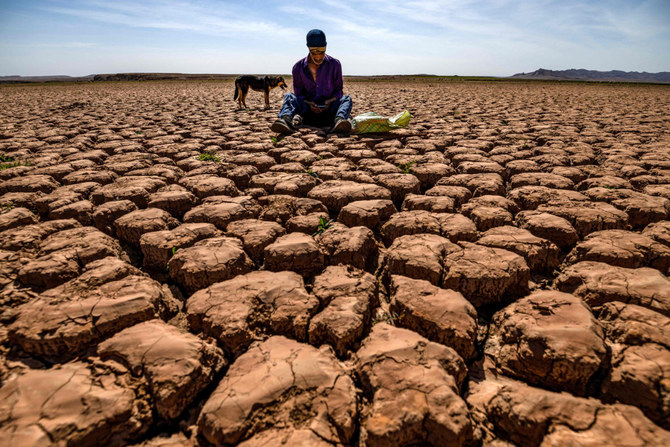

BENI MELLAL, Morocco: In the unrelenting heat of Morocco’s Middle Atlas, people were sleeping on rooftops. Hanna Ouhbour needed refuge too, but she was outside a hospital waiting for her diabetic cousin who was in a room without air conditioning.
On Wednesday, there were 21 heat-related deaths at Beni Mellal’s main hospital as temperatures spiked to 48.3 degrees (118.9 degrees Fahrenheit) in the region of 575,000 people, most lacking air conditioning.
“We don’t have money and we don’t have a choice,” said Ouhbour, a 31-year-old unemployed woman from Kasba Tadla, an even warmer city that some experts say is among the hottest on Earth.
“The majority of the deaths were among people suffering from chronic diseases and the elderly, as the high temperatures contributed to the deterioration of their health condition and led to their death,” Kamal Elyansli, the regional director of health, said in a statement.
This is life and death in the heat.
As the warming Earth sizzled through a week with four of the hottest days ever measured, the world focused on cold, hard numbers that showed the average daily temperature for the entire planet.
But the 17.16 degrees Celsius (62.8 degrees Fahrenheit) reading recorded on Monday doesn’t convey how oppressively sticky any one particular place became at the peak of sunshine and humidity. The thermometer doesn’t tell the story of warmth that just wouldn’t go away at night so people could sleep.
The records are about statistics, keeping score. But people don’t feel data. They feel the heat.
“We do not need any scientists to tell us what the temperature is outside as this is what our body tells us instantly,” said Humayun Saeed, a 35-year-old roadside fruit seller in Pakistan’s cultural capital of Lahore.
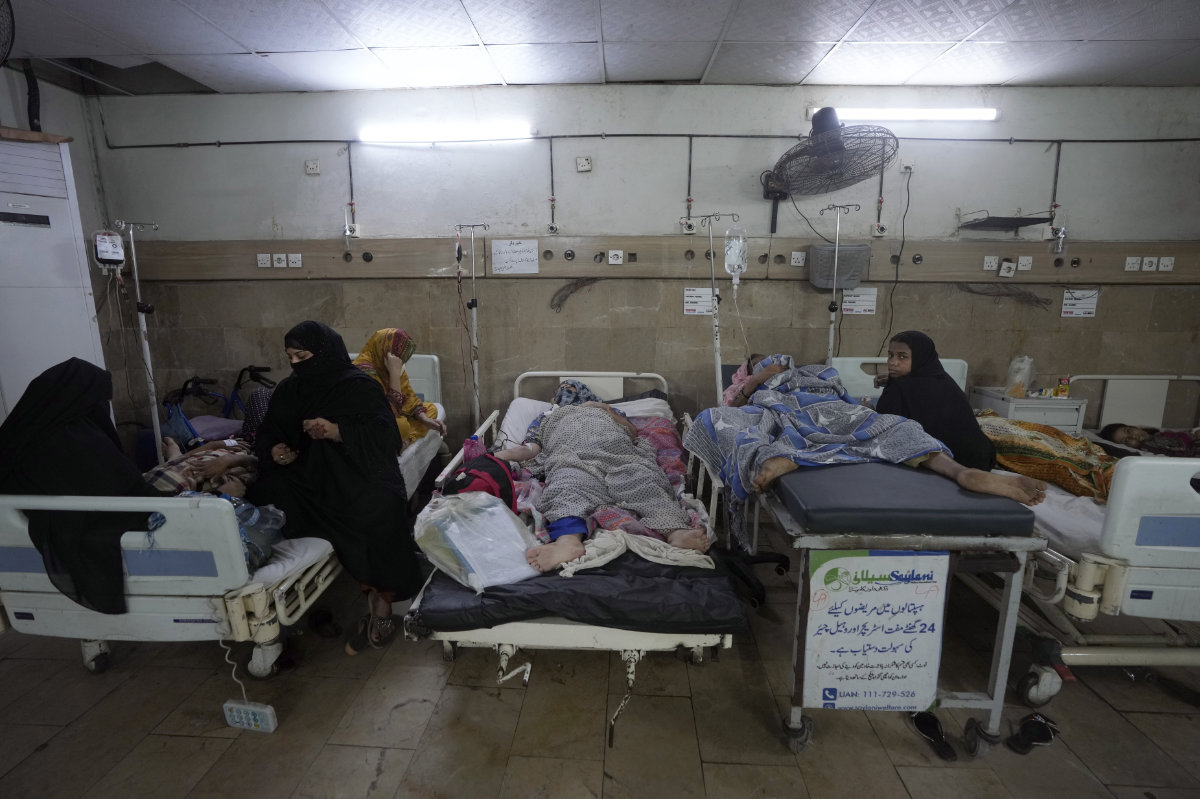
Heatstroke patients receive treatment at a hospital in Karachi, Pakistan, on July 25, 2024. (AP)
Saeed had to go to the hospital twice in June because of heat stroke.
“The situation is much better now, as it was not easy to work in May and June because of the heat wave, but I have been avoiding the morning walk,” Saeed said. “I may resume it in August when the temperature will go further down.”
The heat was making Delia, a 38-year-old pregnant woman standing outside a Bucharest, Romania, train station, feel even more uncomfortable. Daytime was so hot she was drowsy. With no air conditioning at night, she considered sleeping in her car like a friend had.
“I’ve really noticed a very big increase in temperatures. I think it was the same for everyone. I felt it even more because I am pregnant,” said Delia, who only provided her first name. “But I guess it wasn’t just me. Really everyone felt this.”
Self-described weather nerd Karin Bumbaco was in her element, but then it became just a little too much when Seattle had day after day of much warmer than normal heat.
“I love science. I love the weather. I have since I was a little kid,” said Bumbaco, the deputy state climatologist for Washington. “It’s sort of fun to see daily records get broken. ... But in recent years just living through it and actually feeling the heat has become just more miserable on a day-to-day basis.”
“Like this recent stretch we’ve had. I wasn’t sleeping very well. I don’t have AC at my home,” Bumbaco said. “I was watching the thermostat every morning be a little warmer than the previous warm morning. It was just building up the heat in the house and I just couldn’t wait for it to be over.”
For climate scientists around the world, what had been an academic exercise about climate change literally hit home.
“I’ve been analyzing these numbers from the cool of my office, but the heat has started to affect me as well, causing sleepless nights due to warmer urban temperatures,” said Roxy Mathew Koll, a climate scientist at the Indian Institute of Tropical Meteorology in Pune, Maharashtra, which normally has a relatively mild climate.
“My children return home from school during the peak hours exhausted,” Koll said. “Last month one of my colleagues’ mother died from heat stroke in north India.”
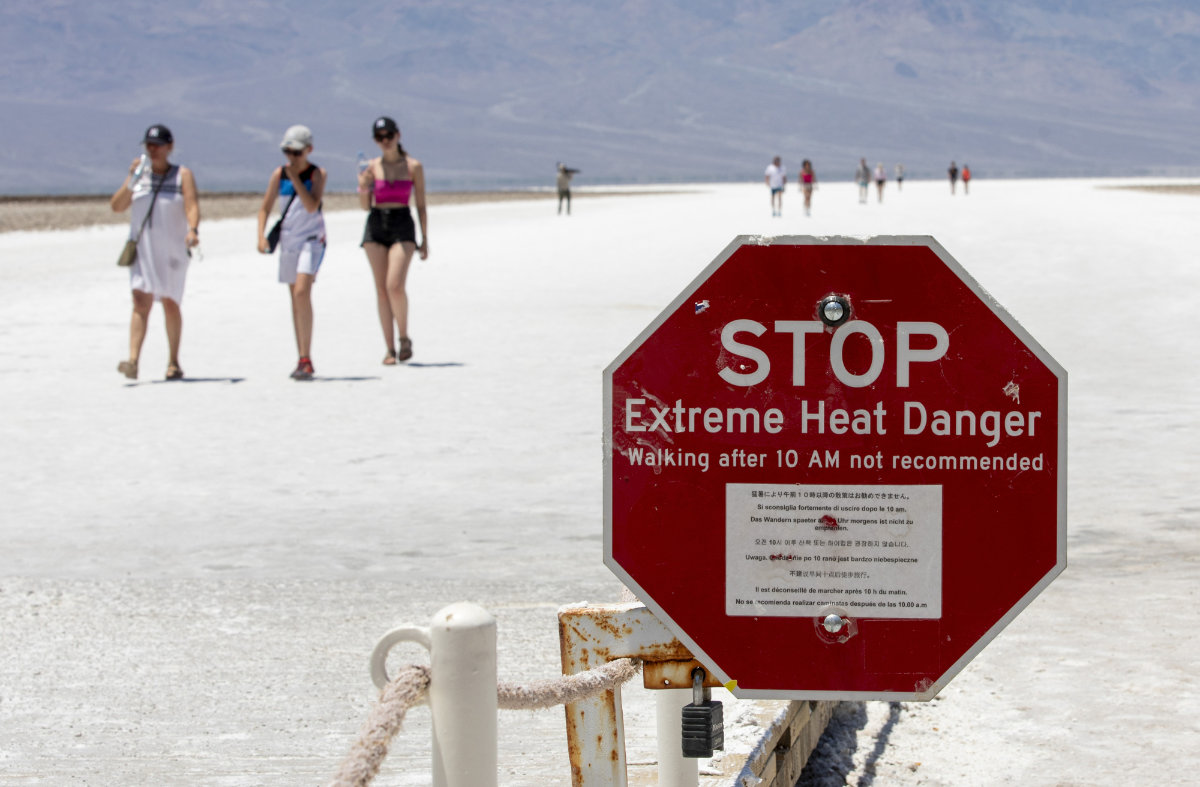
A stop sign warns tourists of extreme heat at Badwater Basin on July 8, 2024, in Death Valley National Park, California. (Las Vegas Review-Journal via AP)
Philip Mote, a climate scientist and dean of the graduate school at Oregon State University, had moved in junior high to California’s Central Valley and its triple digit summer heat.
“I pretty quickly figured I didn’t like a hot dry climate,” Mote said. “And that’s why I moved to the Northwest.”
For decades, Mote worked on climate issues from the comfort of Oregon, where people feared that with global warming the Northwest “would be the last nice place to live in the US and everybody would move here and we’d have overpopulation.”
But the region was hit by nasty fires in 2020 and a deadly heat wave in 2021, causing some people to flee what was supposed to be a climate haven.
In the second week of July, the temperature hit 104 degrees (40 Celsius). As a member of a masters’ rowing club, Mote practices on the water Tuesdays and Thursday evenings, but this week they decided to just float down the river in tubes.
In Boise, Idaho, tubing in the heat that has hovered between 99 and 108 degrees Fahrenheit (37 to 42 degrees Celsius) for 17 days has become so popular there’s a 30-minute to an hour wait to get into the water, said John Tullius, general manager for Boise River Raft & Tube.
“I think it’s been record numbers these last 10 days in a row,” Tullius said, adding that he worries about his outdoor workers, especially the physical toll on those who pick up rafts at the end of the trek.
He erected special shade structure for them, added more workers to ease the load and urges them to hydrate.
In Denver’s City Park, the swan-shaped pedal boat rental shop isn’t that busy because it’s beastly hot outside and those brave souls who do go out have to sit on hot fiberglass seats.
There’s not much shade for the workers, “but we do hide in our little shack,” said employee Dominic Prado, 23. “We also have a very strong fan in there that I like to raise my shirt over it just to cool down.”