

What We Are Reading Today: Inequality and Globalization

Photo/Supplied
Short Url
Updated 26 July 2024
Follow

What We Are Reading Today: Inequality and Globalization

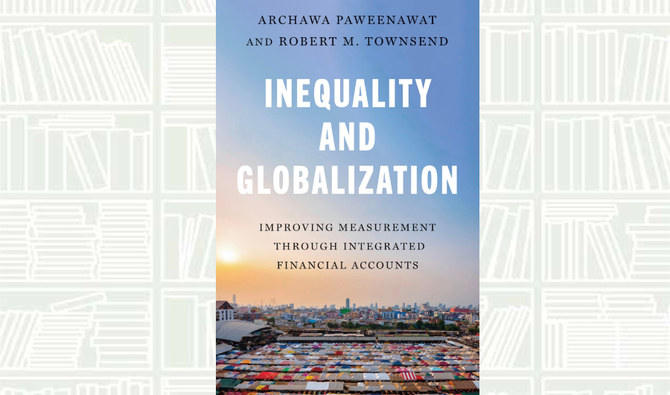
  • Drawing on extensive data from fieldwork in Thailand, Paweenawat and Townsend show how consistent integrated financial accounts at the individual household and small enterprise level can be created using household and firm survey data

Authors: Archawa Paweenawat and Robert M. Townsend

Increasing inequality, the impact of globalization, and the disparate effects of financial regulation and innovation are extraordinarily important topics that fuel spirited policy debates. And yet the facts underlying these debates are of doubtful accuracy.
In reality, as Archawa Paweenawat and Robert Townsend show in Inequality and Globalization, there is a large gap between micro household surveys, which measure key outcomes such as inequality, and aggregated financial accounts, which measure macroeconomic totals and growth.

Paweenawat and Townsend propose a remedy: Integrated financial accounts, in which the flows in income statements, including saving and investment, are consistent with the changes in financial assets and liabilities in the balance sheet at micro and macro levels. None of the leading US micro household surveys or macro accounts meets this criterion.

Drawing on extensive data from fieldwork in Thailand, Paweenawat and Townsend show how consistent integrated financial accounts at the individual household and small enterprise level can be created using household and firm survey data.



What We Are Reading Today: Can College Level the Playing Field? 

Updated 13 March 2026
Follow

What We Are Reading Today: Can College Level the Playing Field? 

Authors: Sandy Baum and Michael McPherson

We often think that a college degree will open doors to opportunity regardless of one’s background or upbringing. In this eye-opening book, two of today’s leading economists argue that higher education alone cannot overcome the lasting effects of inequality that continue to plague us, and offer sensible solutions for building a more just and equitable society.

Sandy Baum and Michael McPherson document the starkly different educational and social environments in which children of different races and economic backgrounds grow up, and explain why social equity requires sustained efforts to provide the broadest possible access to high-quality early childhood and K–12 education. 

They dismiss panaceas like eliminating college tuition and replacing the classroom experience with online education.