


MUMBAI: In the line of A-lister guests that Radhika Merchant and Anant Ambani greeted at their glitzy wedding, it was one elderly lady who had them bow and shout in reverence: “Thank you so much for coming! Every Sunday we eat your food.”
A short clip showing the scene soon went viral on social media, where the multimillion-dollar nuptials that took place over a week ago are still making the rounds.
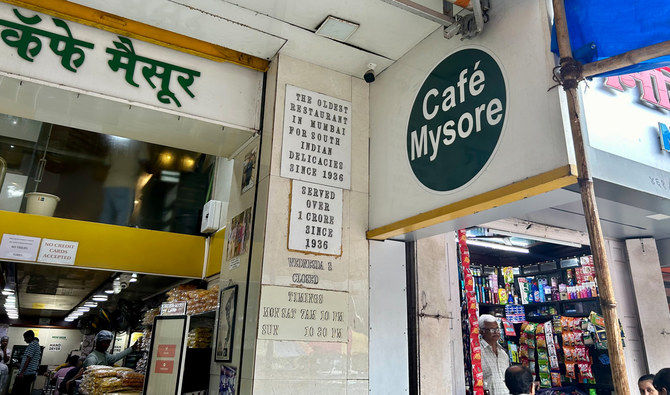
The lady whom the son of Asia’s richest man and his bride received with so much warmth is Shateri Nayak, the owner of Cafe Mysore, the oldest restaurant in Mumbai for South Indian food.
Located near the King’s Circle railway station in Matunga area, it was founded in 1936 by Nayak’s father-in-law, Nagesh Rama Nayak, who moved to Mumbai from the southern state of Karnataka, and brought with him the flavors and quality that soon turned his business into a legendary spot.
But it was the recognition from the son and daughter-in-law of billionaire Mukesh Ambani that shot the place to Internet fame.
“I heard a lot about this, so I decided to visit,” Yashi Raj, a researcher at the Indian Institute of Technology in Mumbai, whose curiosity was piqued by India’s most expensive wedding.
She ordered Cafe Mysore’s special dosas — thin, savory crepes stuffed with paneer cheese, capsicum and vegetables — and dahi vada, or light round fritters with curd and spices on top.
“Both were superb and very tasty,” she told Arab News. “After visiting this cafe, I realized why it is so famous. It stays true to its taste and the food is very authentic.”
The restaurant’s nondescript interior is like of any other Indian eatery, but the flavors, diners say, are something else.
“I crave South Indian food quite a time and this is one of my very go-to places in Matunga, because they have an amazing rasam vada,” said Shrishti Tiwari, a student and Mumbai native.
She was referring to a popular appetizer made with lentil fritters in a soup that has tamarind juice as a base and is considered one of the healthiest South Indian comfort foods.
“I love their rasam, very frequently I come over for rasam vada,” Tiwari said. “I love this place because of the distinct flavors that come out in the masalas and the sambar ... and the people here treat you very nicely.”
Mythili Mistri, a business professional and the restaurant’s regular, comes almost every day for afternoon coffee and bonda, a crispy and savory potato snack.
Cafe Mysore’s coffee is typical filtered South Indian coffee — light and flavorful at the same time.
“I have been coming here for years actually ... I always come here for coffee and if I come in the afternoon they have this vegetable bonda which is excellent,” Mistri said.
She was not surprised that the restaurant appealed to all Indians, including the Ambanis.
“They are serving good food. We don’t get such good South Indian food in many locations,” she told Arab News.
“Just because you are rich it doesn’t mean that you don’t want to enjoy good food ... I think everybody likes to enjoy good food.”


