


FARNBOROUGH, United Kingdom: Qatar Airways on Tuesday ordered 20 Boeing 777X long-haul aircraft worth $8.8 billion at list prices, boosting the US aviation giant at Britain’s Farnborough International Airshow.
“Qatar Airways is proud to announce an expansion to the existing Boeing 777X aircraft order with an additional 20, totalling 94 Boeing 777X aircraft,” said the airline’s chief executive Badr Mohammed Al-Meer.
“We... are an industry leader and operate one of the youngest fleets, offering unparalleled innovation and quality. Keeping an eye on the future, we continue to ensure that all Qatar Airways passengers are only met with the best products and services available in the industry.”
The order was worth $8.8 billion at catalogue prices although major aviation customers typically secure big discounts from aircraft manufacturers.
Boeing’s 777X began test flights earlier this month in preparation for certification to enter service. That is expected in 2025, which is five years behind schedule.
The blockbuster news came on the second day of the biennial Farnborough Airshow, which traditionally features a dogfight between Airbus and Boeing for multi-billion-dollar orders.
More plane orders flowed in at the Airshow on Tuesday despite supply chain pressures on jetmakers and the complaints from airlines about delivery delays.
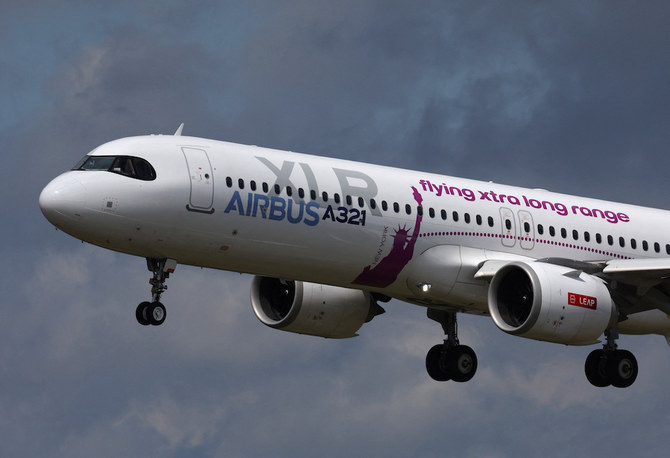
Airbus announced deals with Japan Airlines and Virgin Atlantic, while Boeing bagged an order from Macquarie Airfinance.
Delegates have been expecting limited deal-making at this year’s showcase aviation industry event, with Airbus and Boeing sold out for several years of production and struggling to ramp up output amid supply chain problems.
Delays in plane deliveries have limited some airlines’ ability to take advantage of a post-pandemic travel boom which some say is starting to fade.
“I think all of us on the airline side are slightly surprised by the long impact of COVID on the supply chain,” Virgin Atlantic CEO Shai Weiss told Reuters, as his airline ordered seven Airbus A330-900s in a deal worth $807 million, according to estimated delivery prices from Cirium Ascend.
“We’re urging our ... engine suppliers, the manufacturers, to do everything they can to get back on track.”
Boeing in particular had to scale back production as it came under legal and regulatory scrutiny after a panel blew off mid-air on a near-new 737 MAX 9 in January.
RUNNING PLANES FOR LONGER
Japan Airlines finalized an order for 20 Airbus A350-900 and 11 A321neo jets to be delivered from 2028, worth just over $3 billion in total, according to Cirium Ascend estimates.
The airline had said in March it would buy 21 wide-body A350s and 11 A321neo narrow-body jets, but it is only ordering 20 A350s now as it will receive one as a replacement for a jet destroyed in January in a collision with a Coast Guard aircraft.
Macquarie Airfinance, meanwhile, ordered 20 Boeing 737 MAX-8 planes to be delivered in 2029-2030, worth just over $1 billion, according Cirium Ascend estimates.
Also at the show, Al-Meer said Qatar Airways would decide on a “sizeable” new order of wide-body jets around the end of this year or in the first quarter of 2025.
He added the company had also decided to extend the service life of its Airbus A380 jets and would carry out upgrades including new wifi.
Airlines are increasingly looking to run existing planes for longer as jetmakers struggle to deliver on their order backlogs.
Consultancy Bain said in a report last week that airlines faced their longest-ever waits for engine maintenance amid the shortfall in new aircraft, adding to their costs.
British Airways CEO Sean Doyle said at the air show that his airline was being “very vigilant” on new plane deliveries, but that at the moment “our planes are broadly coming in the timelines that we need them to come.”
(With AFP and Reuters)


