

Pakistan delays national airline’s auction till September as bidders seek more information— report 

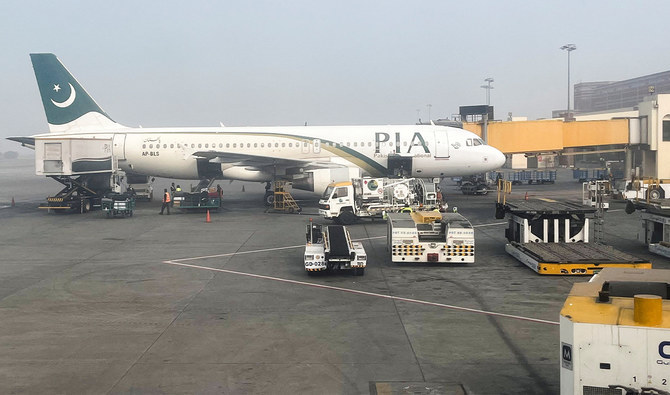
View of a Pakistan International Airlines (PIA) passengers plane, taken through a glass panel, at the Allama Iqbal International Airpor in Lahore, Pakistan on January 29, 2024. (REUTERS/File)
Short Url
Updated 23 July 2024
Follow

Pakistan delays national airline’s auction till September as bidders seek more information— report 

  • Bidders are waiting for airline’s latest audited accounts, clarity on flights to Europe that are banned, says Bloomberg 
  • Pakistan is looking to sell 51 percent to 100 percent of the carrier, which has failed to report an annual profit for nearly two decades

ISLAMABAD: Pakistan’s government has delayed the final auction for its national airline until the end of September, international business publication Bloomberg reported this week, as potential bidders seek more information to assess the carrier. 

Islamabad plans to sell the Pakistan International Airline (PIA) and outsource three of its airports in its attempts to curtail losses and enhance its foreign exchange reserves at a time when the country’s fragile $350 billion economy faces a balance of payment crisis.

The privatization of the loss-making state-owned enterprise has long been on the International Monetary Fund’s (IMF) list of recommendations for Pakistan, with which it signed a $7 billion loan agreement this month. Pakistan’s government said in July it expected to announce the auction date within 10 days. 

“Pakistan has delayed the final auction for state-owned Pakistan International Airlines by two months until the end of September after potential bidders sought more information to assess the carrier, according to people familiar with the matter,” Bloomberg reported on Monday. 

Quoting anonymous sources familiar with the matter, Bloomberg said the bidders are waiting for the airline’s latest audited accounts, clarity on flights to Europe that are banned and aircraft lease agreements. 

The European Union Aviation Safety Agency (EASA) banned PIA from its most lucrative routes in Europe and Britain after a PIA plane crash in Karachi in 2020 killed nearly 100, followed by a scandal over pilot licenses. The ban continues, costing the airline annual revenue of nearly 40 billion rupees ($143.73 million), the government has told parliament.

Pakistan is looking to sell 51 percent to 100 percent of the carrier, which has failed to report an annual profit for nearly two decades. In June, Pakistan selected six bidders to bid for the airline, which includes a consortium led by the Yunus Brothers Group., one of the nation’s largest business conglomerates, and another by businessman Arif Habib. 

A popular airline during its heydays in the ‘60s and ‘70s, PIA has grappled with financial losses, mismanagement, and operational challenges in recent years. It has also been burdened by a high debt load, inefficiencies, and corruption allegations, resulting in an overall decline in its financial performance.

Previous Pakistani governments avoided disposing the flag carrier as a potentially highly unpopular move. However, Pakistan’s recent macroeconomic crisis and its desperate need to secure another financial assistance package from the IMF has forced the government to go ahead with the auction. 


Pakistan likely to import around 7 million cotton bales this year as local production nearly halves

Updated 5 sec ago
Follow

Pakistan likely to import around 7 million cotton bales this year as local production nearly halves

  • Pakistan produced 5.3 million cotton bales by mid-December against 10 million targeted, government data shows
  • While the imports may ensure smooth supply of raw material, they may put pressure on foreign exchange reserves

KARACHI: Pakistan is likely to import around 7 million cotton bales this year owing to a decline of nearly half the annual target set by the Federal Committee on Agriculture (FCA), industry stakeholders said on Tuesday.

Pakistan’s cotton production stood at 5.3 million bales each weighing 170 kilograms as of Dec. 15, according to state-run Pakistan Central Cotton Committee (PCCC) data. The FCA had set a target of 10.2 million bales in April.

Karachi Cotton Brokers Forum (KCBF) Chairman Naseem Usman Osawala sees the country’s cotton production declining by 46 percent this season, compared to the FCA target.

“The country is expected to produce about 5.5 million bales this year,” he told Arab News, adding Pakistan would have to import around 7 million bales to meet requirement of its textile industry which consumes about 12 million bales a year.

The country had sown cotton over 2.002 million hectares, which was down by 11 percent from the targeted 2.26 million hectares.

Muhammad Waqas Ghani, head of research at Karachi-based JS Global Capital brokerage firm, said the South Asian country is likely to miss its cotton output target of 10 million bales.

“At the current rate of arrival, the output can reach 7 million bales at its best,” he added.

Cotton is a raw material for Pakistan’s largest textile industry and was the worst hit crop by climate-induced floods earlier this year.

Osawala said Pakistan’s cotton production has been falling because of an increasing number of sugar mills being established in the country’s cotton-producing regions.

Courts in Pakistan have been issuing significant rulings to bar the establishment of sugar mills in the designated cotton belt areas of the Punjab province. In 2018, the Supreme Court ordered relocation of three sugar mills from cotton-producing districts in southern Punjab to protect the crop.

Since cotton prices are low in the international market, textile millers would go for more imports, according to the KCBF chairman.

On Dec. 22, the price of cotton in the New York market stood at as much as 65.85 cents per pound, 1.64 cents lower than last year, according to the PCCC data.

Osawala said Pakistan’s increasing textile imports are also “hurting local cotton production.”

According to the Pakistan Bureau of Statistics’ (PBS) July-November data, the country had imported raw cotton, synthetic fiber, synthetic and artificial silk yarn and worn clothing worth $2.82 billion, 5 percent more than the imports during the same period last year.

Speaking of the impact of Pakistan’s falling cotton production, Kamran Arshad, chairman of All Pakistan Textile Mills Association (APTMA), said the millers would have to import “a lot of cotton” this year.

“I think approximately 7-7.5 million bales will have to be imported this year,” he said.

The textile and apparel sector is Pakistan’s largest exporter, accounting for more than half of the country’s overall exports and contributing around 8.5 percent of the gross domestic product (GDP) by employing nearly 40 percent of the industrial labor force. But high energy costs and outdated infrastructure among other factors continue to slow growth and leave the country trailing regional peers.

In the last fiscal year, Pakistan imported as much as 6.2 million cotton bales each weighing 220 kilograms, mostly from Brazil and the United States, according to KCBF Chairman Arshad.

Shankar Talreja, head of research at Karachi-based Topline Securities, said Pakistan is likely to import cotton worth $1.2 billion this year “considering the requirement.”

“The full-year import of cotton is likely to remain over $1 billion,” Talreja said.

Economic experts say while importing more cotton would ensure smooth supply of raw material to Pakistan’s textile sector, it may put pressure on the country’s foreign exchange reserves that rose to $15.9 billion last week after the International Monetary Fund (IMF) released a $1.2 billion tranche under Pakistan’s $7 billion loan program.