Baby flamingos saved from drought-decimated lake in Algeria

1 / 4
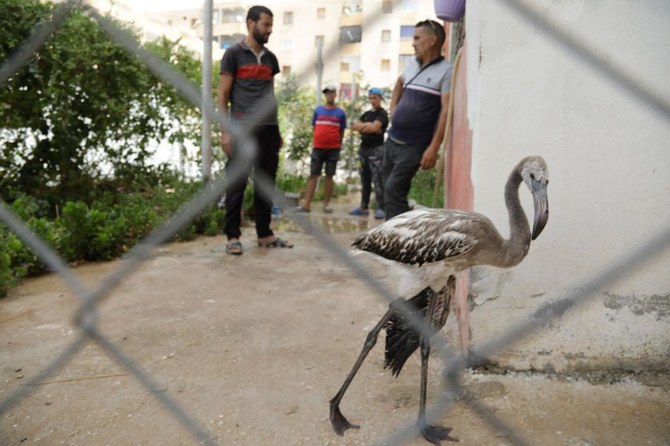
A rescued flamingo walks past volunteers treating dehydrated birds rescued from an area near a dried-up lagoon in the Algerian northeastern region of Ain Mlila on July 19, 2024, following a rescue operation by local residents. (Photo by AFP)
2 / 4
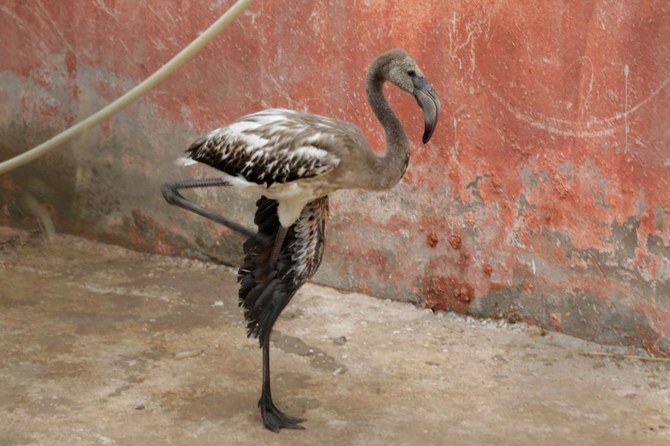
Around 300 pink flamingo chicks were rescued by volunteers in eastern Algeria after the salt lake where they hatched dried up following years of high temperatures and drought. (Photo by AFP)
3 / 4
A volunteer inspects a dehydrated dead flamingo near a dried-up lagoon area in the Algerian northeastern region of Ain Mlila on July 19, 2024, following a rescue operation by local residents. (Photo by AFP)
4 / 4
Thousands of flamingos migrate each year to nest in Lake Tinsilt, located around 450 kilometres (about 280 miles) northeast of the capital Algiers. (Photo by AFP)
Short Url
Updated 22 July 2024
Follow

Baby flamingos saved from drought-decimated lake in Algeria

OUM EL BOUAGHI: Around 300 pink flamingo chicks were rescued by volunteers in eastern Algeria after the salt lake where they hatched dried up following years of high temperatures and drought.
Thousands of flamingos migrate each year to nest in Lake Tinsilt, located around 450 kilometers (about 280 miles) southeast of the capital Algiers.
It is one of the largest wetlands in the country, with an area of more than 20 square kilometers.
“Barely a month ago there was water here,” volunteer Mourad Ajroud told AFP on Friday, pointing to what is now a vast expanse of cracked earth littered with the carcasses of dead birds.
The disappearance of the lake, which locals and Algerian media attribute to high temperatures and a years-long drought, has driven the adult flamingos away.
They left behind their unhatched eggs and defenseless chicks, dozens of which have died from hunger, thirst, poaching and wolf attacks.
A group of volunteers provided their cars and trucks to transfer 283 pink flamingos about 50 kilometers away to Lake Mahidiya, about 50 kilometers away.
The wetland near Ain Mlila remains flush thanks to a steady flow of water from nearby rivers and lakes.
The rescue operation was initiated by local amateur photographer Tarek Kawajlia, who documents the wildlife in his area, and noticed the decrease in the size of the lake and the flight of birds.
The volunteers carry out “morning and evening patrols to follow the chicks until they recover and are able to fly, so that they can return next year to the sabkha (marsh) and life can resume its normal course,” Kawajlia told AFP.
Ajroud, 53, said the group was not able to save all the birds.
“We couldn’t transport them all,” he said sadly, as another volunteer takes an injured bird to a veterinary clinic.
A few hours after the chicks were released at their new habitat, some adult birds joined them.
“The operation was successful and the parents found their little ones in a magnificent scene,” Kawajlia said in a comment on one of his photos posted to Facebook.
Lake Tinsilt is one of the around 50 bodies of water in Algeria declared wetlands of international importance under the Ramsar international environment treaty to protect wetlands.
Last year, about a hundred pink flamingos died at Lake Telamine in western Algeria’s Oran province due to wastewater pollution, according to environmental activists.


Cambodia takes back looted historic artifacts handled by British art dealer

Updated 28 February 2026
Follow

Cambodia takes back looted historic artifacts handled by British art dealer

  • The objects were returned under a 2020 agreement between the Ministry of Culture and Fine Arts and the family of the late Douglas Latchford, a British art collector and dealer who allegedly had the items smuggled out of Cambodia

PHNOM PENH, Cambodia: Cambodian officials on Friday received more than six dozen historic artifacts described as part of the country’s cultural heritage that had been looted during decades of war and instability.
At a ceremony attended by Deputy Prime Minister Hun Many, the 74 items were unveiled at the National Museum in Phnom Penh after their repatriation from the United Kingdom.
The objects were returned under a 2020 agreement between the Ministry of Culture and Fine Arts and the family of the late Douglas Latchford, a British art collector and dealer who allegedly had the items smuggled out of Cambodia.
“This substantial restitution represents one of the most important returns of Khmer cultural heritage in recent years, following major repatriations in 2021 and 2023 from the same collection,” the Culture Ministry said in a statement. “It marks a significant step forward in Cambodia’s continued efforts to recover, preserve, and restore its ancestral legacy for future generations.”
The artifacts were described as dating from the pre-Angkorian period through the height of the Angkor Empire, including “monumental sandstone sculptures, refined bronze works, and significant ritual objects.” The Angkor Empire, which extended from the ninth to the 15th century, is best known for the Angkor Wat archaeological site, the nation’s biggest tourist attraction.
Latchford was a prominent antiquities dealer who allegedly orchestrated an operation to sell looted Cambodian sculptures on the international market.
From 1970 to the 1980s, during Cambodia’s civil wars and the communist Khmer Rouge ‘s brutal reign, organized looting networks sent artifacts to Latchford, who then sold them to Western collectors, dealers, and institutions. These pieces were often physically damaged, having been pried off temple walls or other structures by the looters.
Latchford was indicted in a New York federal court in 2019 on charges including wire fraud and conspiracy. He died in 2020, aged 88, before he could be extradited to face charges.
Cambodia, like neighboring Thailand, has benefited from a trend in recent decades involving the repatriation of art and archaeological treasures. These include ancient Asian artworks as well as pieces lost or stolen during turmoil in places such as Syria, Iraq and Nazi-occupied Europe. New York’s Metropolitan Museum of Art is one of the prominent institutions that has been returning illegally smuggled art, including to Cambodia.
“The ancient artifacts created and preserved by our ancestors are now being returned to Cambodia, bringing warmth and joy, following the country’s return to peace,” said Hun Many, who is the younger brother of Prime Minister Hun Manet.