

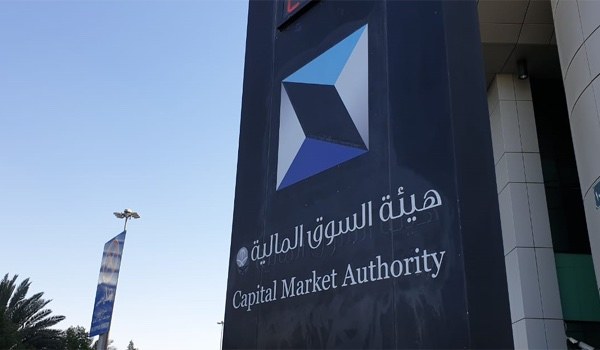
Saudi capital market systems prove resilient during global tech outage

According to the CMA, its systems were fully operational and prepared to support investors during the trading sessions on July 21. Supplied
Short Url
Updated 21 July 2024
Follow

Saudi capital market systems prove resilient during global tech outage

RIYADH: Saudi Arabia’s capital market systems proved resilient during the global technical outage on July 19, which disrupted flights, broadcasting services, and essential services worldwide. 

The Saudi Capital Market Authority stated that it promptly coordinated with market stakeholders to mitigate the effects of the interruption, ensuring that operations remained unaffected.  

According to the CMA, its systems were fully operational and prepared to support investors during the trading sessions on July 21.

The outage, triggered by a software update from cybersecurity firm CrowdStrike, caused widespread disruptions across various sectors. 

In response, the CMA directed listed companies on the Saudi capital market to disclose any significant developments related to the incident. The market regulator emphasized that its technical teams are monitoring systems around the clock to ensure ongoing stability and business continuity. 

The Saudi Exchange also reassured investors of its system’s reliability and readiness to provide continuous service. 

On July 20, Saudi Arabia’s National Cybersecurity Authority stated that the impact of the outage on the Kingdom was limited. The authority also noted that it has implemented exceptional measures to monitor threats and cyber risks and to respond to any incidents. 

The Saudi Central Bank confirmed that its payment and banking infrastructure remained unaffected by the outage, emphasizing its adherence to international cybersecurity and operational standards.  

The apex bank also highlighted its commitment to regularly updating precautionary measures to ensure effective business continuity and the resilience of its banking and payment systems. 

The Saudi Data and Artificial Intelligence Authority also stated that its systems and those it hosts in the Kingdom were not impacted by the global technical failure. 

“SDAIA confirms that its systems and the national systems hosted by it in the Kingdom are not affected by the technical failure that struck most countries of the world today,” it stated in a statement posted on X. 

The incident has sparked renewed discussions about the importance of cybersecurity and resilience in critical infrastructure, with many organizations reassessing their strategies and safeguards to prevent future disruptions.

The Kingdom’s Vision 2030 underscores a robust commitment to advancing cybersecurity, with strategic investments aimed at enhancing digital infrastructure and safeguarding national assets against emerging cyber threats.


MEA to see $3tn real estate, infrastructure pipeline by 2030, JLL says 

Updated 5 sec ago
Follow

MEA to see $3tn real estate, infrastructure pipeline by 2030, JLL says 

RIYADH: The Middle East and Africa region is set to see a $3 trillion pipeline of real estate and infrastructure projects between 2026 and 2030, driven by tight occupancy levels and strong investor demand, an analysis showed. 

In its latest report, professional services firm JLL said low vacancy and strong absorption rates are among the key drivers accelerating the sector’s transformation in the region, easing supply constraints and supporting rental and sales growth. 

The steady momentum in the region’s real estate and infrastructure sectors underscores the ongoing economic diversification efforts pursued by countries across the region.

In July, real estate consultancy Knight Frank said the Kingdom’s construction output value is expected to reach $191 billion by 2029, representing a 29.05 percent increase from 2024, driven by residential development, ongoing giga-projects and rising demand for office space. 

James Allan, CEO, UAE, Egypt and Africa at JLL, said: “Strong market fundamentals boosted the Middle East and Africa real estate market in 2025, setting the momentum for sustained performance across asset classes in 2026.” 

He added: “We saw record residential transactions, double-digit growth in industrial and logistics rents, and an exceptionally tight 1 percent office vacancy rate in 2025, driven by professional talent migration, substantial private investment, and strategic infrastructure development.” 

According to the report, the delivery of key infrastructure projects in the region will further catalyze new real estate developments and attract increased private sector participation. 

In the evolving capital landscape, cross-border capital and alternative financing mechanisms are projected to play an increasingly central role, particularly in greenfield developments where investment stock remains limited. 

The report added that improved market transparency across the region, driven by regulatory changes, is also expected to bolster investor confidence in the Middle East and Africa markets. 

JLL said the UAE remains central to this growth trajectory, with projected project cash flows of $795 billion from 2026 to 2030, including $470 billion allocated to real estate development. 

In November, CBRE echoed similar views on the region’s real estate sector, saying Saudi Arabia’s ongoing economic diversification push is energizing its property market, with office rents in Riyadh climbing 15 percent year on year and occupancy reaching 98 percent by the end of the third quarter of 2025. 

CBRE added that the strong performance in Saudi Arabia’s office sector is buoyed by the Kingdom’s non-oil economic expansion and an influx of multinational companies relocating regional headquarters to Riyadh.