

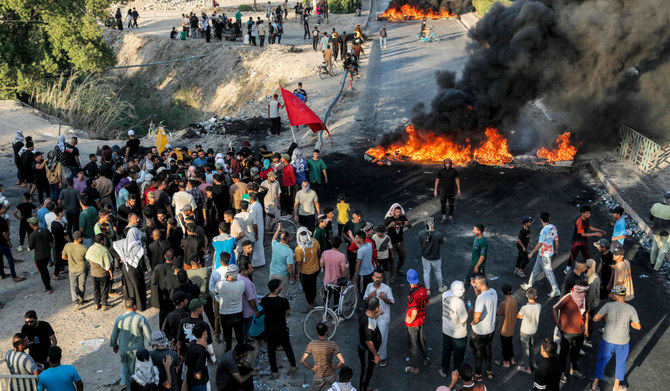

DIWANIYAH, Iraq: Hundreds of Iraqis in the southern province of Diwaniyah protested on Monday against power cuts and water shortages during the extreme heat of summer, an AFP correspondent said.
Decades of war have left the country’s infrastructure in a pitiful state, with power cuts worsening the blistering summer when temperatures often reach 50 Celsius (122 Fahrenheit) mostly in southern provinces.
Dozens of villages in Diwaniyah have also suffered for years from water shortages because of a four-year-long drought and reduced river flows.
On Monday, around 500 angry protesters encircled the municipality building in Shafeiya village, burning tires and chanting for better services.
“We don’t have electricity. We used to get it for only two hours (per day), but now it is only one hour and 15 minutes,” said protester Youssef Kamel.
“We don’t have water or agriculture,” he said, adding that “everyone has left to look for jobs” as laborers in the cities.
Last week, hundreds of people also protested outside electricity department offices in Ghamas district, blocking roads and burning tires.
On Saturday, police used tear gas to disperse protesters, and dozens were briefly detained.
Iraq is the second-largest oil producer in the OPEC cartel, but despite having immense oil and gas reserves, it remains dependent on imports to meet its energy needs.
Neighbouring Iran supplies about a third of its power sector requirements.
Many households have just a few hours of mains electricity per day, and those who can afford it use private generators to keep fridges and air conditioners running.
Anger over corruption, unemployment and blackouts helped to fuel deadly protests from late 2019 to mid-2020.
The protests morphed into an unprecedented anti-government movement, mostly across southern Iraq and in Baghdad, before a security crackdown killed more than 600 people.


