BUFFALO TOWNSHIP, Pennsylvania: The former fire chief who was killed at a Pennsylvania rally for Donald Trump spent his final moments diving in front of his family to protect them from gunfire that rang out Saturday during an assassination attempt against the former president.
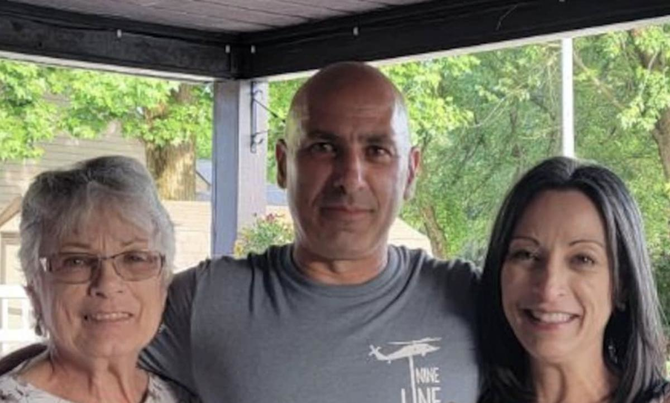
Pennsylvania Gov. Josh Shapiro confirmed Sunday that Corey Comperatore, 50, had died a “hero,” using his body as a shield to protect both his wife and daughter from the bullets.
“His wife shared with me that he dove on his family to protect them,” Shapiro said.
President Joe Biden and first lady Jill Biden extended their “deepest condolences” to Comperatore’s family.
“He was a father. He was protecting his family from the bullets that were being fired and he lost his life, God love him. We’re also praying for the full recovery of those who were injured,” Biden said.
At least two other people were injured during the attempt to kill Trump at Saturday’s rally in Butler, Pennsylvania. Those two have been identified as David Dutch, 57, of New Kensington, Pennsylvania and James Copenhaver, 74, of Moon Township, Pennsylvania, according to the Pennsylvania State Police. Both were listed in stable condition as of Sunday.
Separately, Texas US Rep. Ronny Jackson said in a statement Sunday that his nephew was injured but “thankfully his injury was not serious.”
“My family was sitting in the front, near where the President was speaking,” Jackson said. “They heard shots ringing out — my nephew then realized he had blood on his neck and something had grazed and cut his neck. He was treated by the providers in the medical tent.”
The Secret Service said it killed the suspected shooter, who attacked from an elevated position outside the rally venue.
The former president was showing off a chart of border-crossing numbers when at least five shots were fired. Trump was seen holding his ear and got down on the ground. Agents quickly created a shield around him. When he stood, his face bloodied, he pumped his fist to cheering supporters
Randy Reamer, president of the Buffalo Township volunteer fire company, called Comperatore “a stand-up guy” and “a true brother of the fire service.” He said Comperatore served as chief of the company for about three years but was also a life member, meaning he had served for more than 20 years.
“Just a great all-around guy, always willing to help someone out,” Reamer said of Comperatore. “He definitely stood up for what he believed in, never backed down to anyone. … He was a really good guy.”
A crew was power-washing the front of the Buffalo Township Volunteer Fire Company on Sunday with plans to install memorial drapery to honor the slain former chief.
Assistant Chief Ricky Heasley of Sarver, who knew him for more than a decade, remembered him as very outgoing and full of life.
“He never had a bad word,” Heasley said.
A GoFundMe launched to support Comperatore’s family had already surpassed more than $180,000 in donations as of Sunday.


Former fire chief who died at Trump rally used his body to shield family from gunfire
https://arab.news/yhxxe
Former fire chief who died at Trump rally used his body to shield family from gunfire

- At least two other people were injured during the attempt to kill Trump at Saturday’s rally in Butler, Pennsylvania


Single ‘digital nation-state’ is not a far-fetched notion, Melania Trump tells UN Security Council
- US first lady argues that AI and global connectivity could reshape education, help reduce conflict and empower children worldwide
- Societies rooted in knowledge foster innovation, tolerance and moral reasoning, while those shaped by ignorance risk disorder and conflict, she says
NEW YORK CITY: The idea of a single digital nation-state is “not so far-fetched,” US First Lady Melania Trump told the UN Security Council on Monday.
She argued that artificial intelligence and global connectivity could reshape education, help reduce conflict and empower children worldwide.
The US holds the rotating presidency of the council for March, and as she presided over its first meeting of the month Trump said technology was erasing borders and creating what she described as a shared intellectual future.
“Perhaps this idea isn’t so far-fetched,” she said, pointing to the rise of digital currencies, blockchain-based payment systems, and AI-driven databases she argued were already transforming media and financial markets.
Trump thanked the US’s fellow council members — the UK, France, Russia, China, Greece, the Democratic Republic of Congo, Denmark, Panama, Liberia, Somalia, Colombia, Pakistan, Bahrain and Latvia — for their role in efforts to maintain international security.
The responsibility for preventing conflict “must be applied evenly and should never be carried out lightly,” she said. Her remarks focused in particular on the role of education as the foundation of peace and stability.
“A nation that makes learning sacred protects its books, its language, its science and its mathematics. It protects its future,” Trump said, arguing that societies rooted in knowledge foster innovation, tolerance and moral reasoning, while those shaped by ignorance risk disorder and conflict.
Education is widely recognized as a fundamental human right, she added, yet many children and young adults around the world remain barred from the chance to attend high school or university. The losses arising from this squandered potential, from potential medical breakthroughs to possible advances in food security and technology, are borne not only by the individual countries involved but by humanity as a whole, she said.
Trump called for the expansion of global access to technology to help bridge the digital divide, noting that about 6 billion people, 70 percent of the world’s population, now use mobile devices and the internet.
“If our nations band together, we can close the technological divide,” she said, describing a world in which a farmer on a remote Greek island, a student in Somalia and a resident of New York City can all tap into centuries of accumulated human knowledge.
AI was democratizing access to information once confined to university libraries, she added, and redefining participation in the global “economy of ideas.”
She continued: “Conflict arises from ignorance. Knowledge creates understanding, replacing fear with peace and unity.”
Trump called on council members to safeguard learning and promote access to higher education, urging them to “build a future generation of leaders who embrace peace through education.”
She added: “The path to peace depends on us taking responsibility to empower our children through education and technology.”


